Unrefined · Rich in carotenes · Traditional flavor
Bulk Red Palm Oil
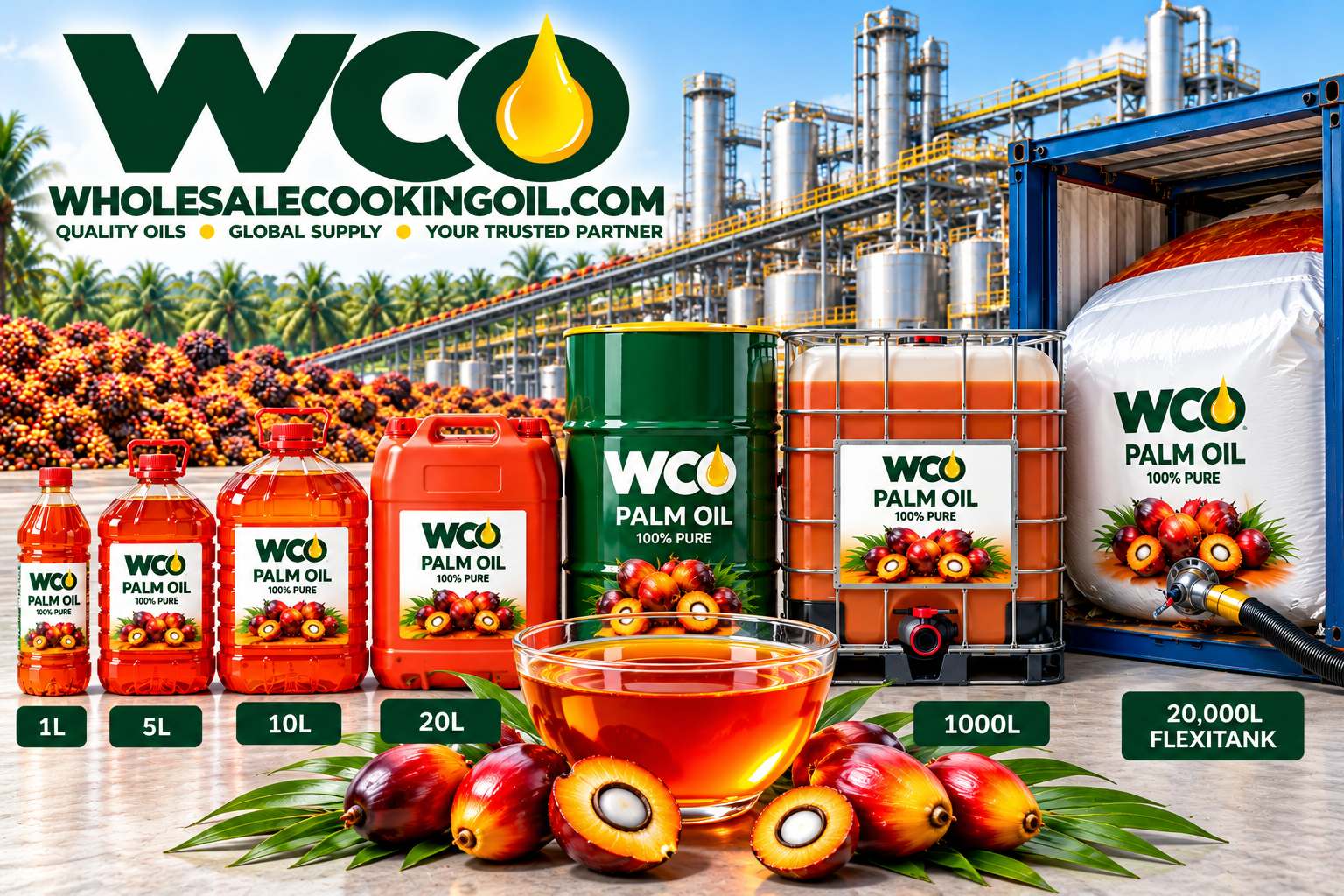
Bulk red palm oil, unrefined, with its natural deep orange-red color, rich flavor, carotenes and vitamin E. The traditional cooking oil of West African and Brazilian cuisine, supplied from 1L bottles to 20,000L flexitanks.
- Grade
- Unrefined, filtered
- Color
- Deep orange-red
- Rich in
- Carotenes and vitamin E
- Packed in
- USA
Request a quote for Red Palm Oil
1. Choose a grade
2. Choose a pack size
Minimum 1,000 L (≈264 gal) per quote — mix any oils and pack sizes. Nothing to pay now: we reply by email with a quotation showing the price, shipping terms and estimated arrival date.
Unrefined palm oil with its natural color and flavor
Bulk red palm oil is palm oil in its traditional, unrefined form. It is pressed from the orange flesh of the oil palm fruit and keeps everything refining removes: its deep orange-red color, its rich, distinctive flavor and its natural carotenes and vitamin E. For millions of cooks across West and Central Africa, Brazil and the diaspora, it is not just a cooking fat but the essential flavor of the dish.
Our red palm oil is milled near the plantations, then clarified, filtered, tested and packed in the United States, and supplied from 1-liter bottles to 20,000-liter flexitanks for food manufacturers, importers, distributors and ethnic food retailers.
Red palm oil, RBD palm oil and palm olein compared
All three come from the same fruit, but they are very different products. Red palm oil is unrefined. RBD palm oil has been refined, bleached and deodorized, which removes the color, flavor and carotenes. Palm olein is the liquid fraction of RBD palm oil, used as a frying oil.
| Red palm oil | RBD palm oil | RBD palm olein | |
|---|---|---|---|
| Processing | Unrefined: milled, clarified and filtered | Refined, bleached and deodorized | RBD palm oil, fractionated |
| Color | Deep orange-red | Light yellow | Clear golden yellow |
| Flavor and aroma | Rich, distinctive | Bland, odorless | Bland, odorless |
| At room temperature | Semi-solid | Semi-solid | Liquid |
| Carotenes (provitamin A) | Naturally rich | Removed by refining | Removed by refining |
| Main uses | Traditional cooking, soups, stews, sauces | Shortening, margarine, baking, industrial frying | Everyday cooking and deep frying |
What makes red palm oil different
- Natural carotenes. The red color comes from carotenoids, mainly beta-carotene and alpha-carotene, which the body can convert into vitamin A. Unbleached palm oil typically contains 500–2,000 mg/kg of carotenoids.
- Vitamin E as tocotrienols. Palm oil is one of the few common oils whose vitamin E is mostly tocotrienols rather than tocopherols.
- Distinctive flavor. It has a rich, savory, slightly earthy taste that is central to many traditional recipes.
- Semi-solid at room temperature. Like all palm oil, it is about half saturated fat, so it thickens or sets in cooler weather and melts easily when warmed.
How red palm oil is used
Red palm oil is a staple of West African cooking, where it flavors soups, stews, sauces and beans, and of Bahian cuisine in Brazil, where it is known as dendê oil and gives dishes such as moqueca and vatapá their color and taste. It is used for sautéing and frying, stirred into stews at the end of cooking, and blended with neutral oils when cooks want its color and flavor at lower cost. Because heat gradually breaks down its carotenes, it is best used for stewing and moderate-heat cooking rather than long, high-temperature deep frying; for that, choose palm olein.
How bulk red palm oil is priced
Red palm oil prices follow palm harvests and global vegetable oil markets. We price each order on grade, pack size, total volume and destination, and larger formats cost less per liter. The minimum is 1,000 liters per quote, and you can combine red palm oil with any of our other oils.
Technical data
Red Palm Oil grades and specifications
Available grades
| Grade | Description |
|---|---|
| Unrefined red palm oil | Milled, clarified and filtered. Keeps its natural color, flavor, carotenes and vitamin E. |
| Crude palm oil (CPO, for refining) | Free fatty acids up to 5%. Supplied to refiners and processors; not for direct consumption. |
Each grade is priced separately. The specifications below are for Unrefined red palm oil; specifications for other grades are supplied with your quote.
Quality specification
| Parameter | Specification |
|---|---|
| Appearance | Orange-red, semi-solid at room temperature, clear when melted |
| Odor and taste | Characteristic of fresh palm oil, free of rancid or foreign odors |
| Free fatty acids (as palmitic acid) | 3.0% max. |
| Acid value | 10.0 mg KOH/g max. (Codex limit for virgin palm oil) |
| Peroxide value (at packing) | 10 meq O₂/kg max. |
| Moisture and volatile matter | 0.2% max. |
| Insoluble impurities | 0.05% max. |
| Total carotenoids (as beta-carotene) | 500–2,000 mg/kg |
| Iodine value (Wijs) | 50–55 |
| Saponification value | 190–209 mg KOH/g |
| Relative density (50 °C) | 0.891–0.899 |
| Refractive index (50 °C) | 1.454–1.456 |
| Shelf life (unopened) | Up to 12 months stored cool and away from light |
Typical specification for our unrefined red palm oil. Quality and identity values follow the Codex Alimentarius standard for palm oil and its limits for virgin palm oils. Values for each lot are confirmed on the Certificate of Analysis supplied with your order.
Fatty acid profile
| Fatty acid | % of total fatty acids |
|---|---|
| Lauric acid (C12:0) | 0.5 max. |
| Myristic acid (C14:0) | 0.5–2.0 |
| Palmitic acid (C16:0) | 39.3–47.5 |
| Stearic acid (C18:0) | 3.5–6.0 |
| Oleic acid (C18:1) | 36.0–44.0 |
| Linoleic acid (C18:2) | 9.0–12.0 |
| Alpha-linolenic acid (C18:3) | 0.5 max. |
Ranges for palm oil from the Codex Alimentarius Standard for Named Vegetable Oils (CXS 210-1999). About half of palm oil’s fatty acids are saturated, mainly palmitic acid, which is why it is semi-solid at room temperature.
Source: Codex Alimentarius Standard for Named Vegetable Oils (FAO)
Applications
What red palm oil is used for
Importers and ethnic food retailers
1L, 5L and 20L containers for African, Caribbean and Brazilian grocery shelves.
Learn more about Importers and ethnic food retailersFood manufacturing
Ready-made soups, stews, sauces and seasonings that need authentic color and flavor.
Learn more about Food manufacturingRestaurants and caterers
West African and Brazilian kitchens cooking soups, stews, rice dishes and fried snacks such as akara and acarajé.
Learn more about Restaurants and caterersDistributors and wholesalers
20L, 200L and IBC formats for supplying stores and foodservice customers.
Learn more about Distributors and wholesalersNatural color
A source of natural orange-yellow color from carotenes in sauces, seasonings and processed foods.
Learn more about Natural colorPackaging
Red Palm Oil pack sizes
Combine red palm oil with any other oils on the same quote, for example 1L and 5L bottles for retail alongside RBD palm olein for frying.
| Pack size | US gallons | Ordered as | Liters per order unit |
|---|---|---|---|
| 1L Bottles | 0.26 gal | Case of 12 × 1L | 12 L |
| 5L Bottles | 1.3 gal | Case of 4 × 5L | 20 L |
| 10L Containers | 2.6 gal | Case of 2 × 10L | 20 L |
| 20L Jerrycans | 5.3 gal | Per jerrycan | 20 L |
| 200L Drums | 52.8 gal | Per drum | 200 L |
| 1,000L IBC Totes | 264 gal | Per IBC tote | 1,000 L |
| 20,000L Flexitanks | 5,283 gal | Per flexitank (20ft container) | 20,000 L |
Sourcing
From palm plantations to your door
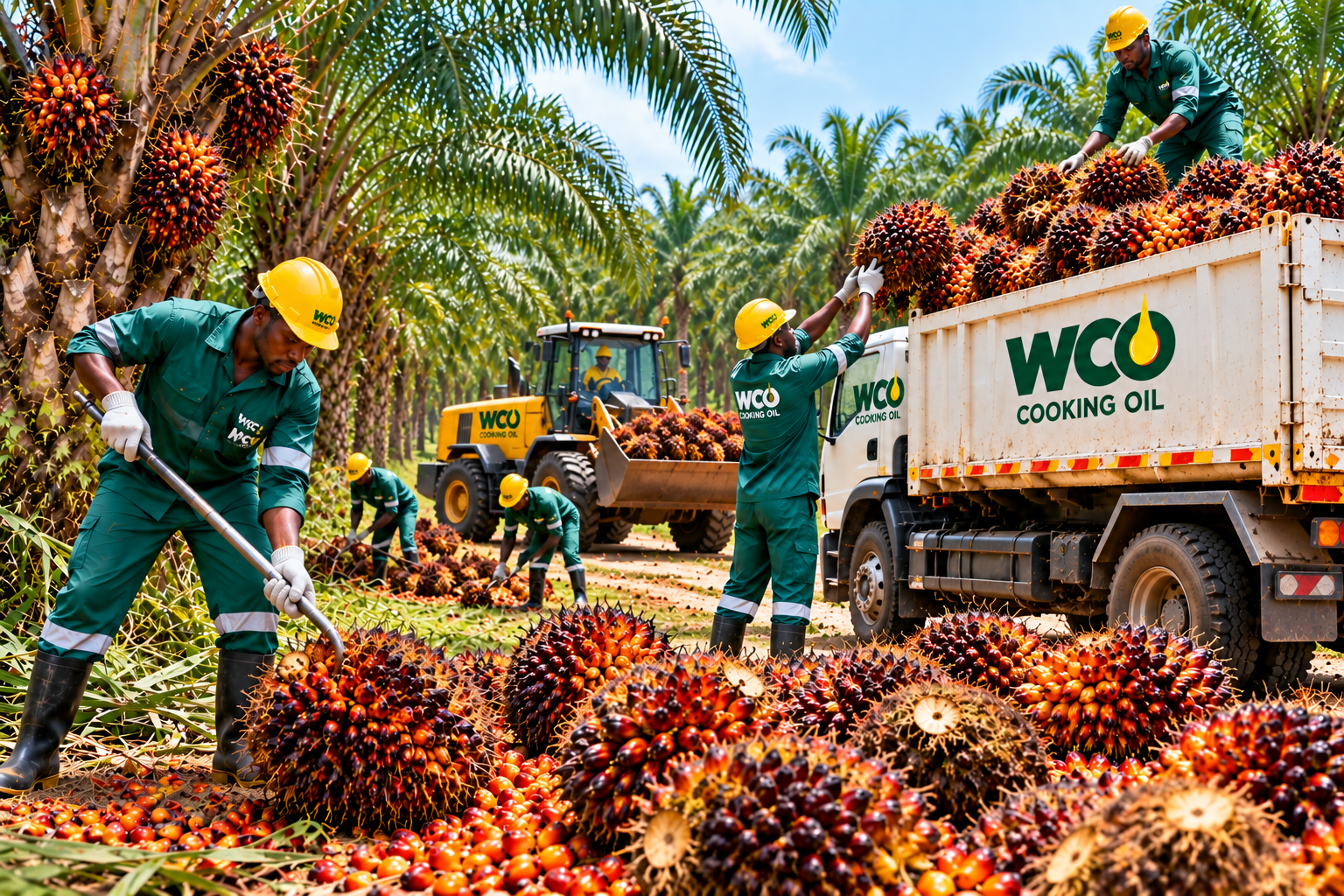
Oil palm grows only in tropical regions, and its fruit has to be milled soon after harvest, because natural enzymes in the fruit start breaking the oil down into free fatty acids. That first step therefore happens at mills close to the plantations in palm-growing regions, including Malaysia and Nigeria.
We then clarify, filter, test and pack the oil in the United States. No refining, bleaching or deodorizing is involved, so the oil keeps its natural color, flavor and carotenes.
Processing
How we make red palm oil
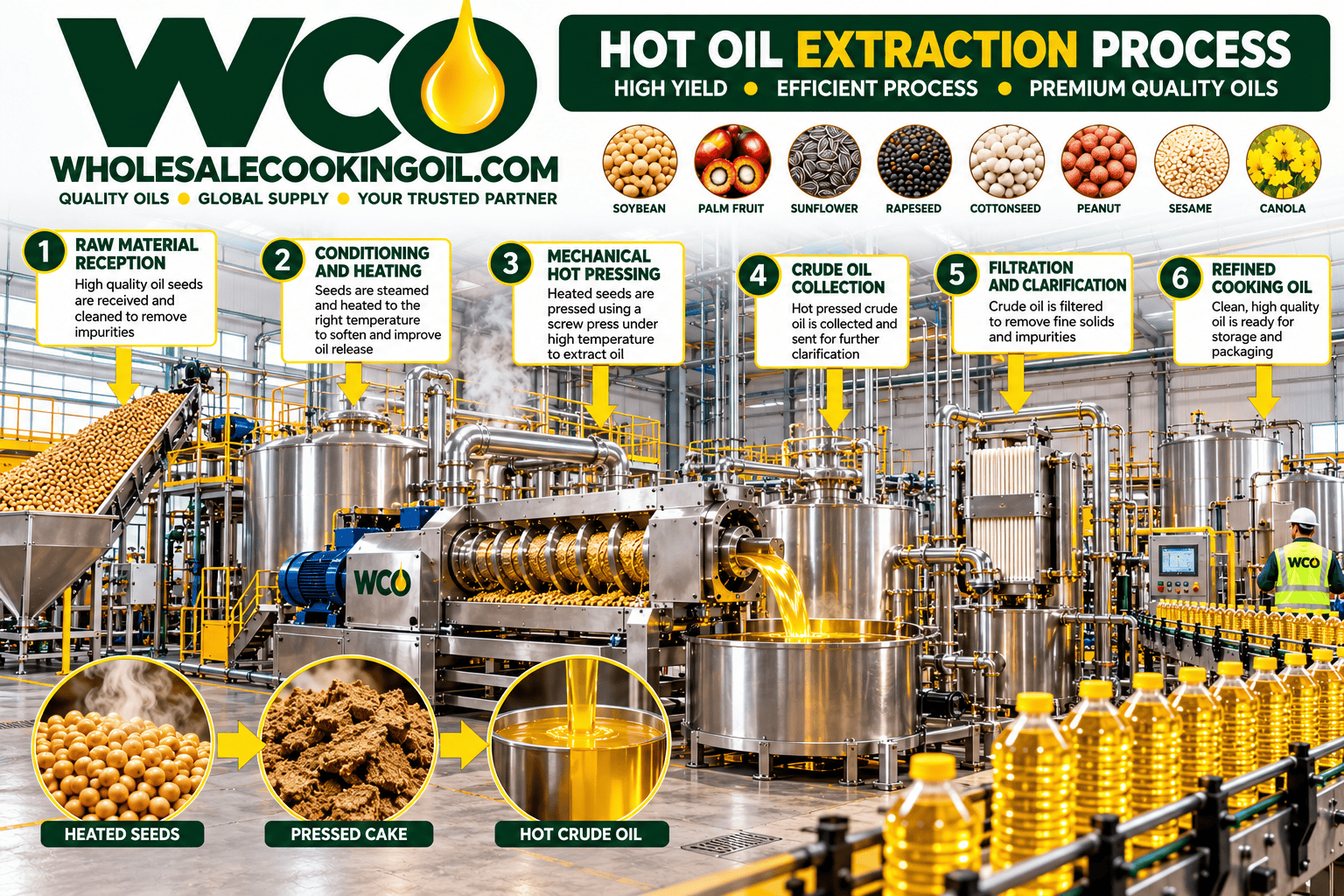
Harvesting
Ripe fruit bunches are cut and brought to the mill quickly to keep free fatty acids low.
Sterilizing and threshing
Bunches are steamed to stop enzyme activity, then the fruit is separated from the stalks.
Pressing
The fruit flesh is pressed to release the red oil.
Clarifying and drying
Water and fruit solids are separated out and the oil is dried.
Filtering
The oil is filtered to remove fine impurities while keeping its natural color and carotenes.
Testing and packing
Each batch is tested against specification before filling into bottles, jerrycans, drums, IBC totes or flexitanks.
Storage & handling
Keeping red palm oil fresh
Temperature
Store in a cool, dry place away from heat. Red palm oil is semi-solid below about 25 °C (77 °F); this is normal.
Light
Keep it away from direct sunlight. Light fades the natural color and degrades the carotenes.
Melting and mixing
It may separate into liquid and solid layers. Warm gently in a water bath or warm room and stir before use. Never heat containers directly over a flame.
Shelf life
Up to 12 months unopened. Once opened, keep containers sealed and use within a few months.
Buying wholesale
Wholesale red palm oil supplier: how ordering works
Wholesale Cooking Oil LLC supplies red palm oil in bulk direct to food businesses in the United States and worldwide. Every lot is tested and packed at our US facilities and shipped with its Certificate of Analysis. Here is what to expect when you buy red palm oil wholesale from us.
Grades
Unrefined red palm oil, Crude palm oil (CPO, for refining). Each grade is quoted separately.
Pack sizes
1L Bottles, 5L Bottles, 10L Containers, 20L Jerrycans, 200L Drums, 1,000L IBC Totes, 20,000L Flexitanks. Mix any sizes and oils on one quote.
Minimum order
1,000 L (≈264 gal) per quote, across any combination of oils and pack sizes.
Your quotation
Free and emailed to you, valid for 7 days, showing the price, any freight and other charges, the route and an estimated arrival date.
Payment
100% in advance in US dollars, by bank transfer or cryptocurrency, against the pro forma invoice in your quotation.
Dispatch and delivery
Dispatched within 24–48 hours of payment clearing. By truck across the US (usually 1–5 business days), Canada and Mexico, or by sea from five US seaports worldwide.
Documents
A Certificate of Analysis for each lot, plus the commercial invoice, packing list and transport document. Specification sheets on request.
Who we supply
Restaurants, hotels, caterers, bakeries, food manufacturers, distributors, retailers and importers.
FAQ
Red Palm Oil questions
What is the minimum order?
1,000 liters (about 264 US gallons) per quote, across any combination of oils and pack sizes. For example, one 1,000L IBC tote, five 200L drums, or 50 cases of 4 × 5L bottles.
What is the difference between red palm oil and RBD palm oil?
Red palm oil is unrefined and keeps its orange-red color, flavor, carotenes and vitamin E. RBD palm oil is refined, bleached and deodorized, so it is light yellow, odorless and neutral in taste, and is used mainly in baking, margarine and shortening.
Is red palm oil the same as palm kernel oil?
No. Red palm oil comes from the fruit flesh. Palm kernel oil comes from the seed inside the fruit, is white to pale yellow, and has a very different fatty acid profile similar to coconut oil.
Why does red palm oil go solid or separate?
Palm oil is about half saturated fat, so it thickens or sets below about 25 °C (77 °F) and can separate into layers. Warm it gently and stir before use; the quality is unaffected.
Can red palm oil be used for frying?
Yes, for sautéing and moderate frying. Long, high-temperature deep frying breaks down its carotenes and color, so for continuous frying we recommend RBD palm olein.
Is red palm oil the same as dendê oil?
Dendê oil is the Brazilian name for red palm oil, used in Bahian dishes such as moqueca, vatapá and acarajé.
Is your palm oil RSPO certified?
Tell us in your quote request if you need RSPO-certified or other sustainably certified palm products, and we will confirm availability and certification for your order.
How is the price set?
Palm oil prices move with palm harvests and global vegetable oil markets, so each quote is based on grade, pack size, total volume and delivery destination. Your quotation shows the price, any freight and other charges, the shipping terms and route, and an estimated arrival date.
Compare
Related oils
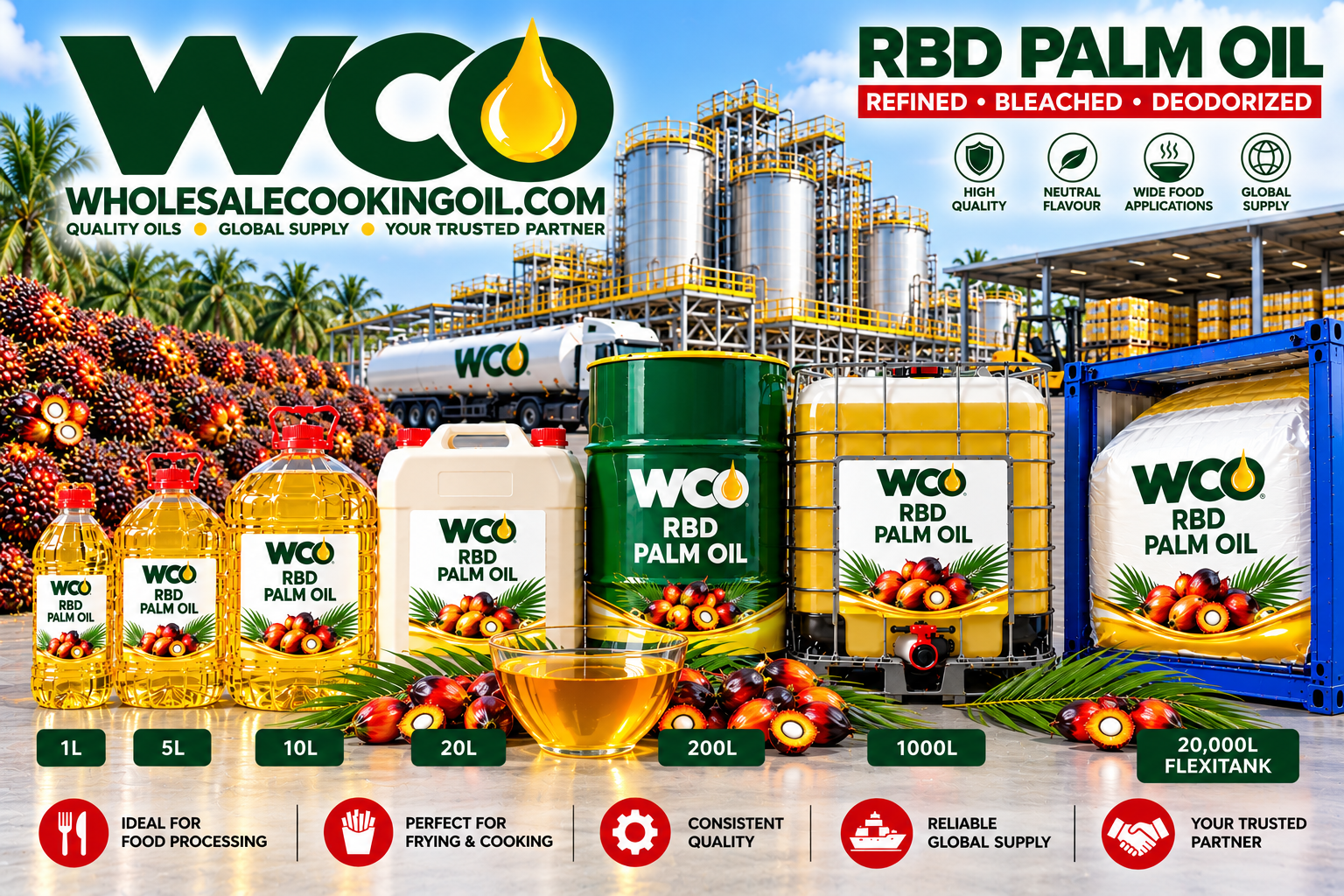
RBD Palm Oil
Bulk RBD palm oil, refined, bleached and deodorized into a light yellow, odorless, neutral fat that is semi-solid at room…
View rbd palm oil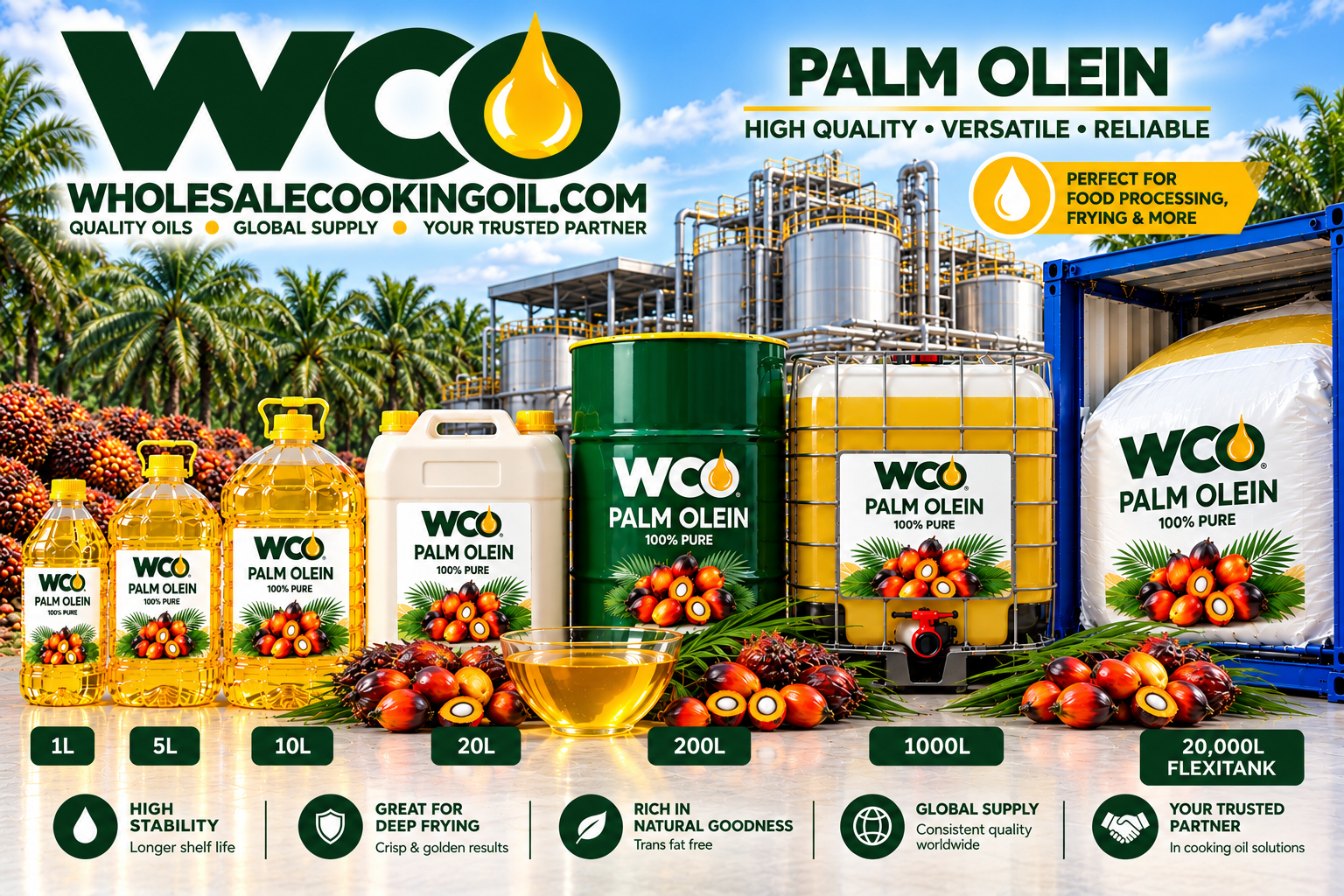
Palm Olein
Bulk RBD palm olein, the liquid fraction of palm oil and one of the world’s most widely used frying oils.…
View palm olein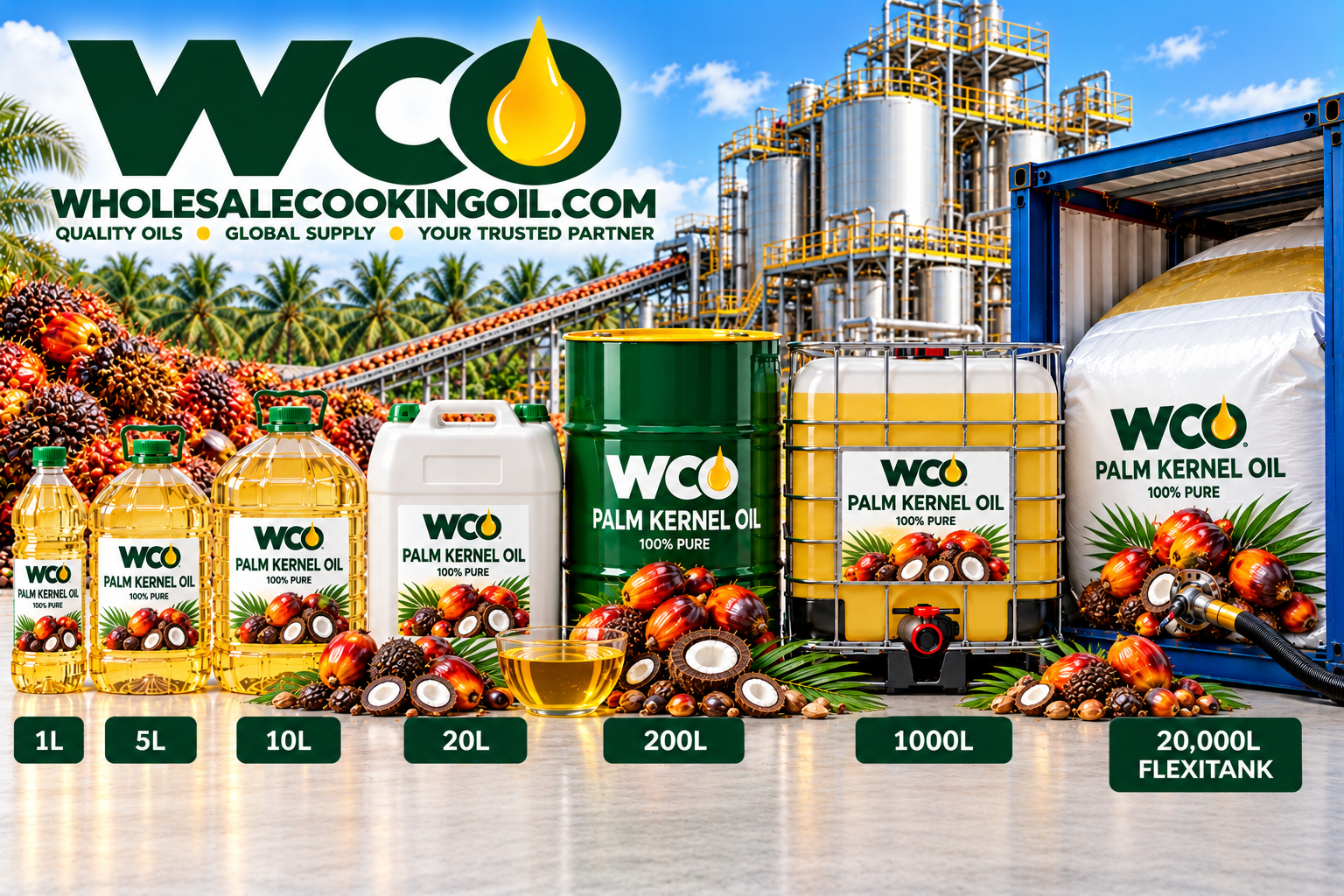
Palm Kernel Oil
Bulk palm kernel oil, a lauric fat with a sharp melt, in RBD, olein and stearin grades for confectionery coatings,…
View palm kernel oil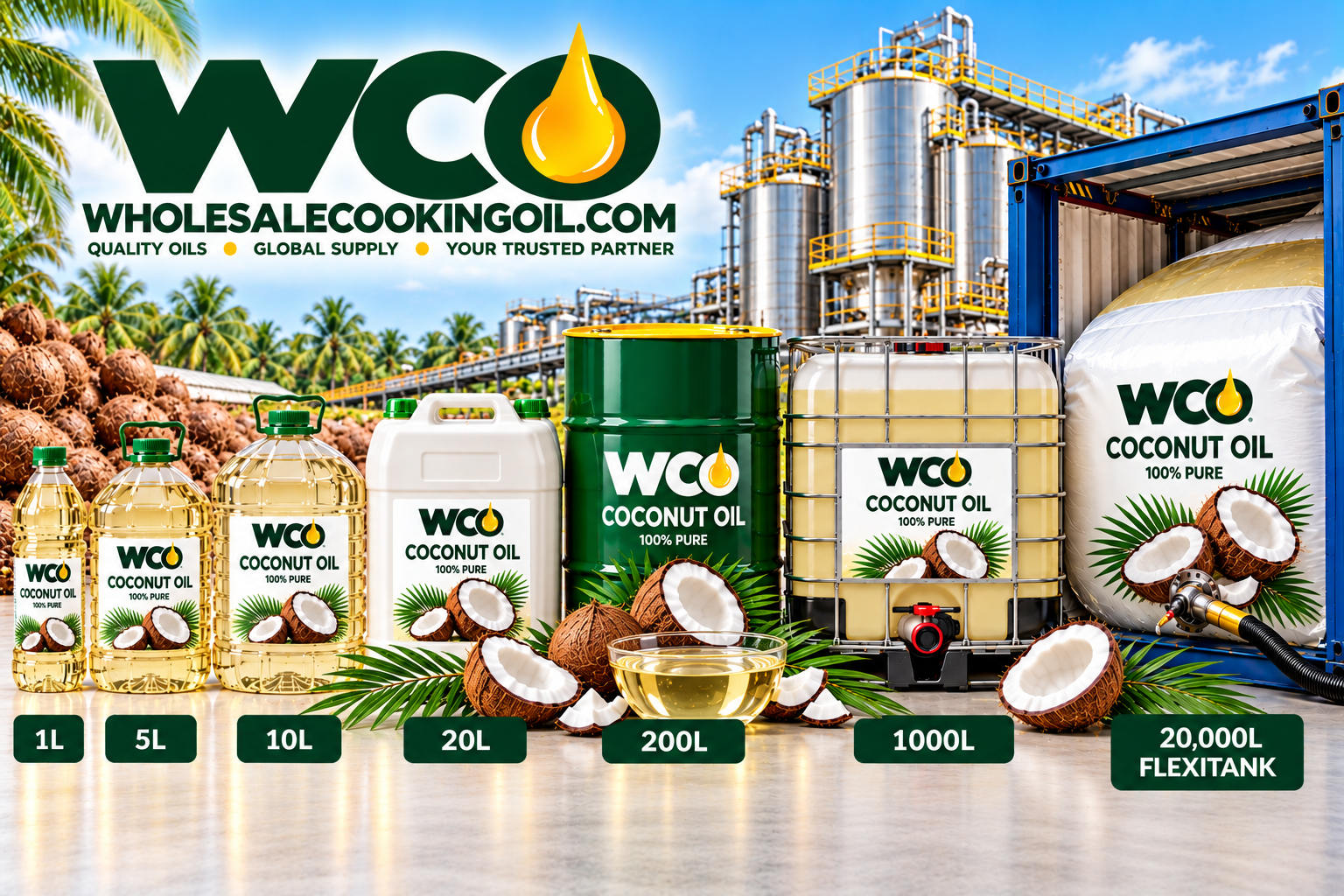
Coconut Oil
Bulk coconut oil in RBD, virgin and fractionated MCT-rich grades. A lauric oil with a sharp melt for baking, confectionery,…
View coconut oil
Peanut Oil
Bulk peanut oil: highly refined for deep frying with a neutral taste and high smoke point, plus cold-pressed and roasted…
View peanut oil
Deep Frying Oil
Bulk deep frying oil, a blend of RBD palm olein and high-oleic sunflower oil made for fryers that run all…
View deep frying oil