Industries · Restaurants & Cafés
Wholesale Cooking Oil for Restaurants and Cafés
One supplier for every oil on your line: frying oil for the fryer, olive oil for the pass, and specialty oils for dressings and finishing, in pack sizes that fit a busy kitchen.
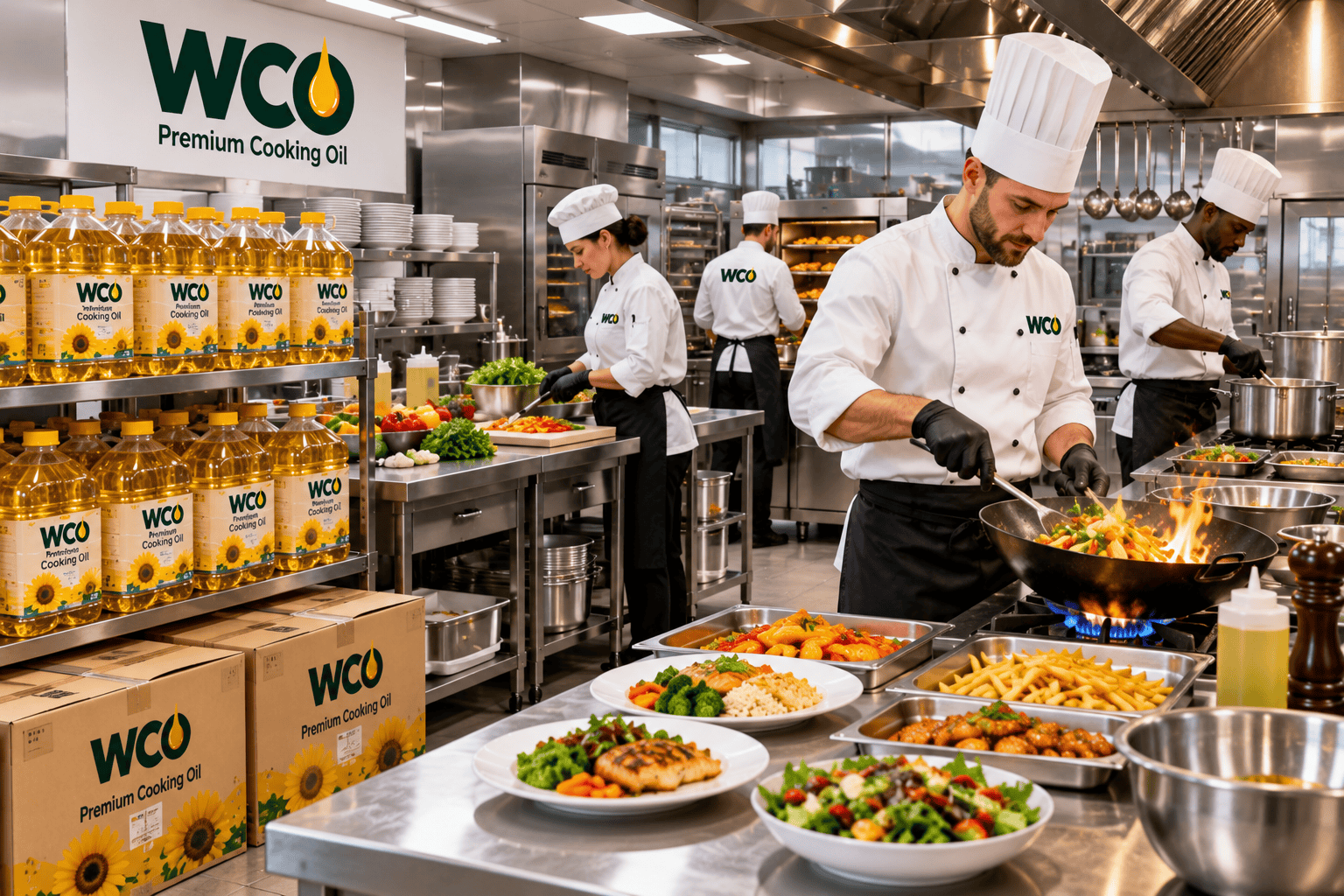
Most restaurants use three or four different oils: a long-lasting oil for the fryer, a neutral oil for the sauté station, olive oil for dressings and finishing, and often a specialty oil such as sesame, peanut or avocado for particular dishes. Buying them from one supplier on one quote keeps ordering simple and costs predictable.
We supply all of them in kitchen-friendly packs, from 5-liter bottles that pour easily by hand to 20-liter jerrycans that fill a fryer in one go. Every lot comes with a Certificate of Analysis, so you know exactly what is in the oil you cook with.
What matters
What restaurants and cafés need from an oil supplier
Long fry life
Oils that hold up through a full service save money and keep food tasting clean.
Clean, neutral taste
Oils that do not mask your food or carry flavors between batches.
Consistent quality
The same oil, lot after lot, so dishes taste the same every day.
Easy handling
Packs your team can lift, pour and store without spills.
Recommended oils
Oils for restaurants and cafés
Our most popular choices. Every oil is available in every pack size; browse all oils.
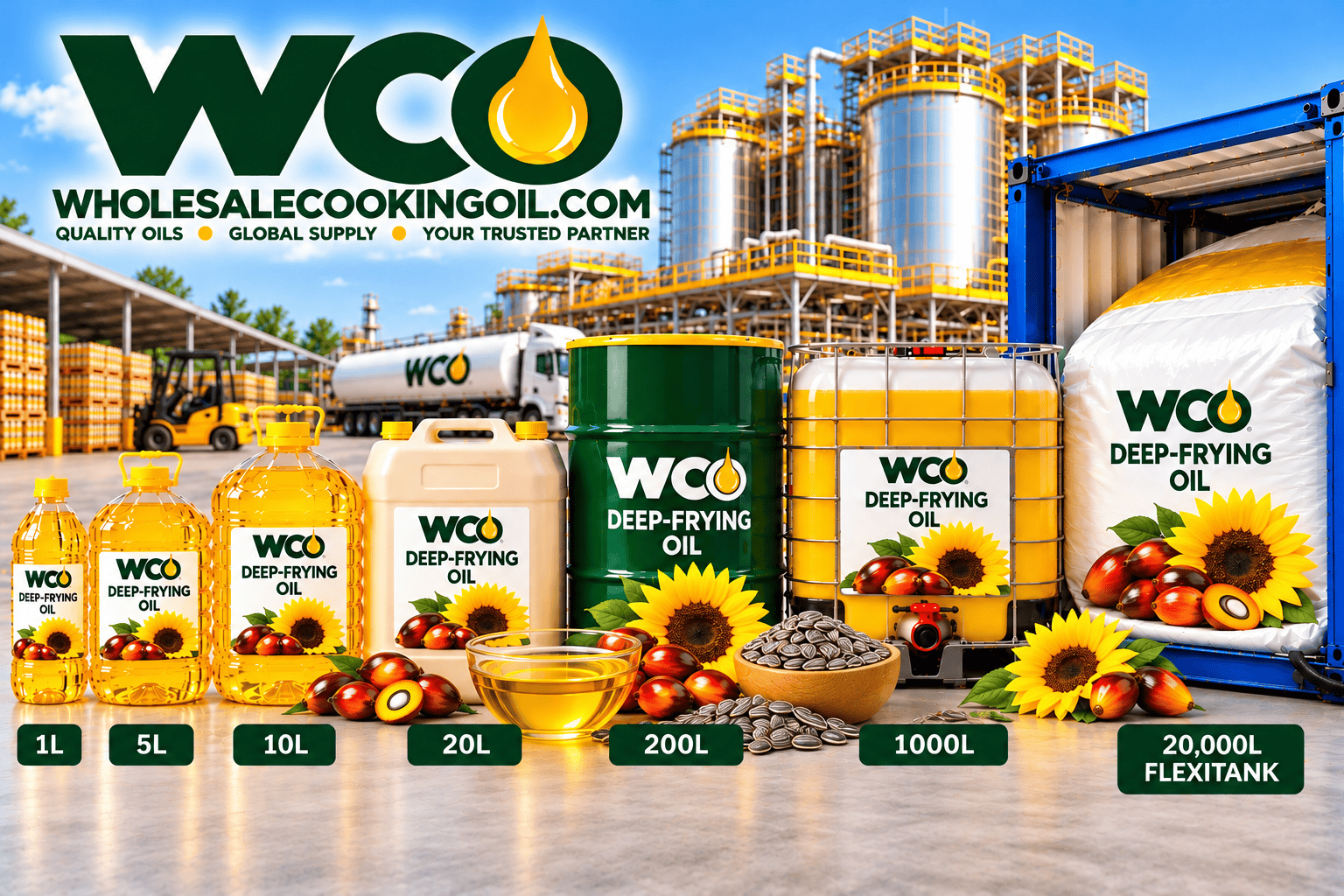
Deep Frying Oil
Built for fryers that run all day.
View oil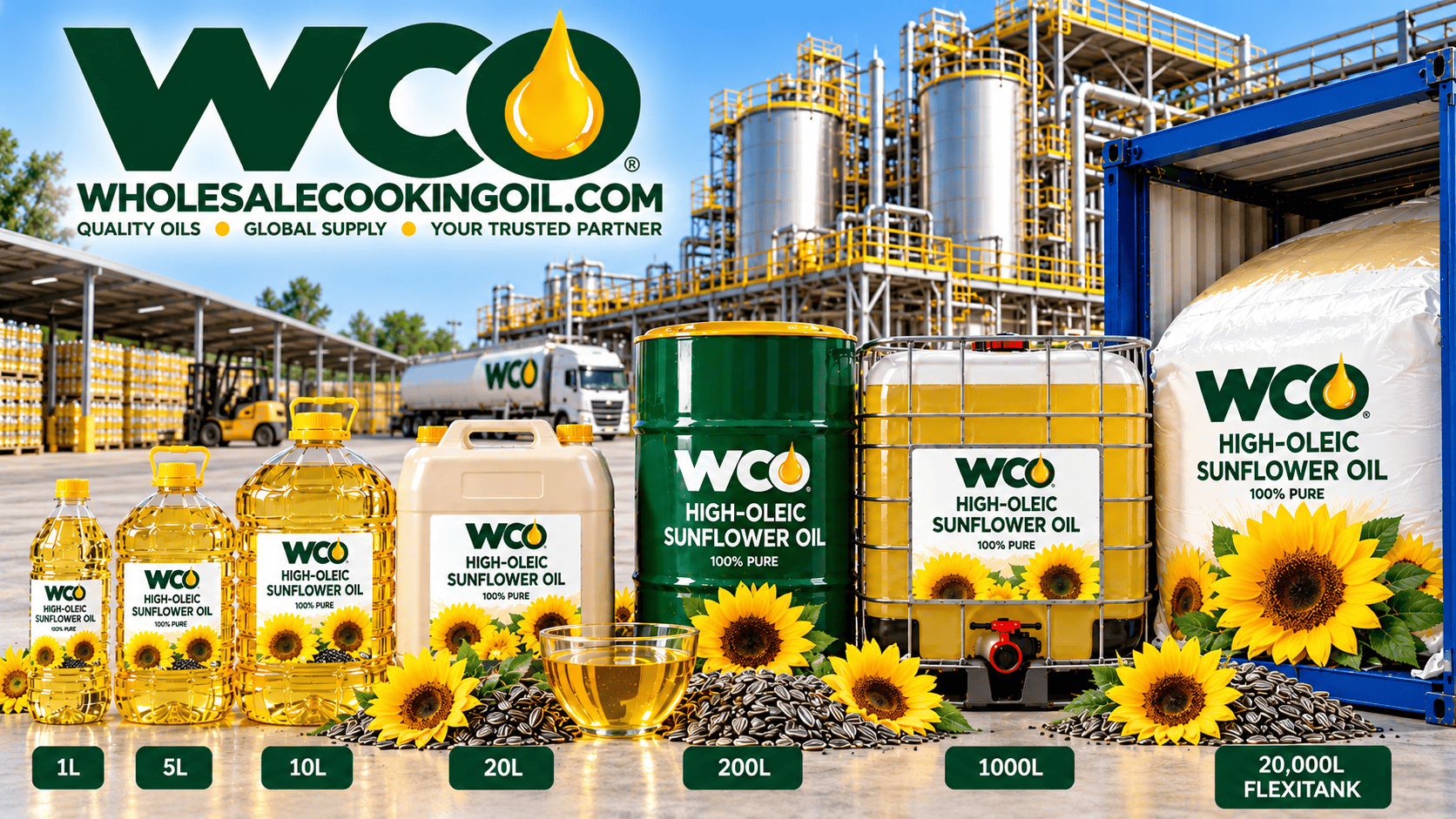
High-Oleic Sunflower Oil
Long fry life with a light, neutral taste.
View oil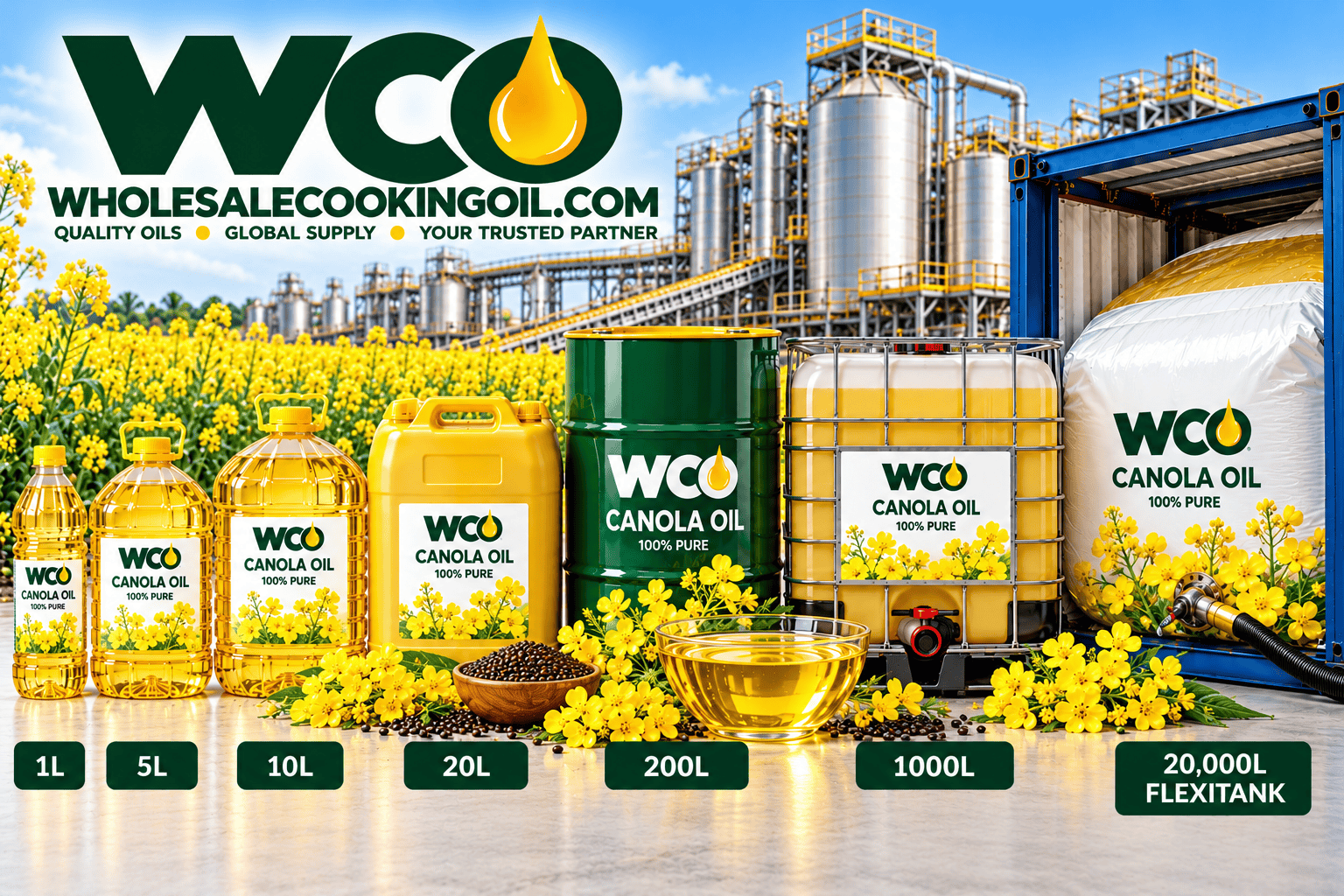
Canola Oil
An all-round neutral oil for sautéing and dressings.
View oil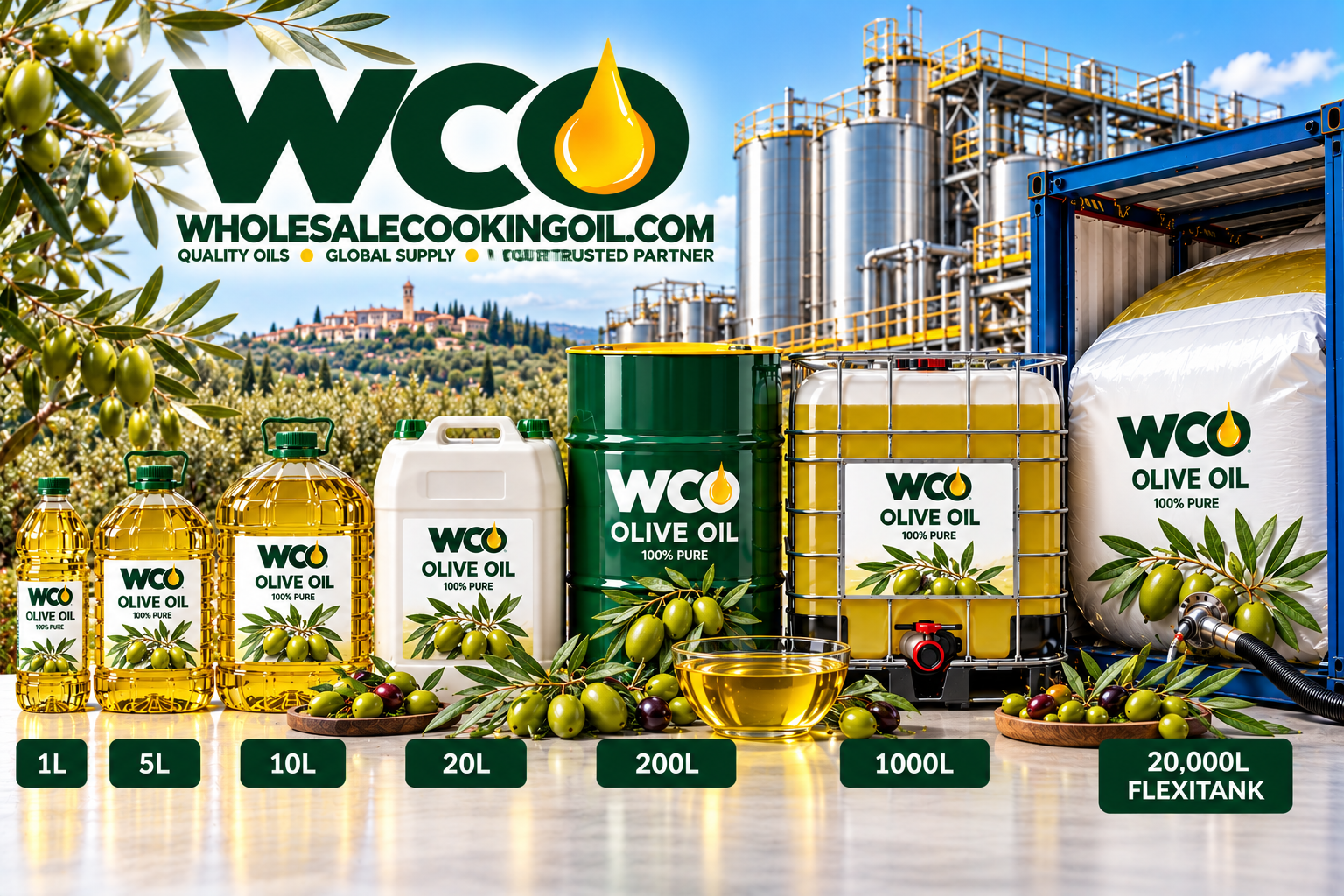
Olive Oil
Extra virgin for finishing, refined blends for cooking.
View oil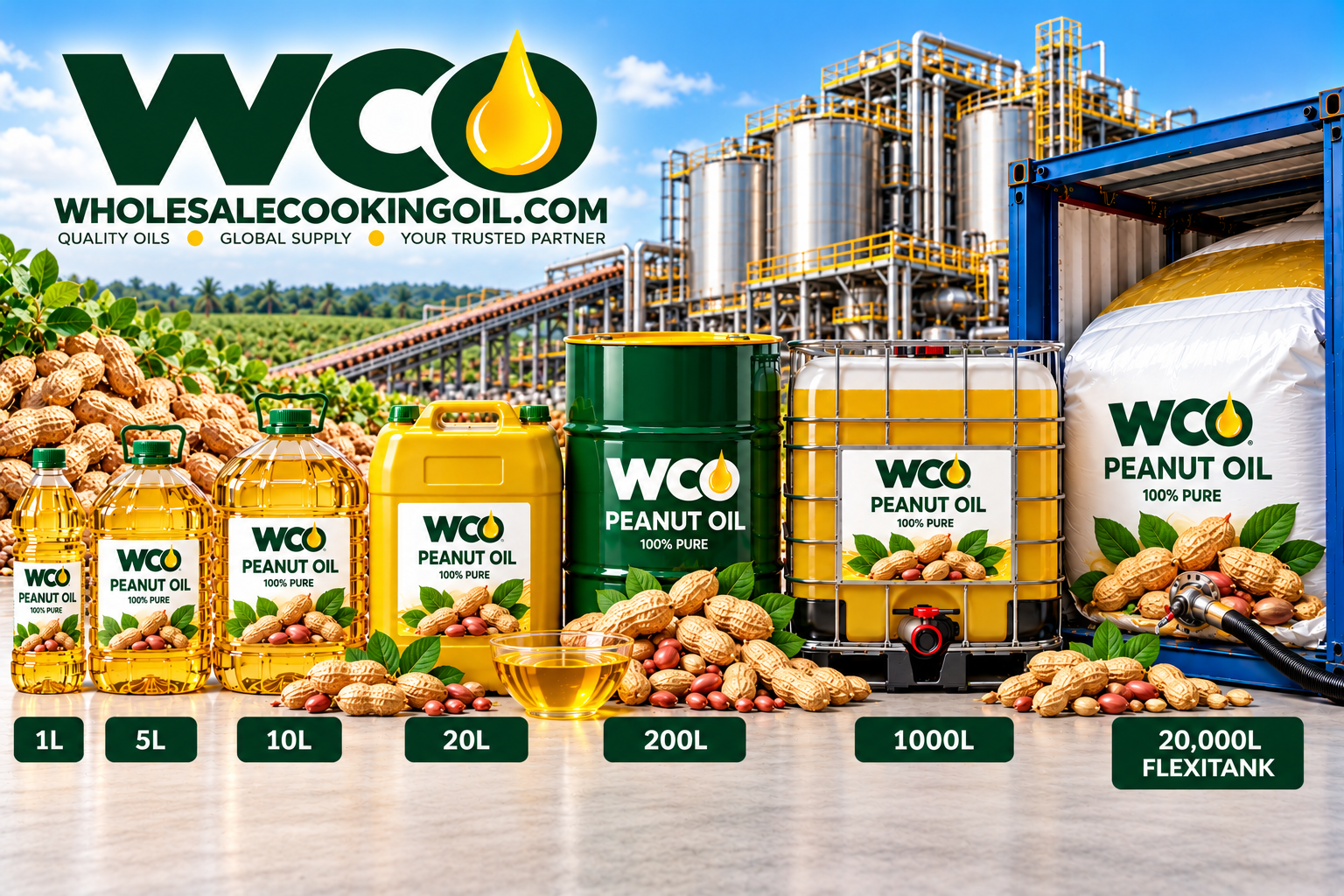
Peanut Oil
A classic for fried chicken and wok cooking.
View oil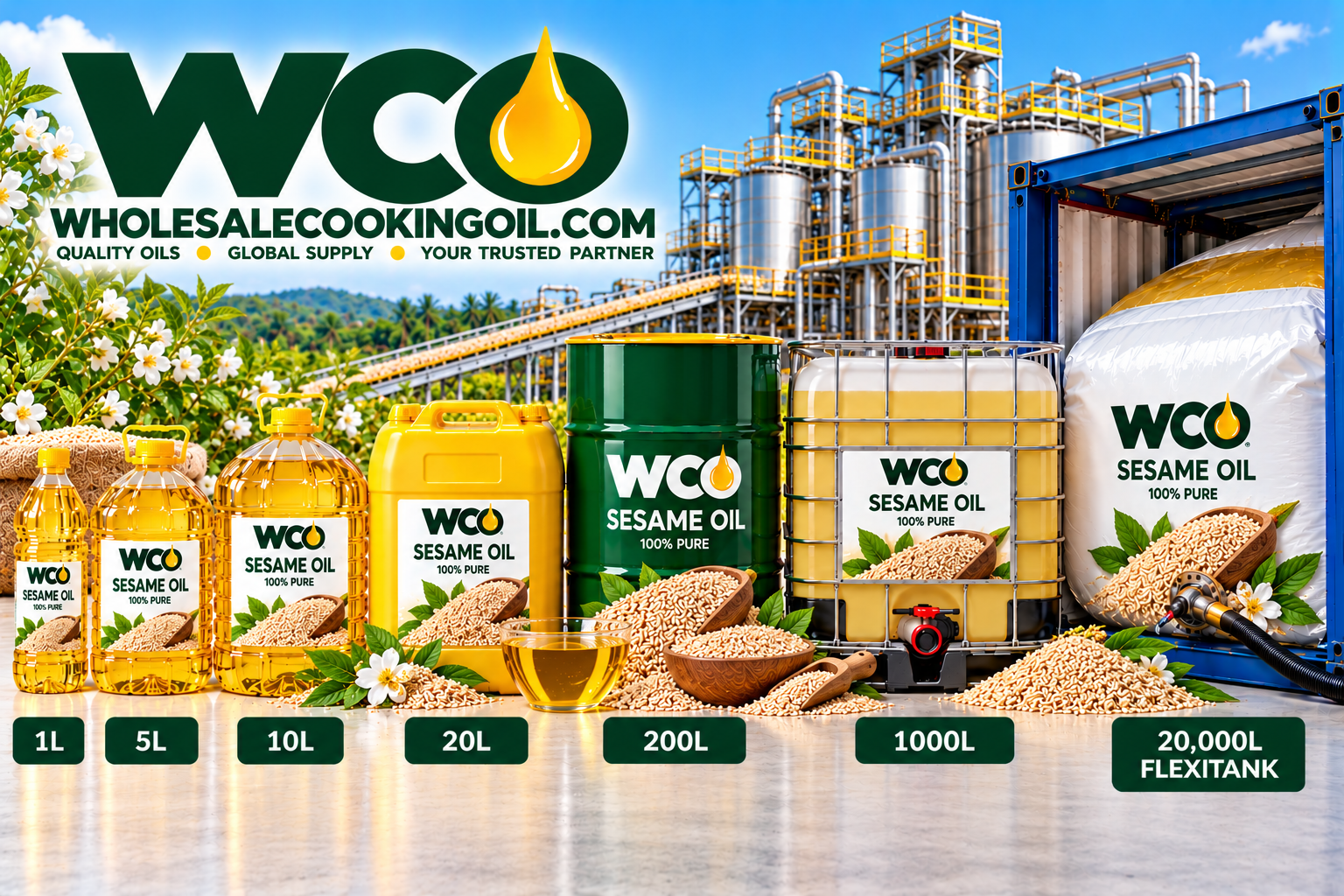
Sesame Oil
Toasted for Asian dishes, refined for stir-frying.
View oilCompare
How the oils compare
Heat stability reflects how much polyunsaturated fat and omega-3 an oil contains: the less it has, the longer it lasts in a fryer and in finished food. Smoke points are for refined grades, as stated on each oil page.
| Oil | Best for | Heat stability | Smoke point | At room temperature |
|---|---|---|---|---|
| Deep Frying Oil | Fryers running all day | Very high | About 230 °C / 450 °F | Liquid |
| High-Oleic Sunflower Oil | Frying with a light, clean taste | Very high | About 230 °C / 450 °F | Liquid |
| Peanut Oil | Fried chicken, wok cooking | High | About 230 °C / 450 °F | Liquid; may cloud when cold |
| Canola Oil | Sautéing, roasting, dressings | Moderate | About 220–230 °C / 430–450 °F | Liquid |
| Olive Oil | Dressings, finishing, Mediterranean dishes | High | Varies by grade | Liquid |
| Sesame Oil | Stir-frying (refined), seasoning (toasted) | Moderate | About 230 °C / 450 °F (refined) | Liquid |
Example
Example order: a restaurant with two fryers
Two 25-liter fryers, with the oil changed once a week and topped up with about 3 liters per fryer per day, use roughly 2 × 25 + 2 × 3 × 7 = 92 liters a week, or about 400 liters a month. Add a 5-liter bottle of olive oil and two of canola oil a week for the sauté station and dressings, and a three-month order looks like this:
| Oil | Pack | Quantity | Liters |
|---|---|---|---|
| Deep Frying Oil | 20L Jerrycans | 60 × 20L Jerrycans | 1,200 L |
| Canola Oil | 5L Bottles | 7 cases of 4 × 5L | 140 L |
| Olive Oil | 5L Bottles | 4 cases of 4 × 5L | 80 L |
| Total | 1,420 L | ||
An illustration only: your own quantities depend on your menu, equipment and volumes. The minimum is 1,000 liters per quote across all lines.
Good practice
Tips for restaurants and cafés
- Fry most foods at 170–180 °C; hotter oil breaks down faster without cooking better.
- Skim crumbs during service and filter the oil daily.
- Top up with fresh oil instead of letting the level drop.
- Replace oil when it darkens, foams, smells off or smokes at normal temperature.
- Collect used oil for recycling; never pour it down the drain.
Rules and research
What restaurants and cafés should know
- German frying-oil guidance from the DGF, widely used as a reference, treats oil with more than 24% total polar compounds as spent. Frying-oil testers measure this in seconds. Source: OFI Magazine: Regulatory update, deep frying (2024)
- India’s food regulator sets a limit of 25% total polar compounds for frying oil, advises frequent filtering, and asks businesses using more than 50 liters of frying oil a day to keep records of oil use and disposal. Source: FSSAI guidance on used cooking oil
- In the EU, food businesses frying potato products must follow acrylamide reduction steps, including frying at 160–175 °C, with a benchmark of 500 µg/kg for ready-to-eat French fries. Source: Commission Regulation (EU) 2017/2158 on acrylamide
Rules change and differ by country. Always confirm the requirements that apply where you operate.
FAQ
Questions from restaurants and cafés
Which oil is best for a restaurant fryer?
An oil low in polyunsaturated fat and omega-3 lasts longest: our deep frying oil, palm olein or a high-oleic oil. They resist breakdown at frying temperatures and keep a clean taste.
Can I order several oils at once?
Yes. Add every oil, grade and pack size you need to one quote list. The 1,000-liter minimum applies to the total.
How often should I change frying oil?
It depends on what and how much you fry. Filter daily, top up with fresh oil, and change it when it darkens, foams or smokes at normal frying temperature. Many kitchens also use a frying-oil tester.
How much frying oil does a restaurant use?
It depends on fryer size, how much you fry and how often you change the oil. As a rough guide, a 25-liter fryer changed weekly and topped up daily uses 40–50 liters a week. Use the example on this page as a starting point.
Is it cheaper to buy oil in jerrycans or bottles?
Larger packs cost less per liter. Most restaurants buy frying oil in 20L jerrycans and cooking and finishing oils in 5L bottles.
Get a quote for your business
Add the oils, grades and pack sizes you need to one list and send a single request.