Industries · Food Manufacturing
Bulk Edible Oils for Food Manufacturers
Oils to specification for sauces, dressings, ready meals, confectionery, dairy alternatives and supplements, documented lot by lot and delivered in drums, IBC totes or flexitanks.
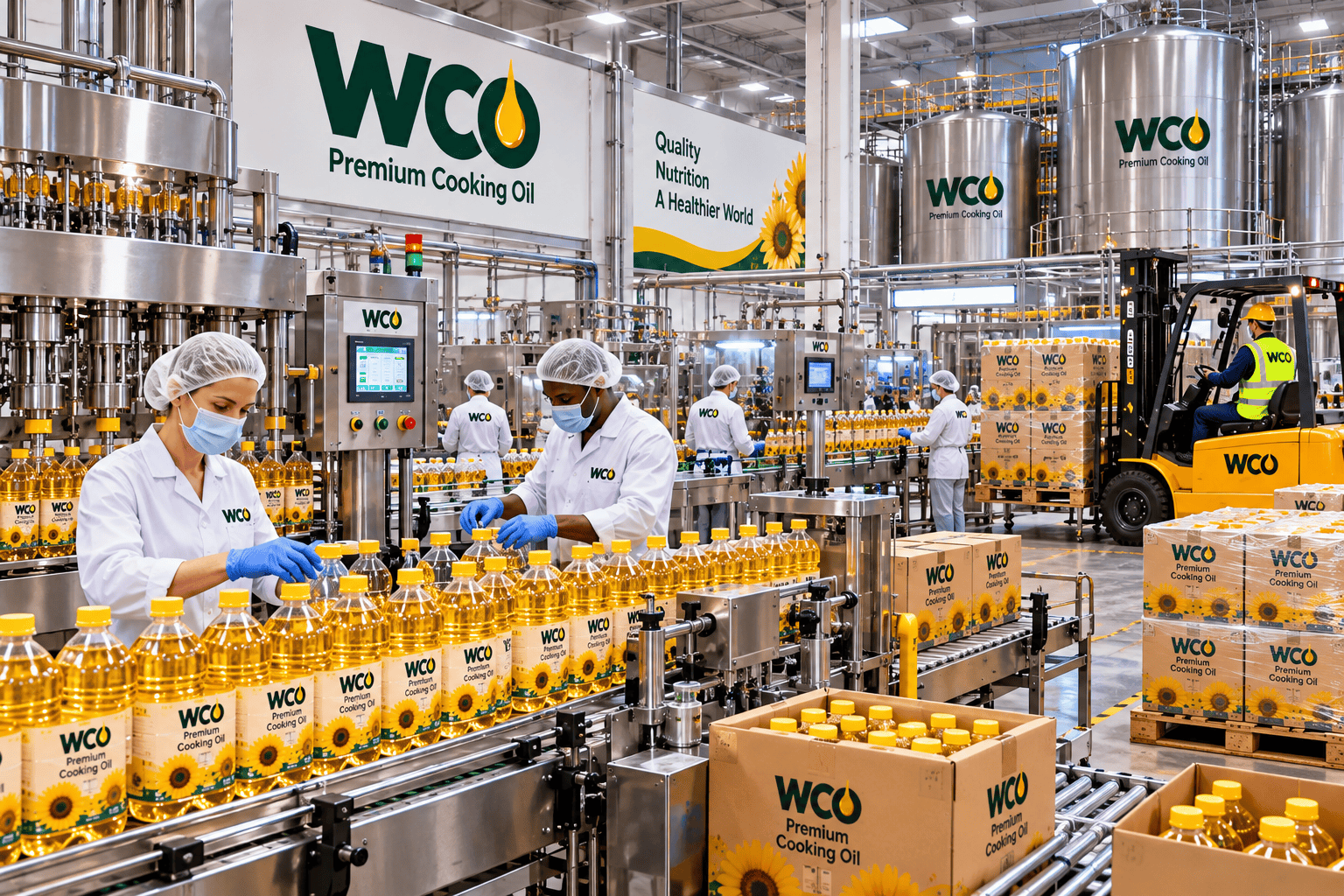
Food manufacturers buy oil as an ingredient, so the specification matters as much as the price: fatty acid profile, free fatty acids, peroxide value, color, melting point and, for some products, allergens or contaminants. Every lot we supply comes with a Certificate of Analysis against a written specification.
Our range covers refined commodity oils, high-oleic oils for stability, lauric fats such as coconut and palm kernel oil for confectionery and dairy alternatives, and specialty oils such as flaxseed, chia and black seed for functional foods and supplements.
What matters
What food manufacturers need from an oil supplier
Written specifications
Agreed limits for each oil, checked on every lot.
Consistency
The same performance in your process, batch after batch.
Documentation
Certificates of Analysis, and other documents confirmed in your quote.
Bulk formats
Drums, IBC totes and flexitanks that suit your intake.
Recommended oils
Oils for food manufacturers
Our most popular choices. Every oil is available in every pack size; browse all oils.
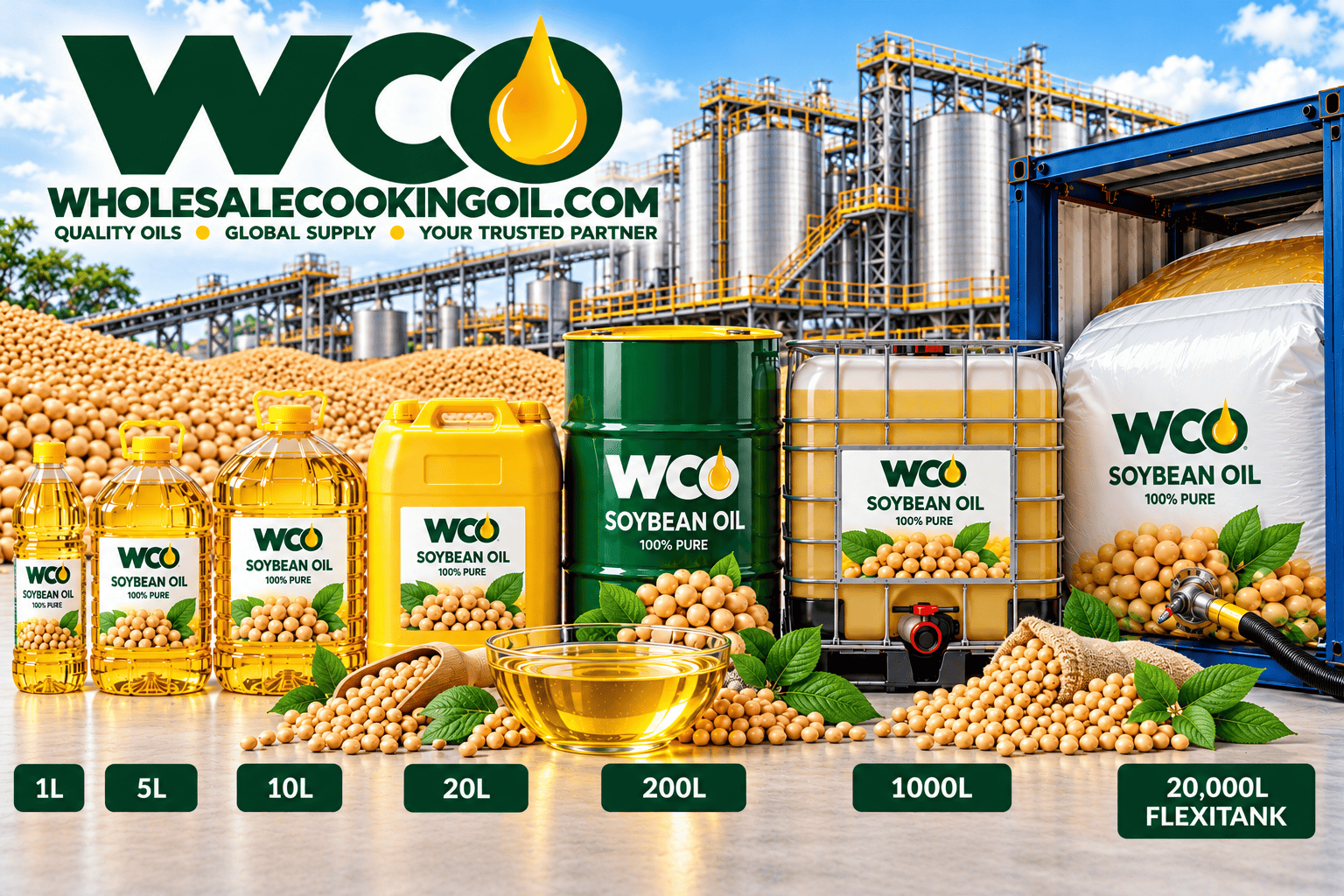
Soybean Oil
Mayonnaise, dressings and sauces.
View oil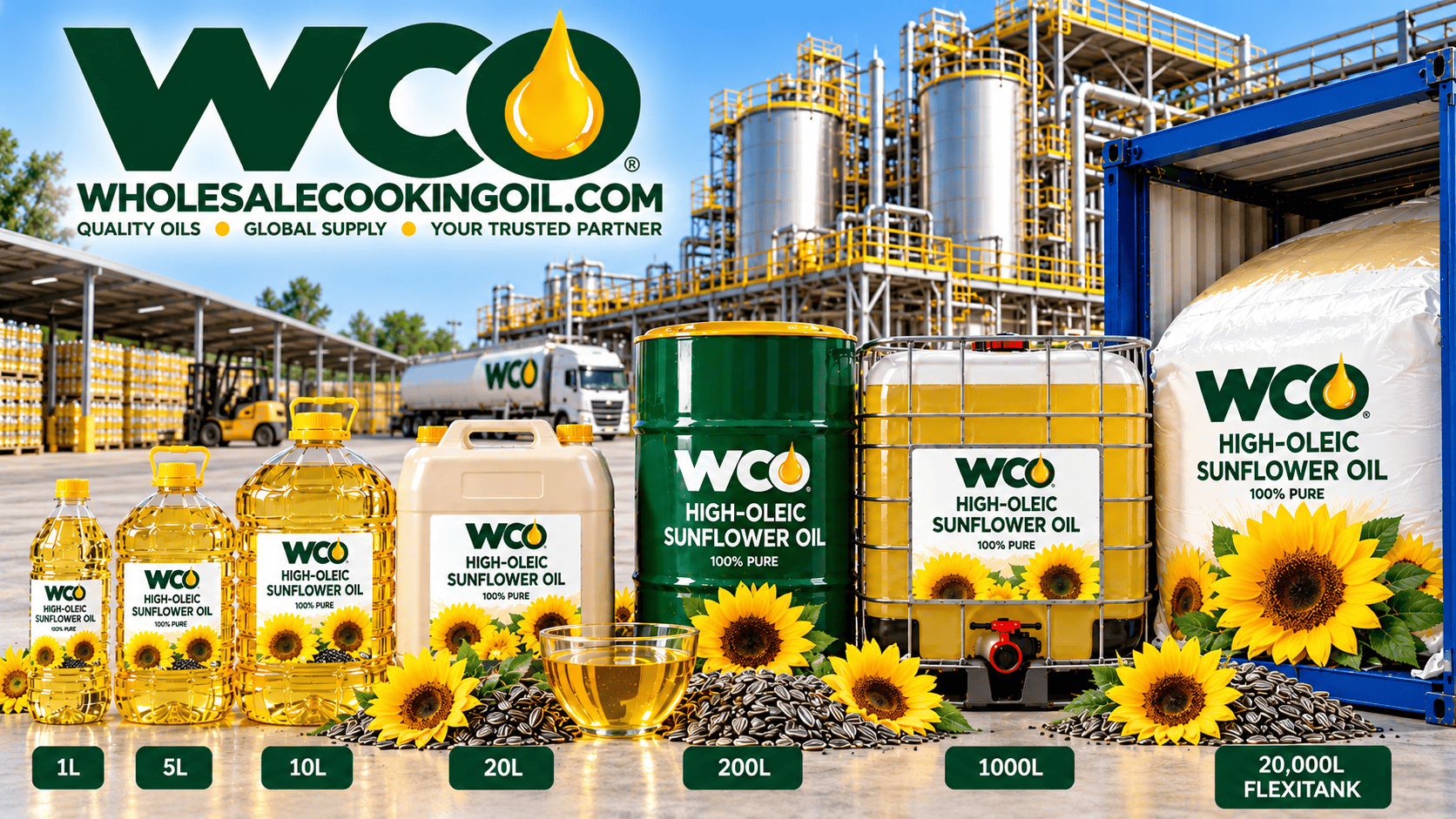
High-Oleic Sunflower Oil
Stable oil for long shelf-life products.
View oil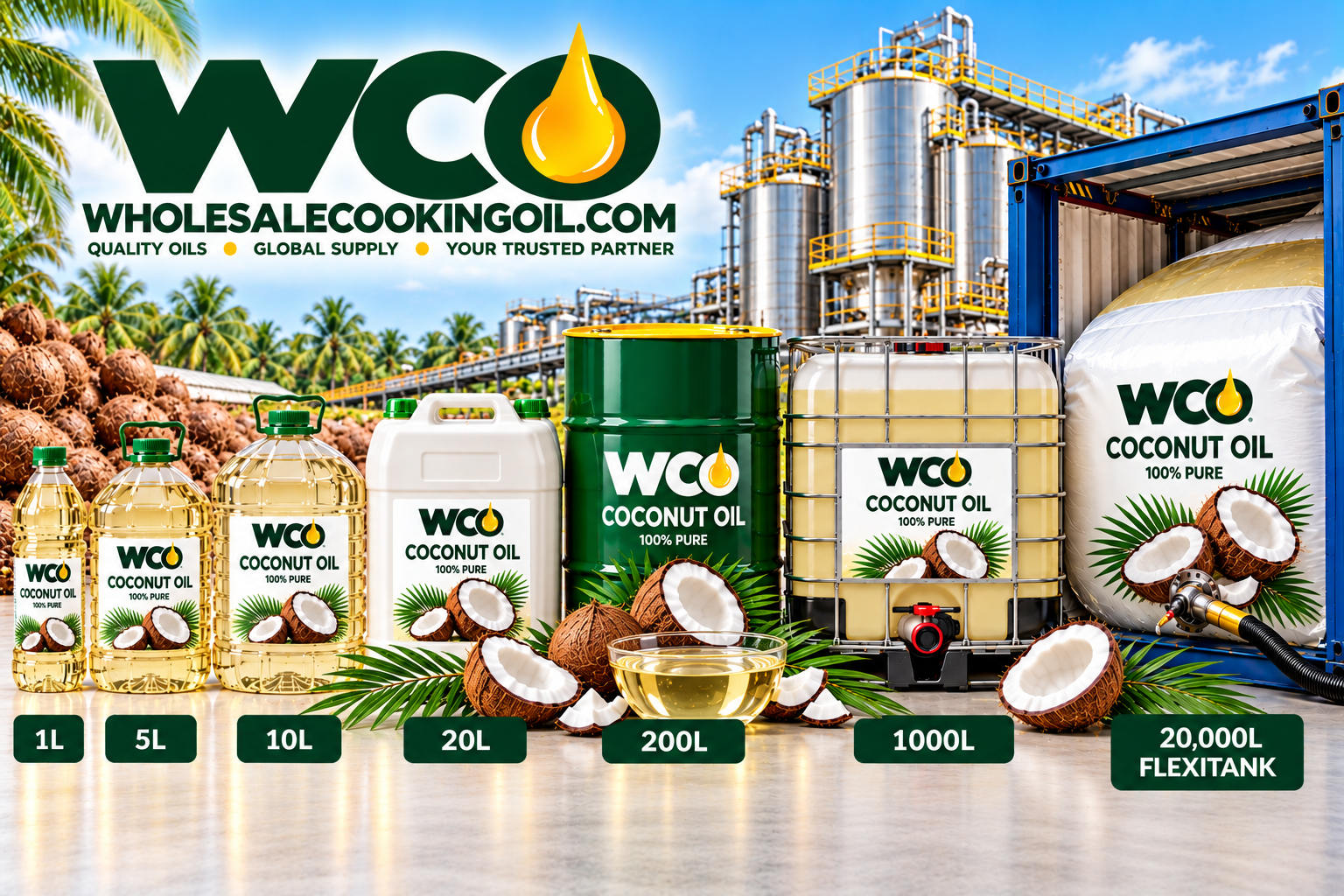
Coconut Oil
Confectionery, non-dairy creamers and plant-based foods.
View oil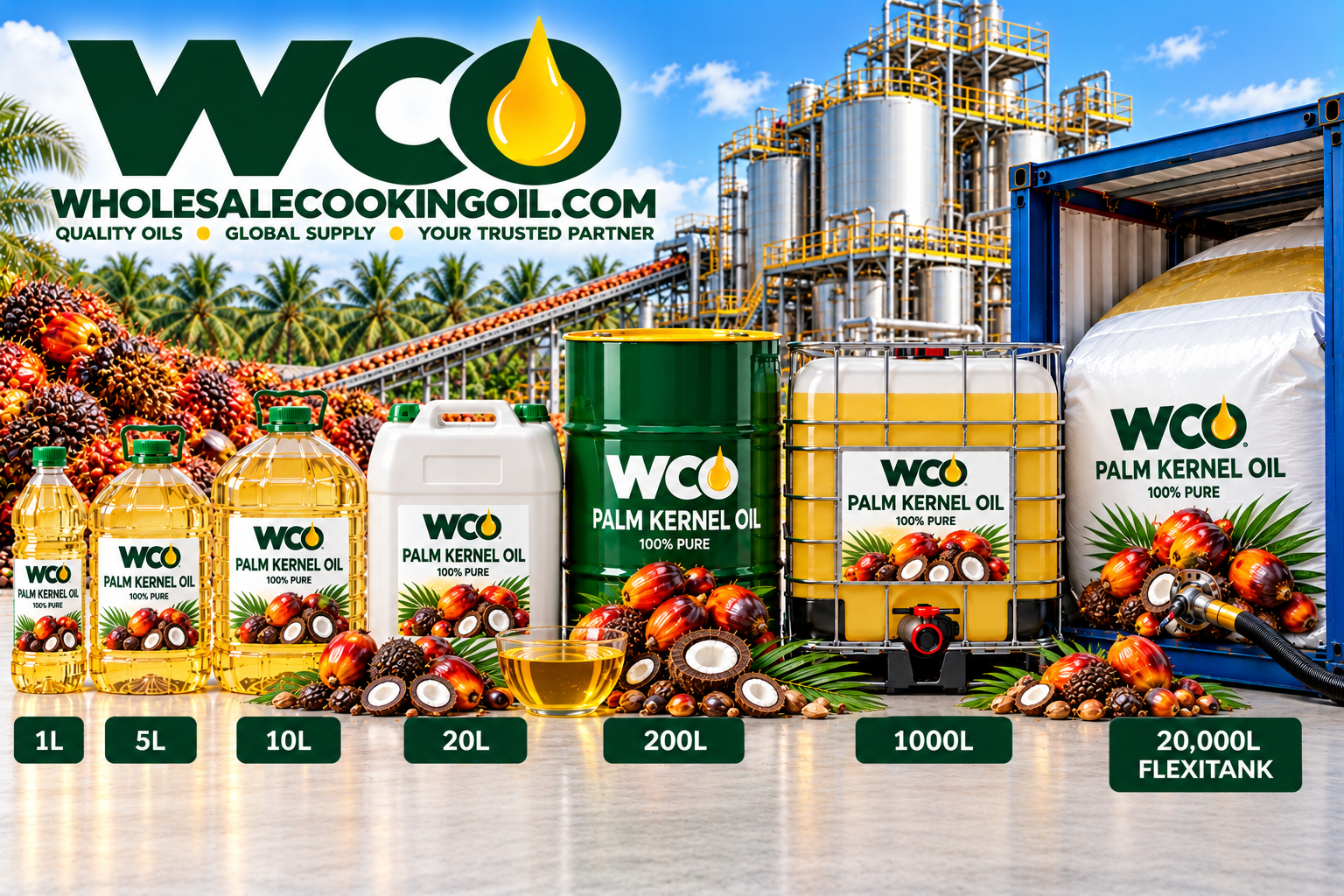
Palm Kernel Oil
Coatings, fillings and cocoa butter substitutes.
View oil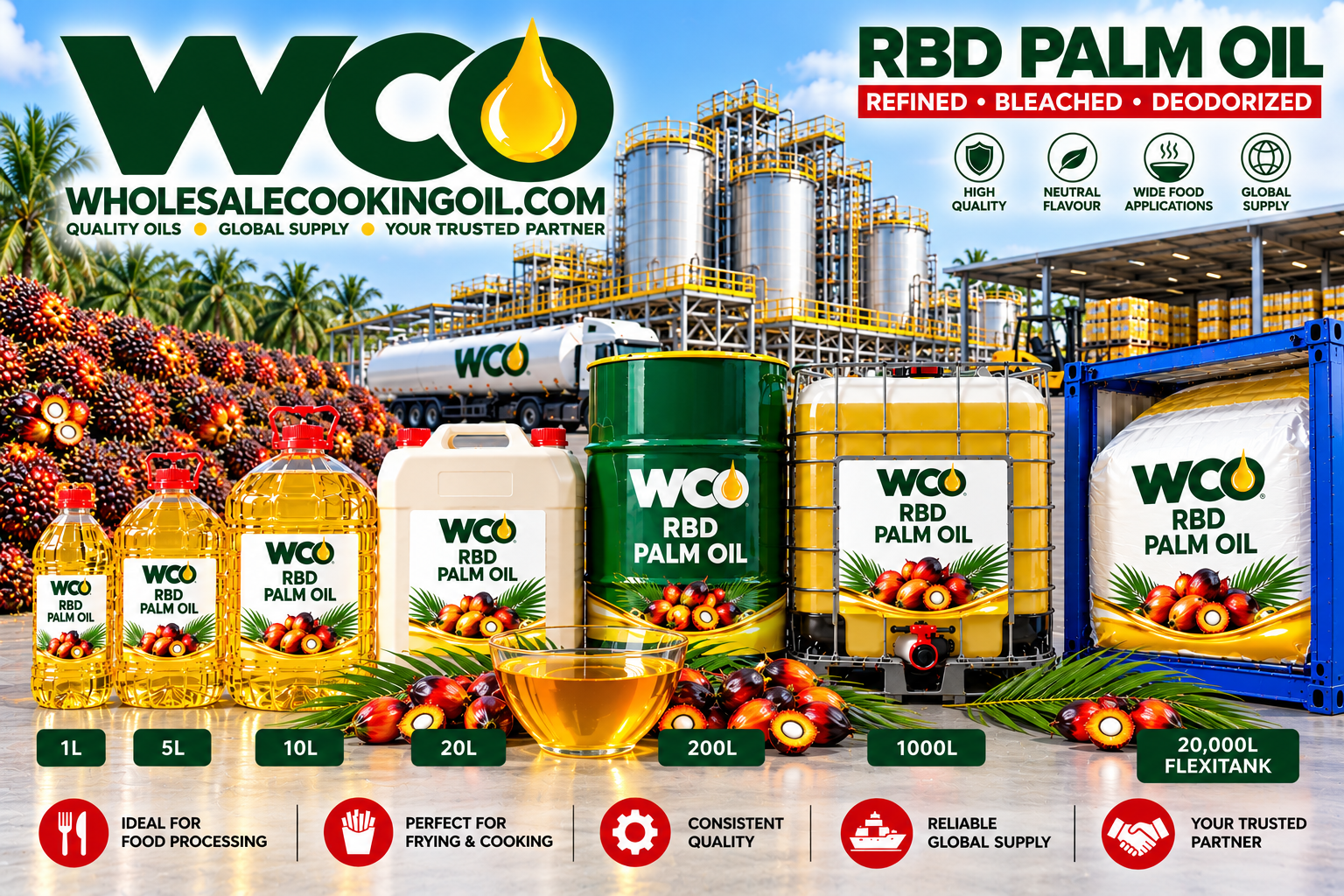
RBD Palm Oil
Shortenings, margarines and bakery fats.
View oil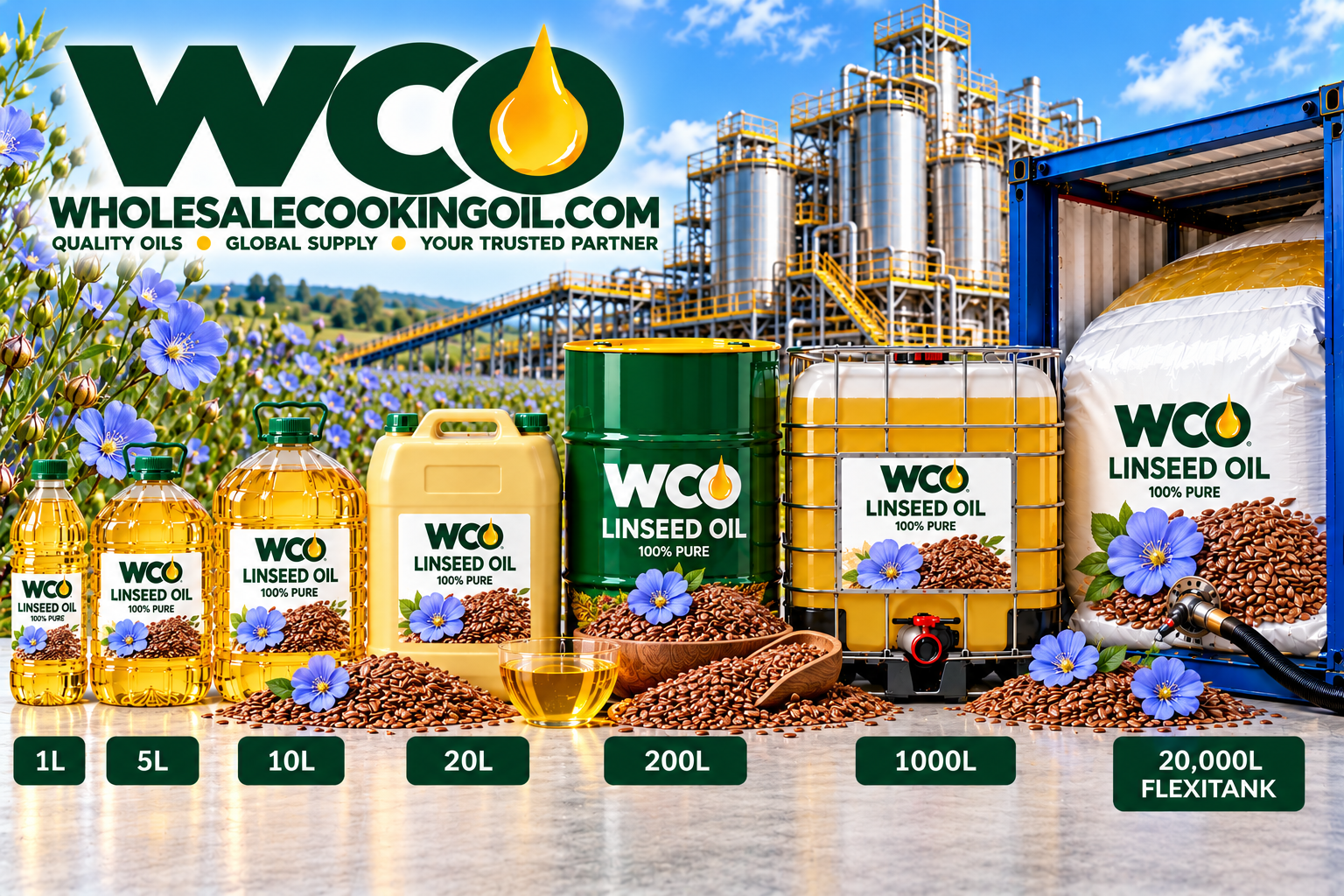
Linseed Oil
Omega-3 ingredient for functional foods.
View oilCompare
How the oils compare
Heat stability reflects how much polyunsaturated fat and omega-3 an oil contains: the less it has, the longer it lasts in a fryer and in finished food. Smoke points are for refined grades, as stated on each oil page.
| Oil | Best for | Heat stability | Smoke point | At room temperature |
|---|---|---|---|---|
| Soybean Oil | Mayonnaise, dressings, sauces | Moderate | About 230 °C / 450 °F | Liquid |
| Canola Oil | Dressings, ready meals | Moderate | About 220–230 °C / 430–450 °F | Liquid |
| High-Oleic Sunflower Oil | Long shelf-life products | Very high | About 230 °C / 450 °F | Liquid |
| Coconut Oil | Creamers, plant-based foods | Very high | About 204–232 °C / 400–450 °F | Solid below about 24 °C |
| Palm Kernel Oil | Coatings, fillings | Very high | — | Solid below about 27 °C |
| RBD Palm Oil | Margarine, shortening | Very high | About 230 °C / 450 °F | Semi-solid |
Example
Example order: a mayonnaise producer
US rules require mayonnaise to contain at least 65% vegetable oil by weight. A plant making 10 tonnes of mayonnaise a week at 75% oil uses about 7.5 tonnes of oil, roughly 8,200 liters. That is about one 20,000-liter flexitank every two and a half weeks.
| Oil | Pack | Quantity | Liters |
|---|---|---|---|
| Soybean Oil | 20,000L Flexitanks | 1 × 20,000L Flexitank | 20,000 L |
| Total | 20,000 L | ||
An illustration only: your own quantities depend on your menu, equipment and volumes. The minimum is 1,000 liters per quote across all lines.
Good practice
Tips for food manufacturers
- Agree a written specification for each oil before the first order.
- Check each delivery against its Certificate of Analysis.
- Choose high-oleic or saturated fats where long shelf life matters.
- Plan heated discharge for palm and lauric fats delivered in bulk.
Rules and research
What food manufacturers should know
- Under US food standards, mayonnaise must contain not less than 65% vegetable oil by weight. Source: US 21 CFR 169.140: Mayonnaise
- Since January 2021, the EU limits 3-MCPD and its esters to 1,250 µg/kg in coconut, maize, rapeseed, sunflower, soybean, palm kernel and olive oils, and 2,500 µg/kg in other vegetable oils. Source: Commission Regulation (EU) 2020/1322 on 3-MCPD and glycidyl esters
- In the EU, industrially produced trans fat is limited to 2 grams per 100 grams of fat in food supplied to consumers. Source: Commission Regulation (EU) 2019/649 on trans fat
Rules change and differ by country. Always confirm the requirements that apply where you operate.
FAQ
Questions from food manufacturers
Can you supply oil to our specification?
Tell us your specification in your quote request and we will confirm which oil and grade can meet it. Each lot is supplied with a Certificate of Analysis.
Which oils give the longest shelf life?
Oils low in polyunsaturated fat: high-oleic oils, palm and lauric fats. They resist oxidation in finished products.
Do you supply oils for supplements?
Yes, including flaxseed, chia seed, black seed, wheat germ and perilla oil. Claims on your product must follow the rules in your market.
Can you test for contaminants such as 3-MCPD?
Tell us the parameters you need in your quote request, and we will confirm which can be reported on the Certificate of Analysis.
How do I receive oil in flexitanks?
You need a storage tank, a pump and hoses, and for solid fats a heating supply. See our flexitank page for details.
Get a quote for your business
Add the oils, grades and pack sizes you need to one list and send a single request.