Refined · Low saturated fat · Neutral taste
Bulk Canola Oil
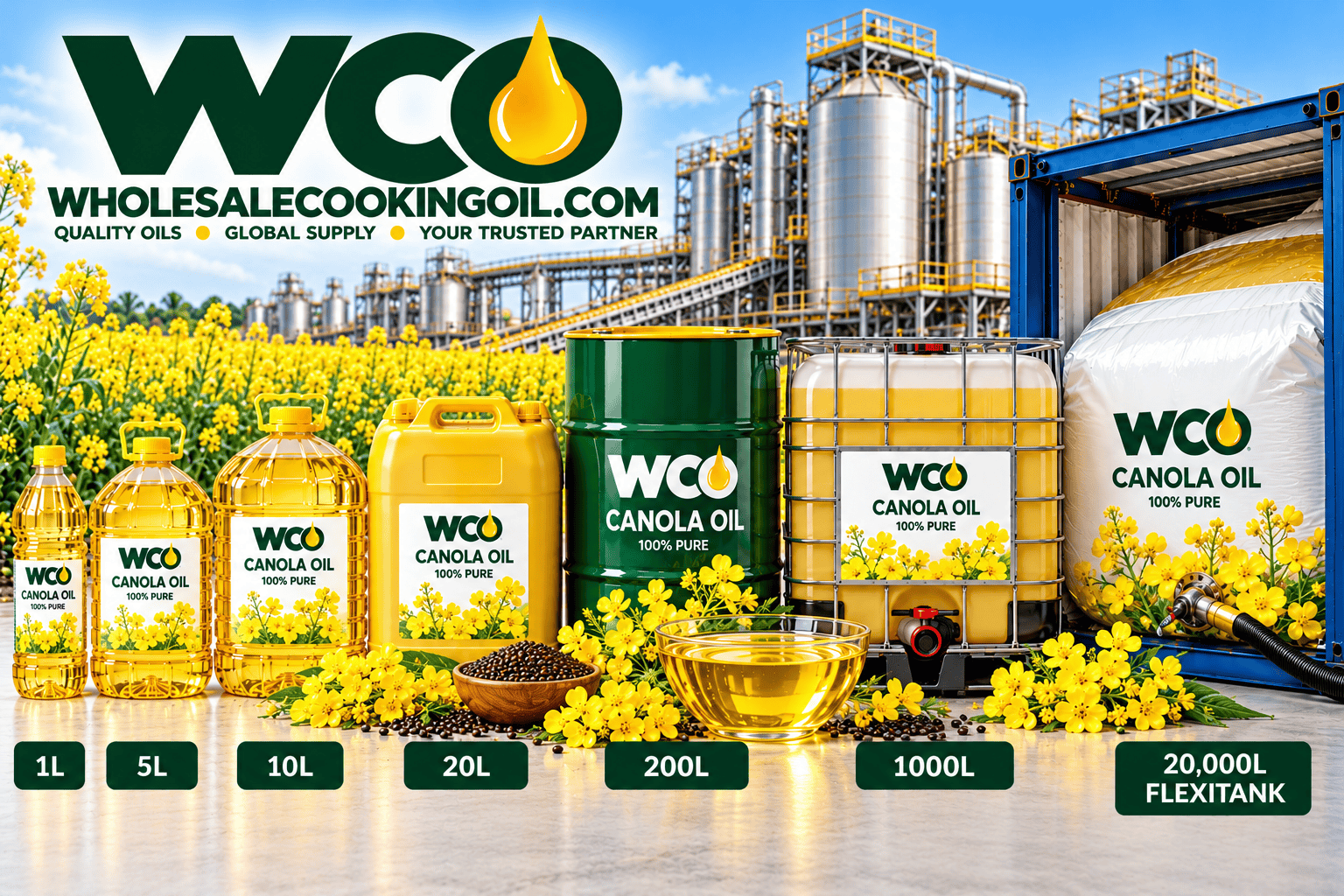
Bulk canola oil, refined for a clean, neutral taste, with the lowest saturated fat of common cooking oils and natural omega-3. Supplied from 1L bottles to 20,000L flexitanks for kitchens, bakeries and food brands.
- Grade
- Refined, bleached, deodorized
- Smoke point
- About 220–230 °C / 430–450 °F
- Saturated fat
- Under 10% typical
- Processed in
- USA
Request a quote for Canola Oil
1. Choose a grade
2. Choose a pack size
Minimum 1,000 L (≈264 gal) per quote — mix any oils and pack sizes. Nothing to pay now: we reply by email with a quotation showing the price, shipping terms and estimated arrival date.
A light, all-purpose oil with a better fat profile
Bulk canola oil has become a default cooking oil for kitchens and food brands that want a neutral, all-purpose oil with a cleaner nutrition label. It has the lowest saturated fat of the common cooking oils, a high share of monounsaturated fat, and a useful amount of plant omega-3, all in an oil that tastes of almost nothing and handles everyday frying and baking.
Our canola oil is refined, bleached and deodorized, processed and packed in the United States from US-grown and imported canola seed, and supplied from 1-liter bottles to 20,000-liter flexitanks.
Canola oil and rapeseed oil: what is the difference?
Canola was developed by plant breeders in Canada in the 1970s from rapeseed. Traditional rapeseed oil can be high in erucic acid, while canola varieties are bred to be low in erucic acid and in glucosinolates. In the United States, low erucic acid rapeseed oil used in food may contain no more than 2% erucic acid, which is why our specification lists erucic acid separately.
Why buyers choose canola oil
- Low saturated fat. Palmitic and stearic acid together are typically under 10% of its fatty acids.
- Rich in monounsaturated fat. Oleic acid typically makes up 51–70% of its fatty acids.
- Plant omega-3. Alpha-linolenic acid (ALA) is typically 5–14%, more than in most common cooking oils.
- Neutral taste and light color. It works in savory cooking, baking and cold dressings without changing the flavor of the food.
Canola oil for frying
Refined canola oil has a smoke point of roughly 220–230 °C (430–450 °F) and is widely used for pan frying, sautéing and deep frying. Because it contains omega-3, standard canola oil breaks down faster than high-oleic oils in fryers running continuously. Kitchens that fry all day often move to high-oleic canola oil, which keeps the same clean taste while lasting much longer in the fryer.
How bulk canola oil is priced
Canola oil prices follow seed harvests and global vegetable oil markets. We price each order on grade, pack size, total volume and destination, and larger formats such as IBC totes and flexitanks cost less per liter. The minimum is 1,000 liters per quote, and you can combine canola oil with any of our other oils.
Technical data
Canola Oil grades and specifications
Available grades
| Grade | Description |
|---|---|
| Refined (RBD) | Neutral taste and light color. The standard grade for cooking, baking and food production. |
| Expeller-pressed, refined | Mechanically pressed without chemical solvents, then refined. For "no solvents" product positioning. |
| Cold-pressed (virgin) | Pressed below 50 °C and unrefined, with a mild nutty flavor. For dressings and cold use. |
| Crude degummed (for refining) | Unrefined oil for refiners and further processing. Not for direct consumption. |
Each grade is priced separately. The specifications below are for Refined (RBD); specifications for other grades are supplied with your quote.
Quality specification
| Parameter | Specification |
|---|---|
| Appearance (20 °C) | Clear, bright, free of sediment |
| Odor and taste | Bland, neutral, free of foreign odors |
| Color (Lovibond, 5¼ in. cell) | 2.0 red max. |
| Free fatty acids (as oleic acid) | 0.10% max. |
| Peroxide value (at packing) | 1.0 meq O₂/kg max. |
| Moisture and volatile matter | 0.05% max. |
| Insoluble impurities | 0.05% max. |
| Erucic acid (C22:1) | 2.0% max. of total fatty acids |
| Cold test (0 °C, 5.5 hours) | Clear |
| Iodine value (Wijs) | 105–126 |
| Saponification value | 182–193 mg KOH/g |
| Relative density (20 °C) | 0.914–0.920 |
| Refractive index (40 °C) | 1.465–1.467 |
| Trans fatty acids | 1.0% max. of total fatty acids |
| Smoke point | About 220–230 °C / 430–450 °F |
| Shelf life (unopened) | Up to 18 months; 12 months for IBC and flexitank deliveries |
Typical specification for our standard refined grade. Identity values follow the Codex Alimentarius standard for low erucic acid rapeseed oil. Values for each lot are confirmed on the Certificate of Analysis supplied with your order.
Fatty acid profile
| Fatty acid | % of total fatty acids |
|---|---|
| Palmitic acid (C16:0) | 2.5–7.0 |
| Stearic acid (C18:0) | 0.8–3.0 |
| Oleic acid (C18:1) | 51.0–70.0 |
| Linoleic acid (C18:2) | 15.0–30.0 |
| Alpha-linolenic acid (C18:3) | 5.0–14.0 |
| Gadoleic acid (C20:1) | 0.1–4.3 |
| Erucic acid (C22:1) | 2.0 max. |
Ranges for low erucic acid rapeseed oil from the Codex Alimentarius Standard for Named Vegetable Oils (CXS 210-1999). Your lot results are shown on the Certificate of Analysis.
Source: Codex Alimentarius Standard for Named Vegetable Oils (FAO)
Applications
What canola oil is used for
Restaurants and cafés
A light all-purpose oil for sautéing, roasting, pan frying and dressings, with a cleaner nutrition profile to put on the menu.
Learn more about Restaurants and cafésBakeries
Neutral and light in color, canola oil works in cakes, muffins, quick breads and as a pan release oil.
Learn more about BakeriesDressings and sauces
Its mild taste and clarity make it a popular base for vinaigrettes, mayonnaise and cold sauces.
Learn more about Dressings and saucesHealth-focused food brands
Low saturated fat and natural omega-3 support better-for-you product positioning.
Learn more about Health-focused food brandsHotels and catering
One versatile oil for frying, baking and cold preparation across large kitchens.
Learn more about Hotels and cateringRetail and private label
1L and 5L bottles for supermarket shelves, or packed under your own brand.
Learn more about Retail and private labelPackaging
Canola Oil pack sizes
Combine canola oil with any other oils on the same quote, for example 1L bottles for retail and 20L jerrycans for your kitchens.
| Pack size | US gallons | Ordered as | Liters per order unit |
|---|---|---|---|
| 1L Bottles | 0.26 gal | Case of 12 × 1L | 12 L |
| 5L Bottles | 1.3 gal | Case of 4 × 5L | 20 L |
| 10L Containers | 2.6 gal | Case of 2 × 10L | 20 L |
| 20L Jerrycans | 5.3 gal | Per jerrycan | 20 L |
| 200L Drums | 52.8 gal | Per drum | 200 L |
| 1,000L IBC Totes | 264 gal | Per IBC tote | 1,000 L |
| 20,000L Flexitanks | 5,283 gal | Per flexitank (20ft container) | 20,000 L |
Sourcing
From canola fields to finished oil
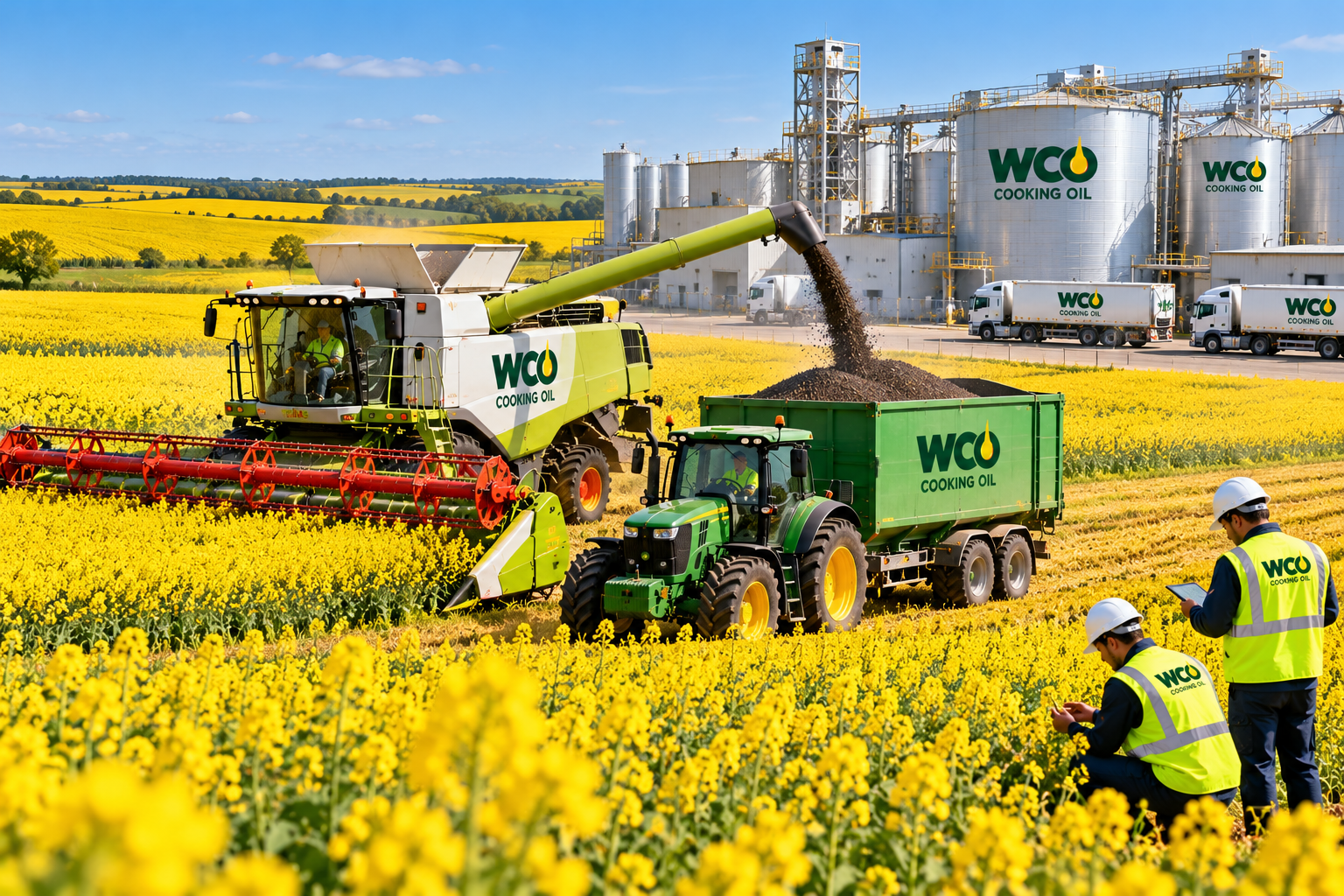
Our canola oil is processed and packed in the United States from US-grown and imported canola seed. Sourcing from more than one region keeps supply dependable through the seasons and shields you from the effect of a single poor harvest.
Incoming seed is cleaned and checked before processing, and the finished oil is refined, tested against specification, including erucic acid content, and packed at our US facilities.
Processing
How we make canola oil
Cleaning
Seed is cleaned of dust, stalks and other foreign material.
Conditioning and pressing
The seed is flaked, gently heated and mechanically pressed to release the oil.
Extraction
The remaining oil is recovered from the press cake.
Degumming and neutralizing
Gums and free fatty acids are removed for stability.
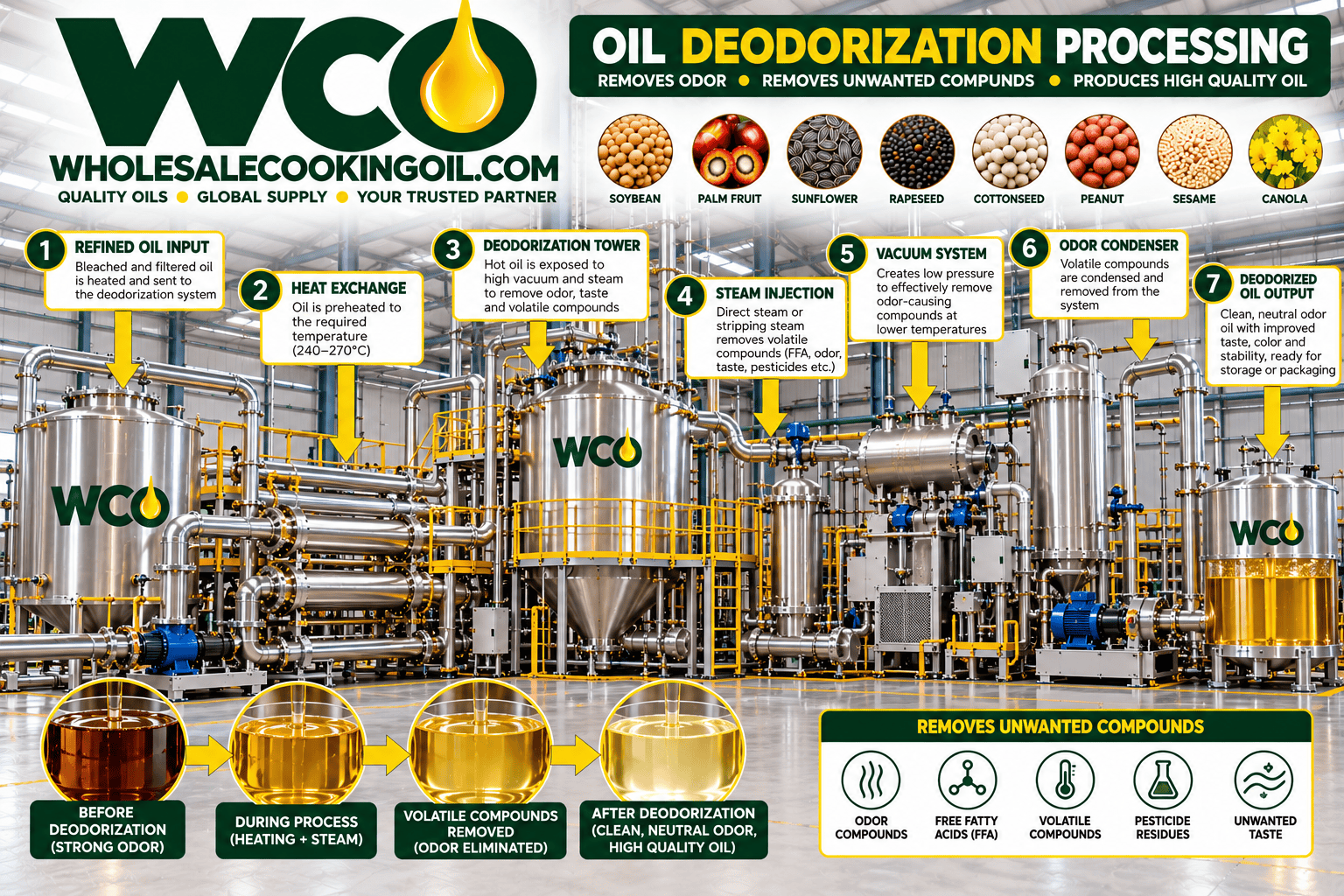
Bleaching and deodorizing
Color pigments and odor compounds are removed, giving a light color and neutral taste.
Testing and packing
Each batch is tested against specification, including erucic acid, before filling.
Storage & handling
Keeping canola oil fresh
Temperature
Store between 10 and 25 °C (50–77 °F), away from heat sources. Heat speeds up oxidation and shortens shelf life.
Light and air
Keep containers sealed and out of direct sunlight. Oxygen and light are the main causes of rancidity.
Shelf life
Up to 18 months unopened in original packaging. Transfer IBC and flexitank deliveries to clean, dry tanks and use them first-in, first-out.
In the fryer
Filter oil daily, skim debris, top up with fresh oil and avoid salting food over the fryer. Replace the oil when it darkens, foams or smokes at normal frying temperature.
Buying wholesale
Wholesale canola oil supplier: how ordering works
Wholesale Cooking Oil LLC supplies canola oil in bulk direct to food businesses in the United States and worldwide. Every lot is tested and packed at our US facilities and shipped with its Certificate of Analysis. Here is what to expect when you buy canola oil wholesale from us.
Grades
Refined (RBD), Expeller-pressed, refined, Cold-pressed (virgin), Crude degummed (for refining). Each grade is quoted separately.
Pack sizes
1L Bottles, 5L Bottles, 10L Containers, 20L Jerrycans, 200L Drums, 1,000L IBC Totes, 20,000L Flexitanks. Mix any sizes and oils on one quote.
Minimum order
1,000 L (≈264 gal) per quote, across any combination of oils and pack sizes.
Your quotation
Free and emailed to you, valid for 7 days, showing the price, any freight and other charges, the route and an estimated arrival date.
Payment
100% in advance in US dollars, by bank transfer or cryptocurrency, against the pro forma invoice in your quotation.
Dispatch and delivery
Dispatched within 24–48 hours of payment clearing. By truck across the US (usually 1–5 business days), Canada and Mexico, or by sea from five US seaports worldwide.
Documents
A Certificate of Analysis for each lot, plus the commercial invoice, packing list and transport document. Specification sheets on request.
Who we supply
Restaurants, hotels, caterers, bakeries, food manufacturers, distributors, retailers and importers.
FAQ
Canola Oil questions
What is the minimum order?
1,000 liters (about 264 US gallons) per quote, across any combination of oils and pack sizes. For example, one 1,000L IBC tote, five 200L drums, or 50 cases of 4 × 5L bottles.
What is the difference between canola oil and rapeseed oil?
Canola comes from rapeseed varieties bred to be low in erucic acid and glucosinolates. In the US, food-grade low erucic acid rapeseed oil may contain no more than 2% erucic acid, and our specification lists it separately.
Is canola oil good for frying?
Yes, refined canola oil handles everyday frying well. For fryers running all day, high-oleic canola oil lasts much longer between oil changes.
Why is canola oil considered a healthier oil?
It has the lowest saturated fat of the common cooking oils, is rich in monounsaturated fat and contains plant omega-3 (ALA). Any health claims on your own packaging must follow the labeling rules in your market.
Can you supply non-GMO or identity-preserved oil?
Tell us in your quote request if you need non-GMO, identity-preserved or certified oil. Availability and certification depend on the crop lot, and we will confirm exactly what we can supply in your quote.
Where is your canola oil made?
It is processed and packed in the United States from US-grown and imported canola seed.
How is the price set?
Vegetable oil prices move with crop harvests and global commodity markets, so each quote is based on grade, pack size, total volume and delivery destination. Your quotation shows the price, any freight and other charges, the shipping terms and route, and an estimated arrival date.
Compare
Related oils
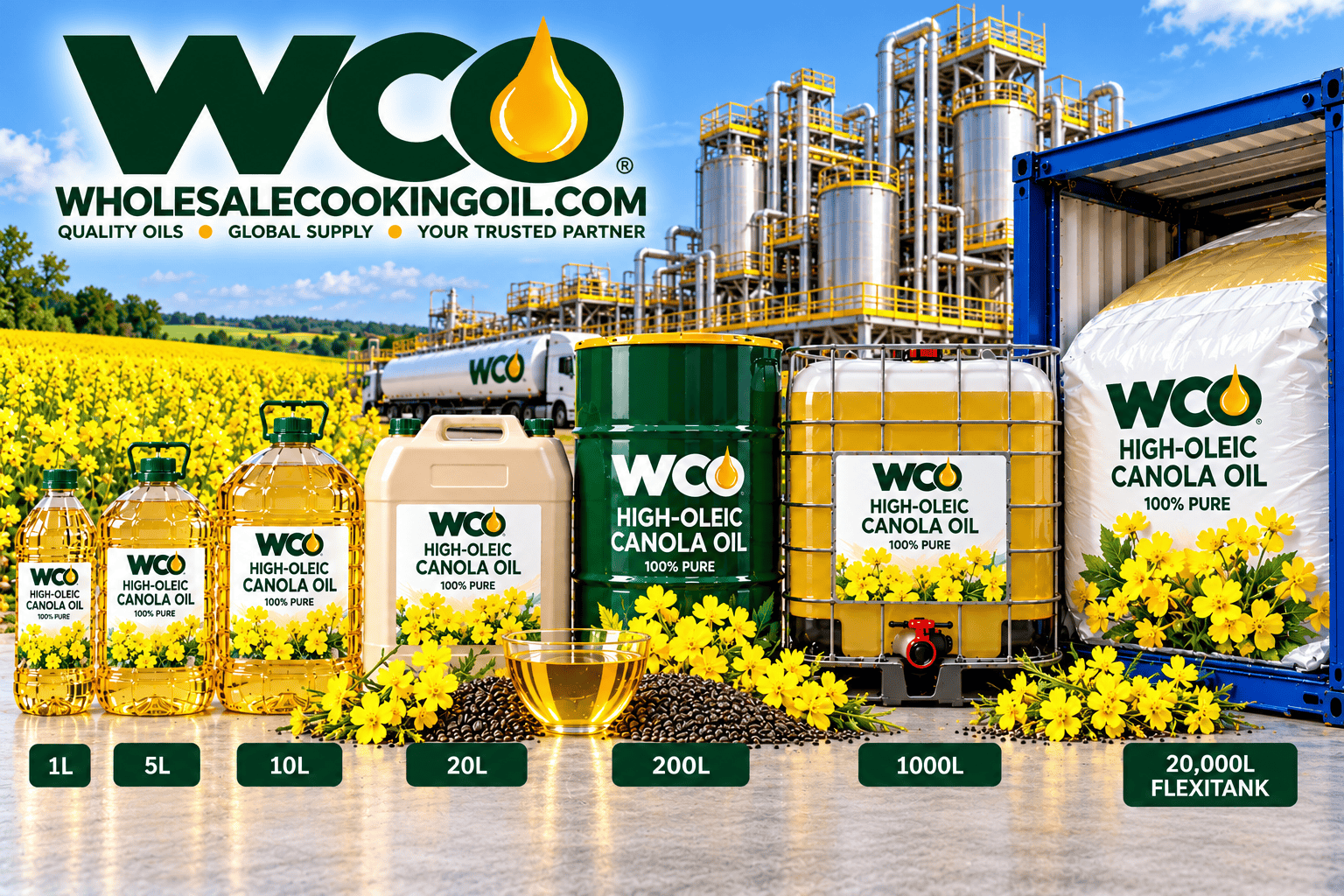
High-Oleic Canola Oil
Bulk high-oleic canola oil with about 7% saturated fat, about 70% monounsaturated fat and only about 3% omega-3, for a…
View high-oleic canola oil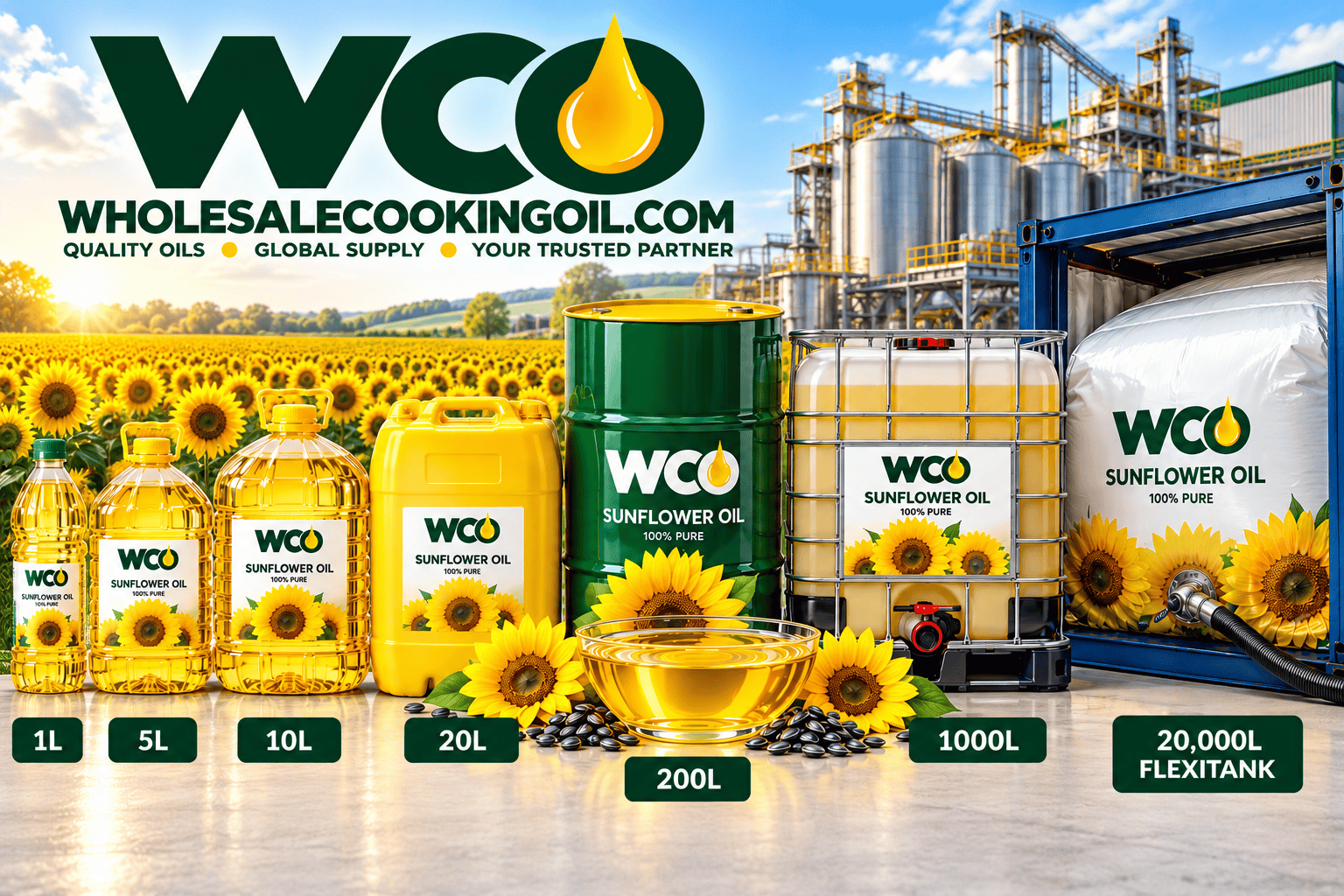
Sunflower Oil
Bulk sunflower oil, refined and winterized, with a clean, neutral taste and a high smoke point. Processed and packed in…
View sunflower oil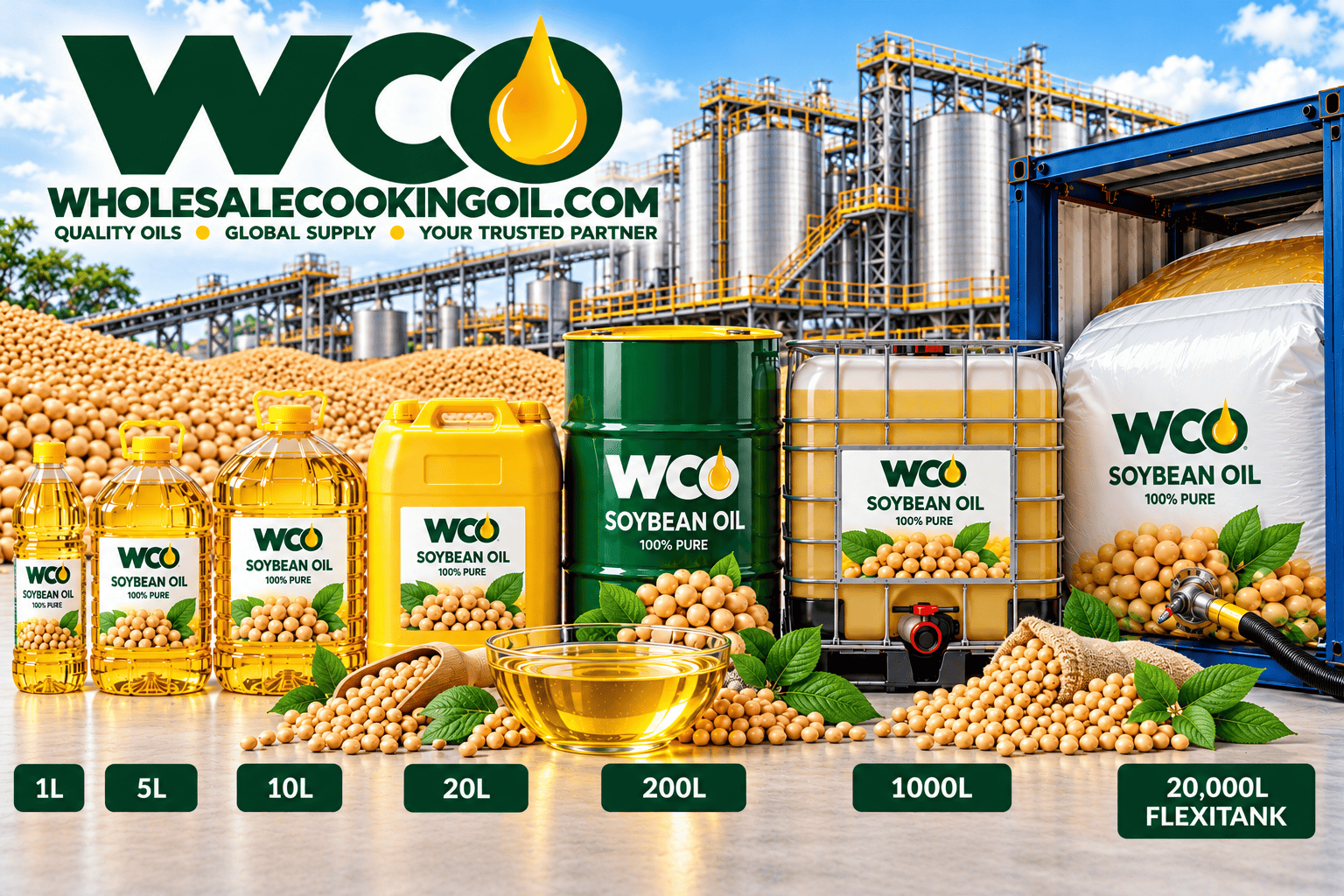
Soybean Oil
Bulk soybean oil, refined, bleached and deodorized for a clean, neutral taste. A versatile, economical oil for frying, baking, dressings…
View soybean oil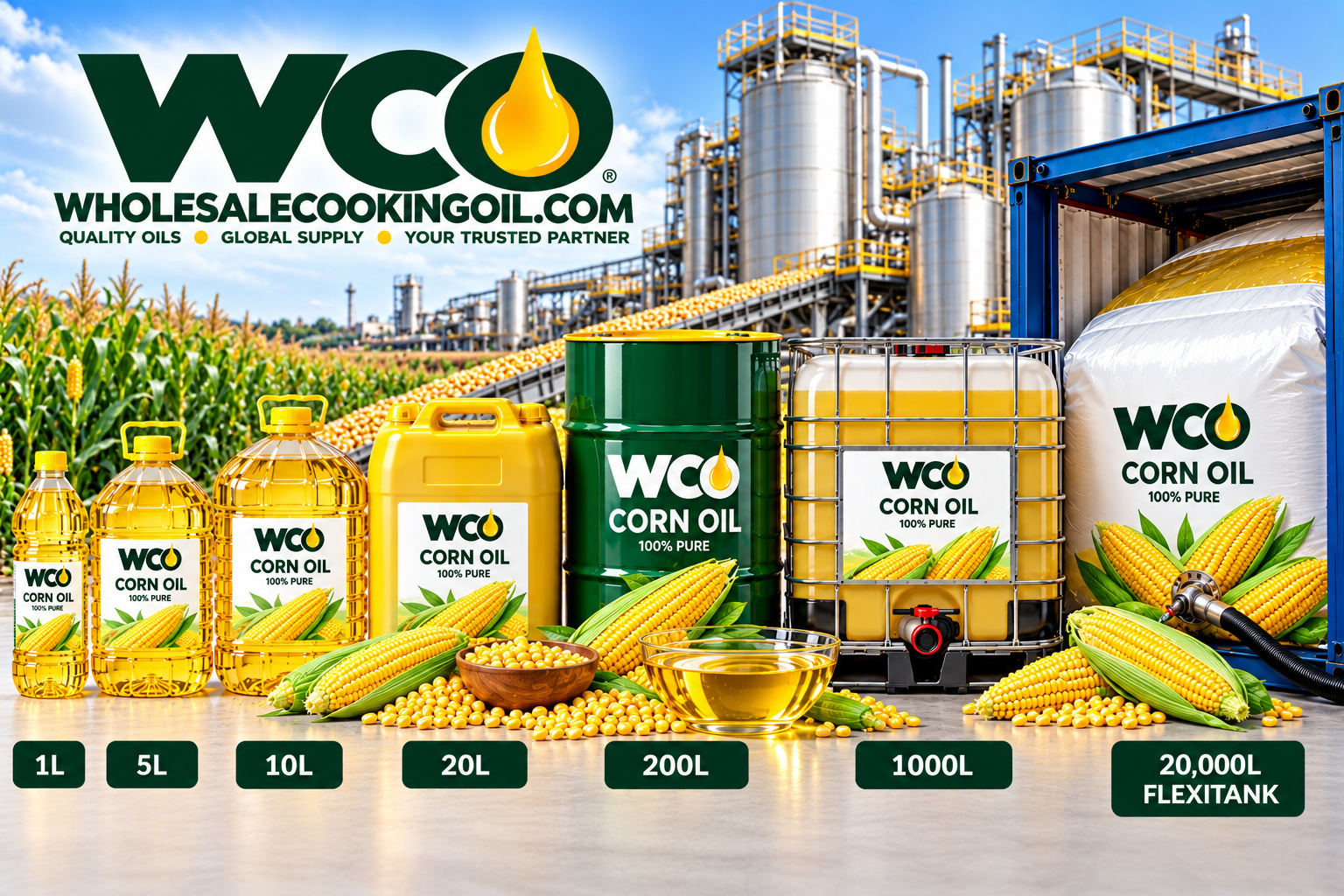
Corn Oil
Bulk corn oil, refined and winterized, with a light golden color, clean taste and high smoke point. A dependable oil…
View corn oil
Olive Oil
Bulk olive oil in every main IOC grade, from extra virgin for dressings and finishing to olive oil and olive…
View olive oil
Blended Vegetable Oil
Bulk vegetable oil, a refined blend of soybean and canola oils with a clean taste, light color and dependable performance.…
View blended vegetable oil