Cold-pressed · Refined · Natural omega-3
Bulk Camelina Oil
Bulk camelina oil, cold-pressed or refined, with about a third omega-3 alpha-linolenic acid, a mild, nutty taste and better stability than flaxseed oil. Supplied from 1L bottles to 20,000L flexitanks.
- Grades
- Cold-pressed, refined
- Omega-3 (ALA)
- About 31–40%
- Also called
- False flax
- Pressed in
- USA
Request a quote for Camelina Oil
1. Choose a grade
2. Choose a pack size
Minimum 1,000 L (≈264 gal) per quote — mix any oils and pack sizes. Nothing to pay now: we reply by email with a quotation showing the price, shipping terms and estimated arrival date.
An ancient oilseed with a modern omega-3 profile
Bulk camelina oil is pressed from the seeds of Camelina sativa, also called false flax or gold-of-pleasure, a hardy oilseed of the mustard family grown in Europe since the Bronze Age and now on the northern plains of North America. Cold-pressed camelina oil is golden with a mild, nutty, slightly herbal taste. It contains around a third alpha-linolenic acid (omega-3), yet it is noticeably more stable than flaxseed oil, which makes it useful in dressings, light cooking and food manufacturing.
Our camelina oil is pressed, tested and packed in the United States from US-grown and imported camelina seed, and supplied from 1-liter bottles to 20,000-liter flexitanks.
Camelina oil grades
| Cold-pressed (virgin) | Refined | |
|---|---|---|
| Color | Golden | Pale yellow |
| Flavor | Mild, nutty, herbal | Neutral |
| Heat | Dressings and light cooking | Cooking and food manufacturing |
| Best for | Dressings, dips, health foods, retail | Food manufacturing, blends |
What makes camelina oil different
- Omega-3 rich. Typically 31–40% alpha-linolenic acid.
- More stable than flax. Natural tocopherols help it resist oxidation better than other high-omega-3 oils.
- Eicosenoic acid. About 12–15% eicosenoic (gondoic) acid, a fingerprint of camelina oil.
- Low erucic acid. Erucic acid is typically about 2–4%, within the EU maximum level of 50 g/kg (5%) for camelina oil.
In the United States, the FDA had no questions in 2016 about a GRAS notice for camelina oil as a food ingredient. Rules differ in other markets; tell us your destination and intended use and we will confirm our documentation fits.
How bulk camelina oil is priced
Camelina is a specialty crop grown in smaller volumes than canola or flax, so camelina oil is priced as a premium oil. Cold-pressed costs more than refined. Each grade is quoted separately on pack size, total volume and destination; the minimum is 1,000 liters per quote.
Technical data
Camelina Oil grades and specifications
Available grades
| Grade | Description |
|---|---|
| Cold-pressed (virgin) | Unrefined with a mild, slightly nutty flavor and natural omega-3. |
| Refined | Light and neutral for cooking and food manufacturing. |
Each grade is priced separately. The specifications below are for Cold-pressed (virgin); specifications for other grades are supplied with your quote.
Quality specification
| Parameter | Specification |
|---|---|
| Appearance (20 °C) | Clear, golden (cold-pressed) |
| Odor and taste | Mild, nutty, free of rancid or foreign notes |
| Acid value | 2.0 mg KOH/g max. |
| Peroxide value (at packing) | 5.0 meq O₂/kg max. |
| Moisture and volatile matter | 0.10% max. |
| Insoluble impurities | 0.05% max. |
| Alpha-linolenic acid (C18:3) | 30% min. |
| Erucic acid (C22:1) | 4.0% max. |
| Use | Dressings and light cooking; not for deep frying |
| Shelf life (unopened) | Up to 12 months stored cool and dark in sealed packaging |
Typical specification for cold-pressed camelina oil. Camelina oil is not covered by the Codex standard for named vegetable oils. The erucic acid limit keeps the oil within the EU maximum level of 50 g/kg for camelina oil. The refined specification is supplied with your quote. Values for each lot are confirmed on the Certificate of Analysis supplied with your order.
Fatty acid profile
| Fatty acid | % of total fatty acids |
|---|---|
| Palmitic acid (C16:0) | 5.5–5.9 |
| Oleic acid (C18:1) | 11.6–18.2 |
| Linoleic acid (C18:2) | 12.3–18.2 |
| Alpha-linolenic acid (C18:3) | 34.1–37.0 |
| Eicosenoic acid (C20:1) | 13.3–15.0 |
| Erucic acid (C22:1) | 2.2–3.6 |
Ranges measured in oil from 10 camelina genotypes over four seasons in a peer-reviewed study. Published ranges in the wider literature are about 31–40% alpha-linolenic acid and 12–15% eicosenoic acid. Each lot is analyzed.
Source: Krzyżaniak et al., Industrial Crops and Products, 2019: seed composition of 10 camelina genotypes
Applications
What camelina oil is used for
Health food manufacturers
Dressings, dips, spreads and omega-3 functional foods.
Learn more about Health food manufacturersRetail and private label
Cold-pressed camelina oil in 1L bottles, or under your own brand.
Learn more about Retail and private labelDistributors and importers
Drums and IBC totes for repacking.
Learn more about Distributors and importersPackaging
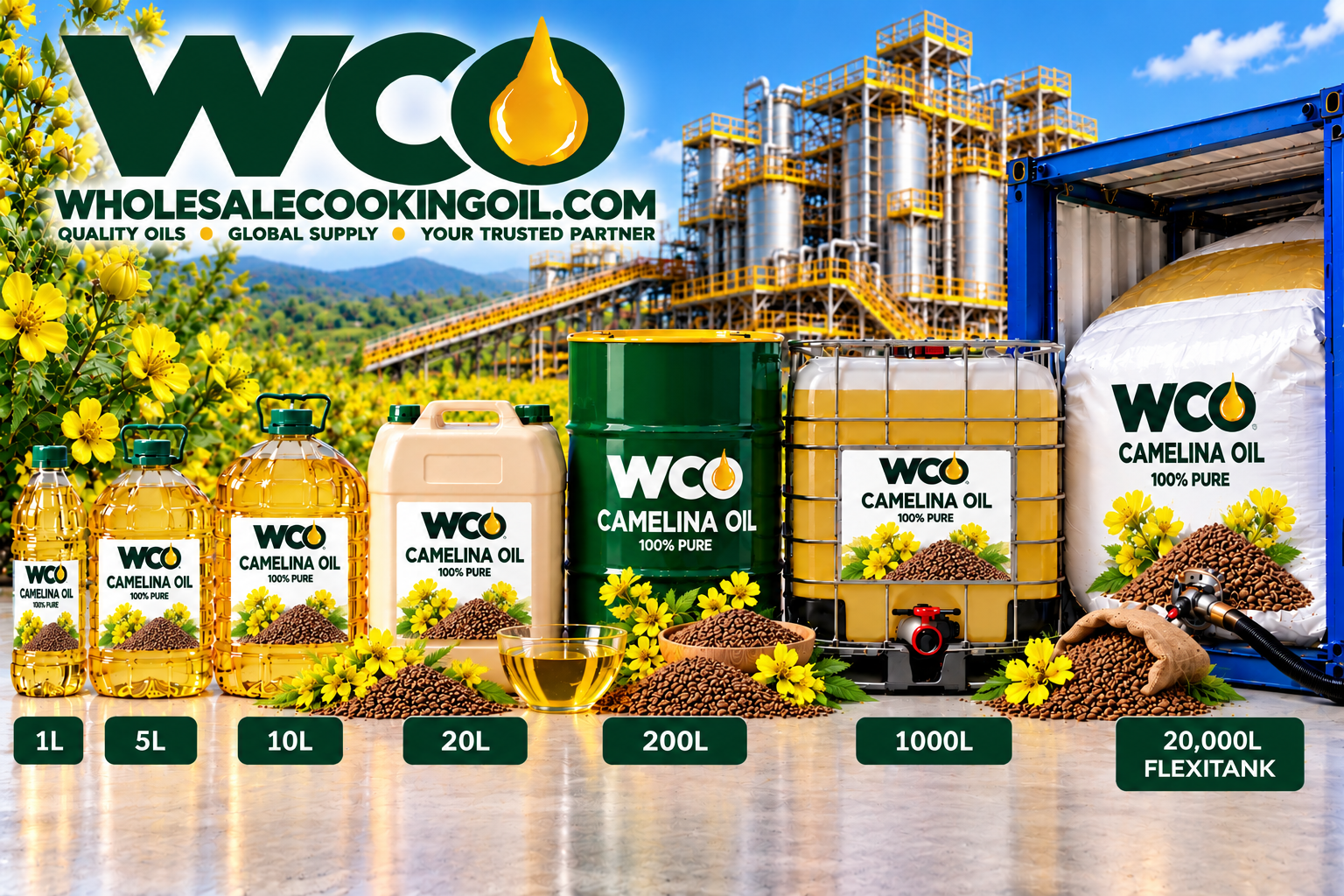
Camelina Oil pack sizes
Combine camelina oil grades with any other oils on the same quote. 1L and 5L bottles suit kitchens and retail; drums and IBC totes suit manufacturers.
| Pack size | US gallons | Ordered as | Liters per order unit |
|---|---|---|---|
| 1L Bottles | 0.26 gal | Case of 12 × 1L | 12 L |
| 5L Bottles | 1.3 gal | Case of 4 × 5L | 20 L |
| 10L Containers | 2.6 gal | Case of 2 × 10L | 20 L |
| 20L Jerrycans | 5.3 gal | Per jerrycan | 20 L |
| 200L Drums | 52.8 gal | Per drum | 200 L |
| 1,000L IBC Totes | 264 gal | Per IBC tote | 1,000 L |
| 20,000L Flexitanks | 5,283 gal | Per flexitank (20ft container) | 20,000 L |
Sourcing
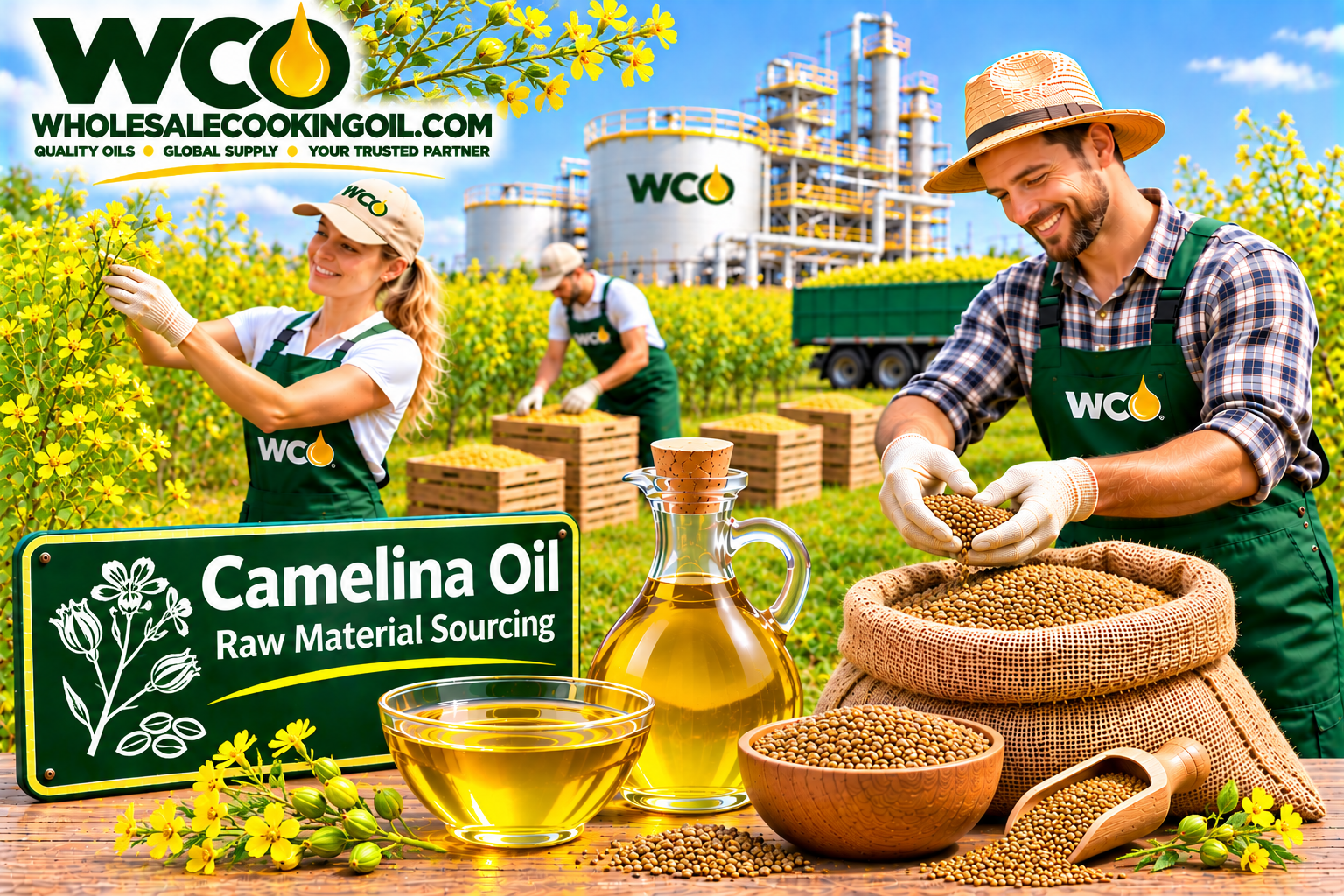
From camelina fields to finished oil
Camelina is a short-season, drought-tolerant oilseed that grows well on the northern plains with few inputs. Our camelina oil is pressed, tested and packed in the United States from US-grown and imported camelina seed.
The small seed is cleaned and pressed; cold-pressed oil is settled and filtered, and refined oil is refined for a neutral taste. Every batch is tested before it is packed.
Processing
How we make camelina oil
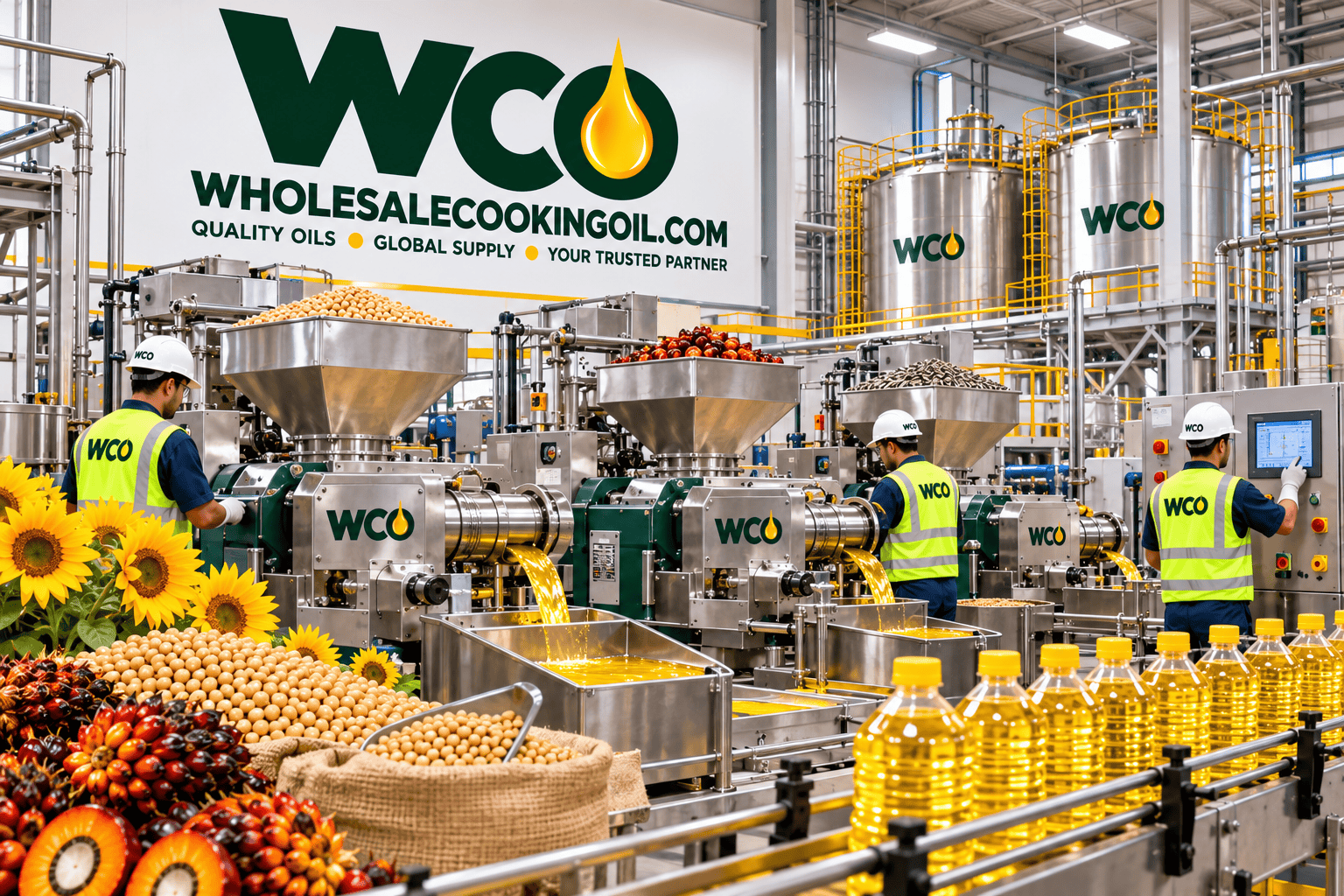
Cleaning
The small seed is cleaned and sorted.
Pressing
Seed is mechanically pressed; cold-pressed oil is pressed without added heat.
Settling and filtering
The oil is settled and filtered.
Refining (refined grade)
Refining gives a pale, neutral oil.
Testing
Each batch is tested for ALA, erucic acid, acid value and peroxide value.
Packing
Filled into full, sealed, light-protected containers.
Storage & handling
Keeping camelina oil fresh
Temperature
Store cool, between 10 and 20 °C (50–68 °F).
Light and air
Keep in the dark and sealed to protect its omega-3.
After opening
Keep the container closed and use within a few months.
Shelf life
Up to 12 months unopened stored cool and dark.
Buying wholesale
Wholesale camelina oil supplier: how ordering works
Wholesale Cooking Oil LLC supplies camelina oil in bulk direct to food businesses in the United States and worldwide. Every lot is tested and packed at our US facilities and shipped with its Certificate of Analysis. Here is what to expect when you buy camelina oil wholesale from us.
Grades
Cold-pressed (virgin), Refined. Each grade is quoted separately.
Pack sizes
1L Bottles, 5L Bottles, 10L Containers, 20L Jerrycans, 200L Drums, 1,000L IBC Totes, 20,000L Flexitanks. Mix any sizes and oils on one quote.
Minimum order
1,000 L (≈264 gal) per quote, across any combination of oils and pack sizes.
Your quotation
Free and emailed to you, valid for 7 days, showing the price, any freight and other charges, the route and an estimated arrival date.
Payment
100% in advance in US dollars, by bank transfer or cryptocurrency, against the pro forma invoice in your quotation.
Dispatch and delivery
Dispatched within 24–48 hours of payment clearing. By truck across the US (usually 1–5 business days), Canada and Mexico, or by sea from five US seaports worldwide.
Documents
A Certificate of Analysis for each lot, plus the commercial invoice, packing list and transport document. Specification sheets on request.
Who we supply
Restaurants, hotels, caterers, bakeries, food manufacturers, distributors, retailers and importers.
FAQ
Camelina Oil questions
What is the minimum order?
1,000 liters (about 264 US gallons) per quote, across any combination of oils, grades and pack sizes. For example, one 1,000L IBC tote, five 200L drums, or 50 cases of 4 × 5L bottles.
How is camelina oil different from flaxseed oil?
Both are plant omega-3 oils. Camelina oil has less ALA than flaxseed oil but is noticeably more stable, so it lasts longer and can be used in dressings and light cooking.
Does camelina oil contain erucic acid?
A little, typically about 2–4%, within the EU maximum level of 50 g/kg for camelina oil. Each lot’s erucic acid is on the Certificate of Analysis.
Can camelina oil be used for cooking?
Yes, for dressings, marinades and light sautéing. It is not a deep-frying oil.
Can I make health claims on my product?
Only claims permitted in your market, using the approved wording. We supply the oil and its Certificate of Analysis; your label and marketing must follow local food and supplement rules.
How is the price set?
Each grade is priced separately, based on the crop, grade, pack size, total volume and delivery destination. Your quotation shows the price, any freight and other charges, the shipping terms and route, and an estimated arrival date.
Compare
Related oils
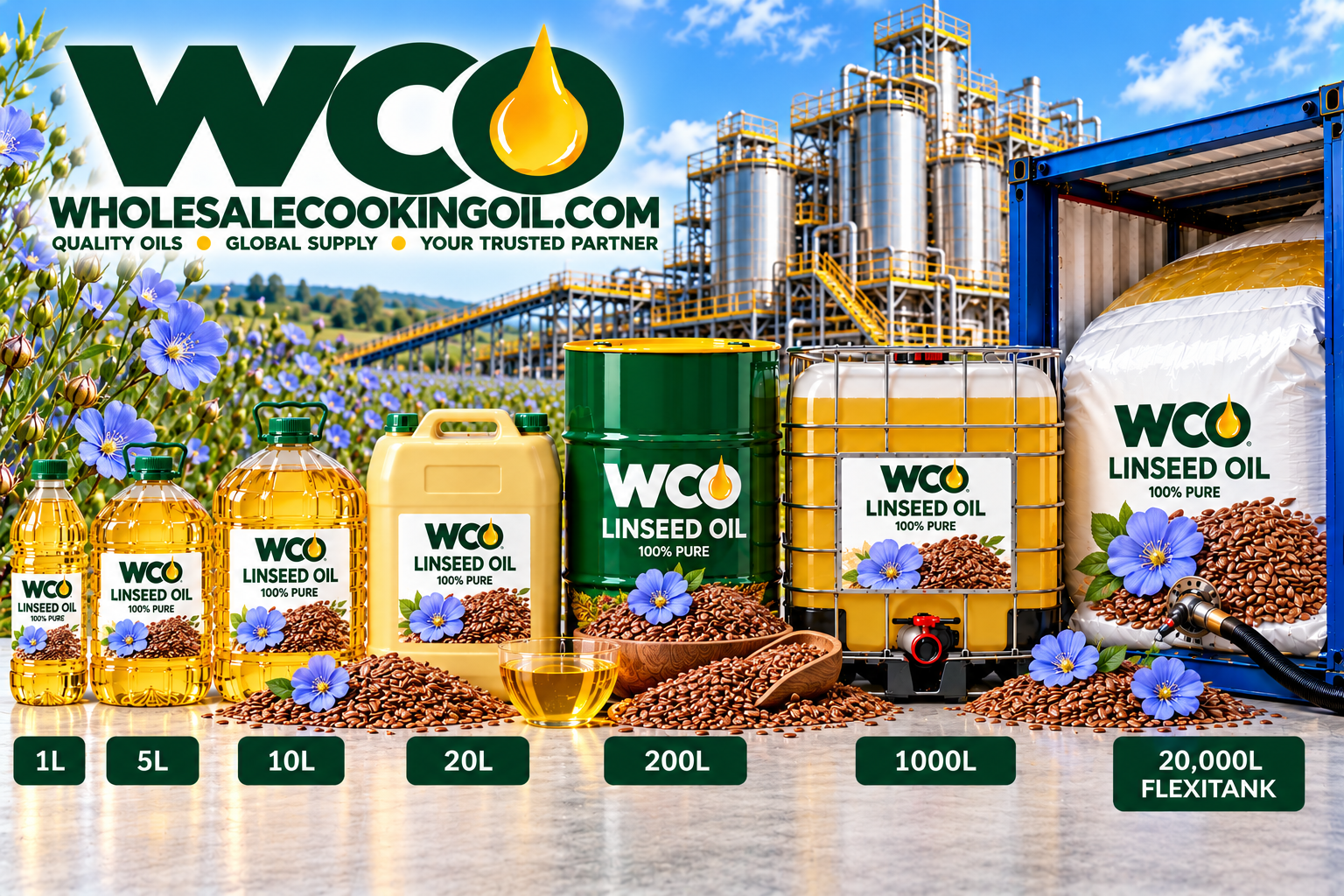
Linseed Oil
Bulk food-grade flaxseed (linseed) oil, cold-pressed and rich in plant omega-3 alpha-linolenic acid. For supplements, health foods, smoothies and dressings,…
View linseed oil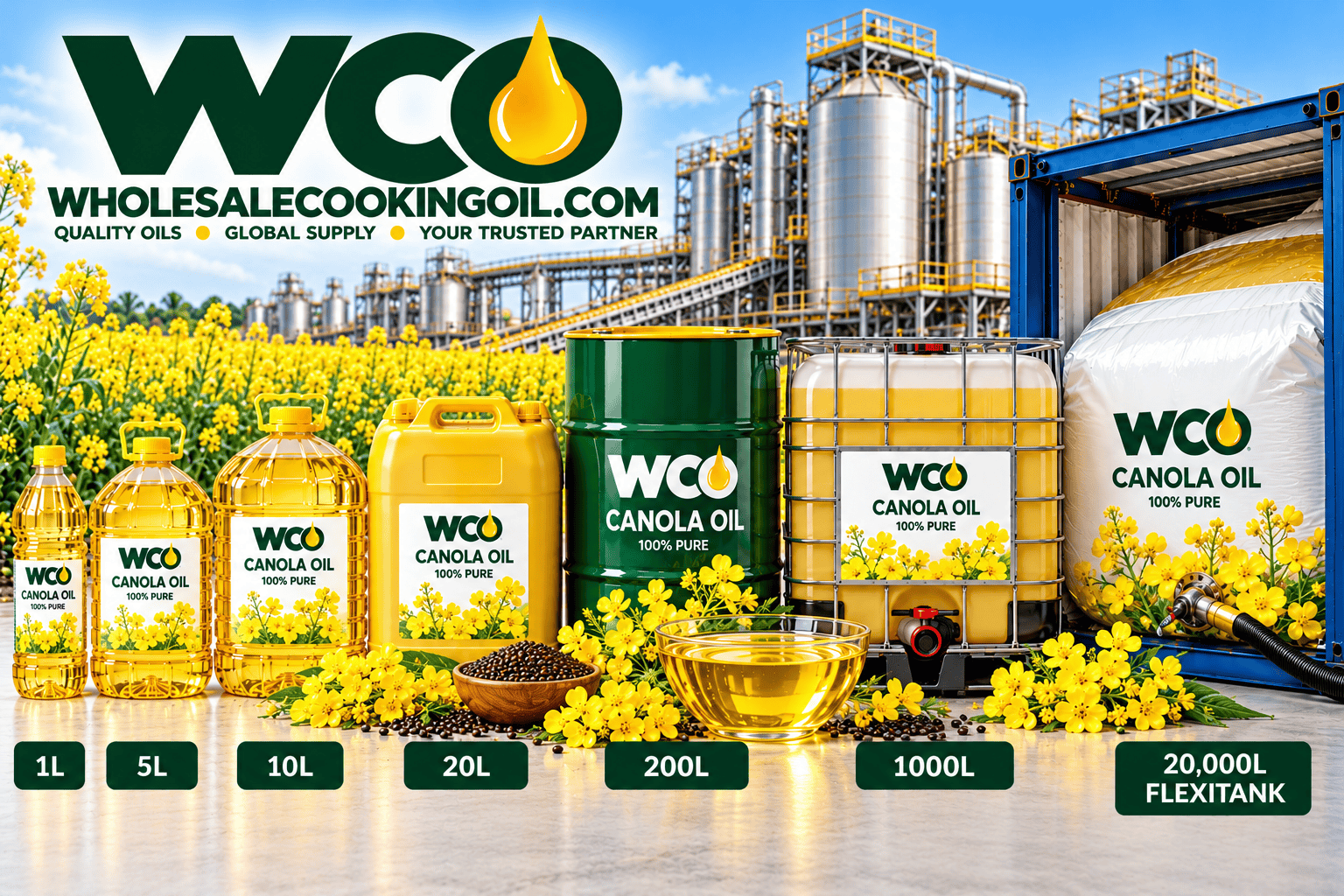
Canola Oil
Bulk canola oil, refined for a clean, neutral taste, with the lowest saturated fat of common cooking oils and natural…
View canola oil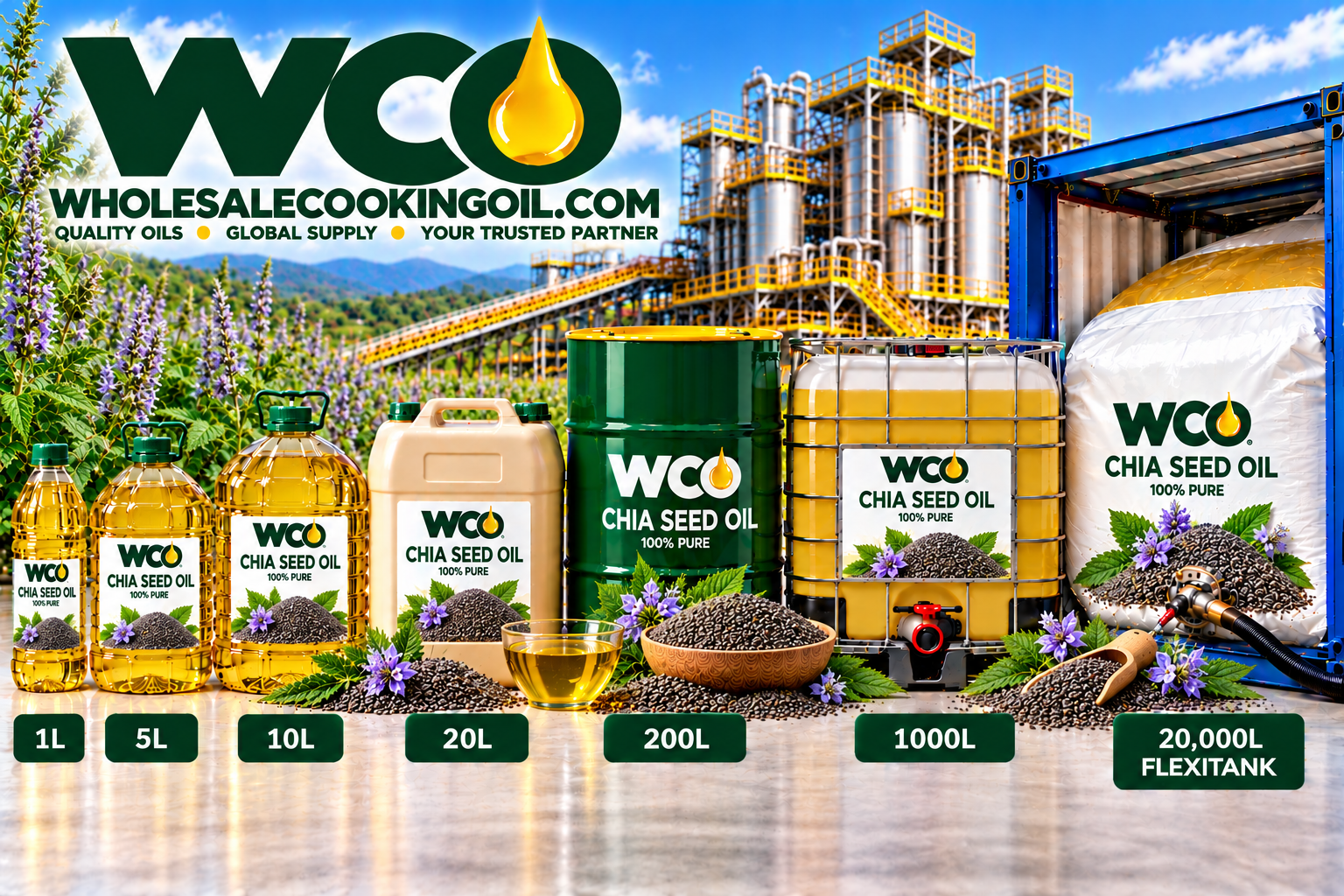
Chia Seed Oil
Bulk cold-pressed chia seed oil with at least 60% omega-3 alpha-linolenic acid and a mild taste, for supplements, functional foods,…
View chia seed oil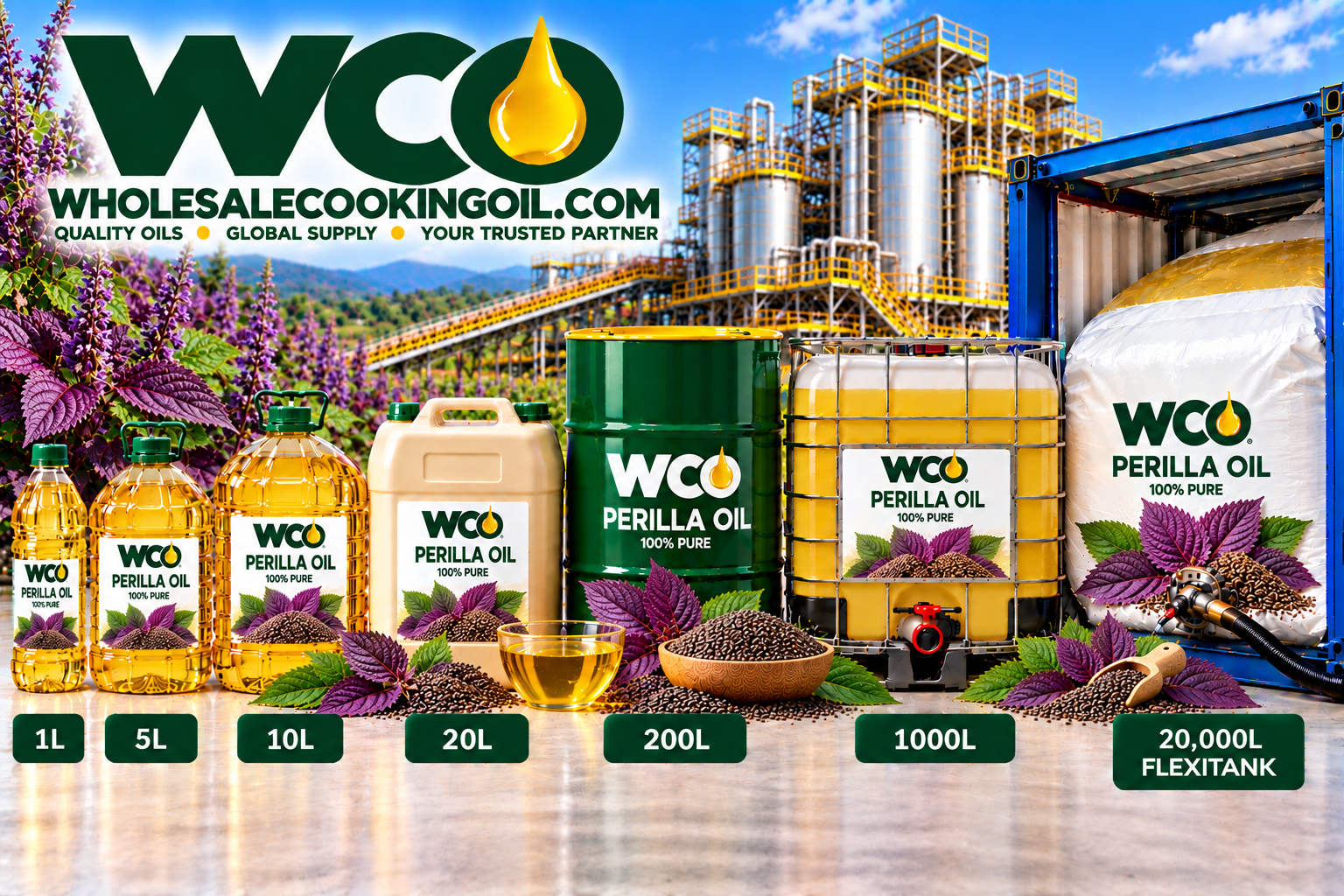
Perilla Oil
Bulk perilla seed oil, cold-pressed as a rich plant source of omega-3 alpha-linolenic acid, or roasted for nutty Korean-style seasoning.…
View perilla oil
Hemp Seed Oil
Bulk food-grade hemp seed oil, cold-pressed or refined, with omega-6 and omega-3 in about a 3:1 ratio. Every lot is…
View hemp seed oil
Mustard Oil
Bulk mustard oil for export in kachi ghani (cold-pressed), expeller-pressed and refined grades. Natural pungency for South Asian cooking and…
View mustard oil