
Refined · Cold-pressed · Light and clean
Bulk Grapeseed Oil
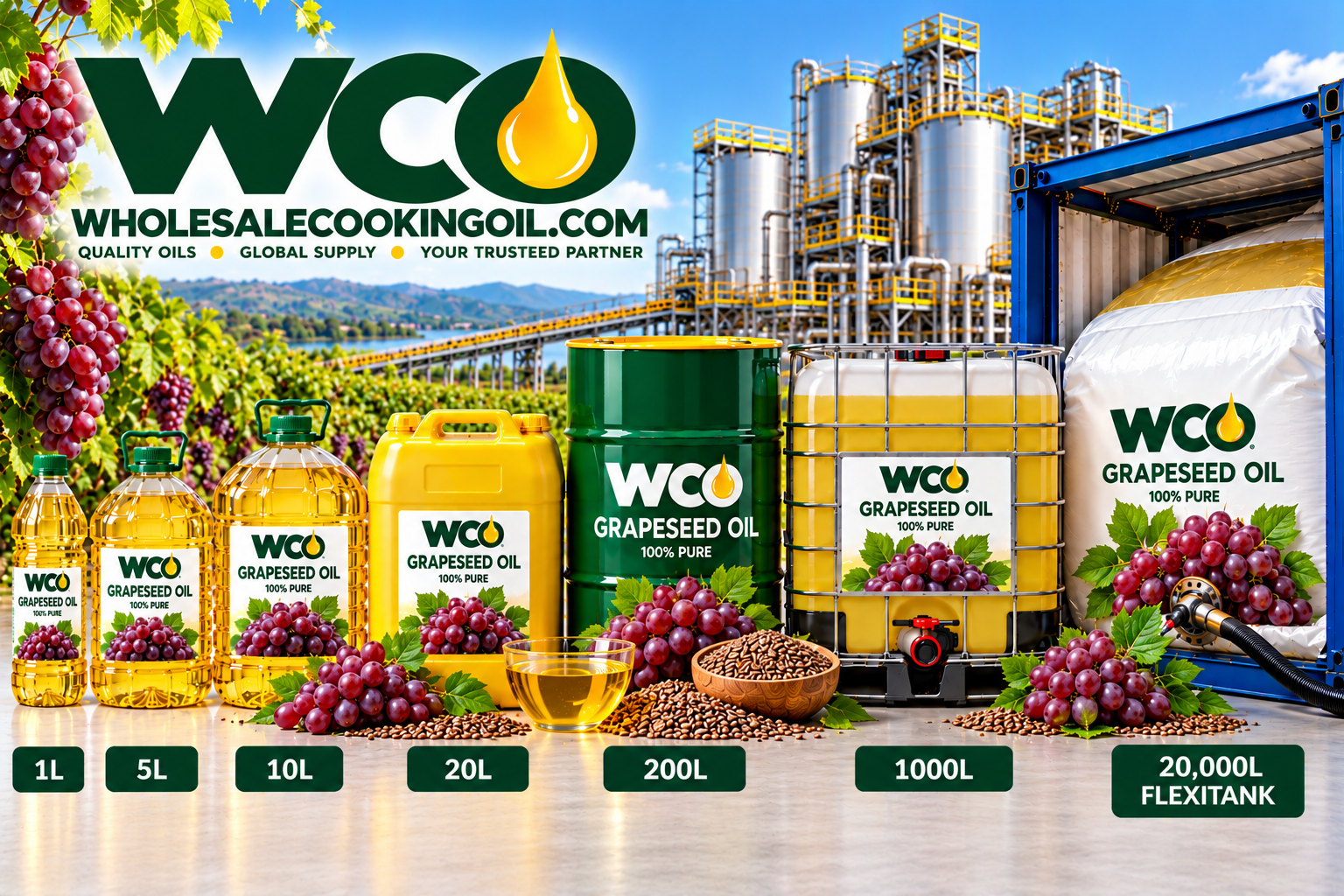
Bulk grapeseed oil from the wine harvest: refined for a pale color and clean, light taste, or cold-pressed with a fruity note. Ideal for dressings, mayonnaise, infused oils and sautéing, supplied from 1L bottles to 20,000L flexitanks.
- Grades
- Refined and cold-pressed
- Smoke point (refined)
- About 216 °C / 421 °F
- Best for
- Dressings and mayonnaise
- Processed in
- USA
Request a quote for Grapeseed Oil
1. Choose a grade
2. Choose a pack size
Minimum 1,000 L (≈264 gal) per quote — mix any oils and pack sizes. Nothing to pay now: we reply by email with a quotation showing the price, shipping terms and estimated arrival date.
A light, clean oil from the wine harvest
Bulk grapeseed oil is pressed from the seeds left over after grapes are crushed for wine. Refined grapeseed oil is pale, light-bodied and almost flavorless, which makes it a chef’s favorite for dressings, mayonnaise, marinades and infused oils, where it carries other flavors without competing with them. Cold-pressed grapeseed oil keeps a light, fruity note for finishing.
Our grapeseed oil is processed and packed in the United States from US-grown and imported grape seed, and supplied from 1-liter bottles to 20,000-liter flexitanks.
What grapeseed oil does best
- Dressings and emulsions. Its light body and neutral taste make smooth mayonnaise, aiolis and vinaigrettes.
- Infused oils. It takes on the flavor of herbs, garlic and chili cleanly.
- Sautéing and baking. Refined grapeseed oil has a smoke point of about 216 °C (421 °F), suitable for sautéing, roasting and baking.
- Upcycled ingredient. It turns a by-product of winemaking into food, a story many brands value.
An honest note on frying
Grapeseed oil is one of the richest common oils in linoleic acid (omega-6), typically 58–78% of its fatty acids. Polyunsaturated fats break down faster under prolonged heat, so although grapeseed oil handles sautéing well, it is not the best choice for fryers running all day. For continuous frying, choose a high-oleic oil or our deep frying oil.
Purity and contaminant testing
Grape seeds have to be dried before pressing. If they are dried in direct contact with combustion gases, the oil can pick up polycyclic aromatic hydrocarbons (PAHs), which food regulators limit. Seed drying with indirect heat, and testing the finished oil, keep PAHs within limits. Our specification includes the EU limits for benzo(a)pyrene and PAH4, and results for each lot are on the Certificate of Analysis.
How bulk grapeseed oil is priced
Grapeseed oil supply depends on the wine harvest, and grape seeds yield relatively little oil, so it is priced above most seed oils. Cold-pressed costs more than refined. Each grade is quoted separately on pack size, total volume and destination; the minimum is 1,000 liters per quote.
Technical data
Grapeseed Oil grades and specifications
Available grades
| Grade | Description |
|---|---|
| Refined | Pale, neutral and light. For cooking, dressings and food manufacturing. |
| Cold-pressed (virgin) | Unrefined with a light fruity note. For dressings and finishing. |
Each grade is priced separately. The specifications below are for Refined; specifications for other grades are supplied with your quote.
Quality specification
| Parameter | Specification |
|---|---|
| Appearance (20 °C) | Clear, pale, free of sediment |
| Odor and taste | Light, clean, free of foreign odors |
| Free fatty acids (as oleic acid) | 0.10% max. |
| Peroxide value (at packing) | 1.0 meq O₂/kg max. |
| Moisture and volatile matter | 0.05% max. |
| Insoluble impurities | 0.05% max. |
| Benzo(a)pyrene | 2.0 µg/kg max. |
| Sum of 4 PAHs (PAH4) | 10.0 µg/kg max. |
| Iodine value (Wijs) | 128–150 |
| Saponification value | 188–194 mg KOH/g |
| Relative density (20 °C) | 0.920–0.926 |
| Refractive index (40 °C) | 1.467–1.477 |
| Smoke point | About 216 °C / 421 °F |
| Shelf life (unopened) | Up to 18 months; 12 months for IBC and flexitank deliveries |
Typical specification for refined grapeseed oil. Identity values follow the Codex Alimentarius standard for grapeseed oil; PAH limits follow EU maximum levels for oils and fats. Values for each lot are confirmed on the Certificate of Analysis supplied with your order.
Fatty acid profile
| Fatty acid | % of total fatty acids |
|---|---|
| Palmitic acid (C16:0) | 5.5–11.0 |
| Stearic acid (C18:0) | 3.0–6.5 |
| Oleic acid (C18:1) | 12.0–28.0 |
| Linoleic acid (C18:2) | 58.0–78.0 |
| Alpha-linolenic acid (C18:3) | 1.0 max. |
| Arachidic acid (C20:0) | 1.0 max. |
Ranges for grapeseed oil from the Codex Alimentarius Standard for Named Vegetable Oils.
Source: Codex Alimentarius Standard for Named Vegetable Oils (CXS 210-1999)
Applications
What grapeseed oil is used for
Sauce and dressing makers
Mayonnaise, aioli, vinaigrettes and dressings that need a neutral, light oil.
Learn more about Sauce and dressing makersRetail and private label
Refined and cold-pressed grapeseed oil in 1L and 5L bottles, or under your own brand.
Learn more about Retail and private labelDistributors and importers
Drums and IBC totes for repacking.
Learn more about Distributors and importersPackaging
Grapeseed Oil pack sizes
Combine grapeseed oil with any other oils on the same quote, for example refined grapeseed oil in 20L jerrycans for your dressing line.
| Pack size | US gallons | Ordered as | Liters per order unit |
|---|---|---|---|
| 1L Bottles | 0.26 gal | Case of 12 × 1L | 12 L |
| 5L Bottles | 1.3 gal | Case of 4 × 5L | 20 L |
| 10L Containers | 2.6 gal | Case of 2 × 10L | 20 L |
| 20L Jerrycans | 5.3 gal | Per jerrycan | 20 L |
| 200L Drums | 52.8 gal | Per drum | 200 L |
| 1,000L IBC Totes | 264 gal | Per IBC tote | 1,000 L |
| 20,000L Flexitanks | 5,283 gal | Per flexitank (20ft container) | 20,000 L |
Sourcing
From the wine harvest to finished oil
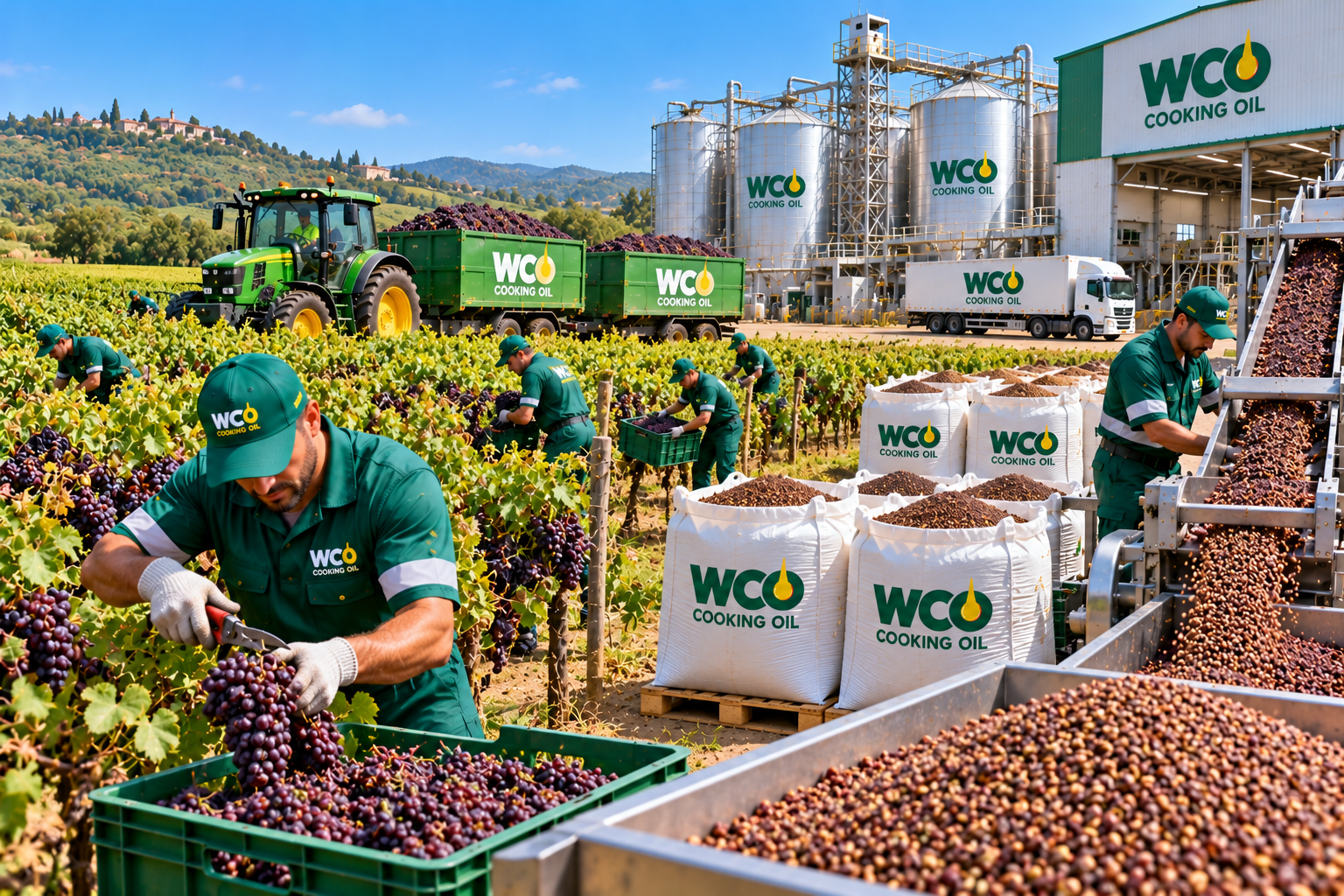
Our grapeseed oil is processed and packed in the United States from US-grown and imported grape seed, collected from the pomace left after grapes are pressed for wine.
The seeds are separated, cleaned and dried, then pressed. Refined oil is refined for a pale color and neutral taste; cold-pressed oil is filtered only. Every batch is tested, including for PAHs, and packed at our US facilities.
Processing
How we make grapeseed oil
Seed separation
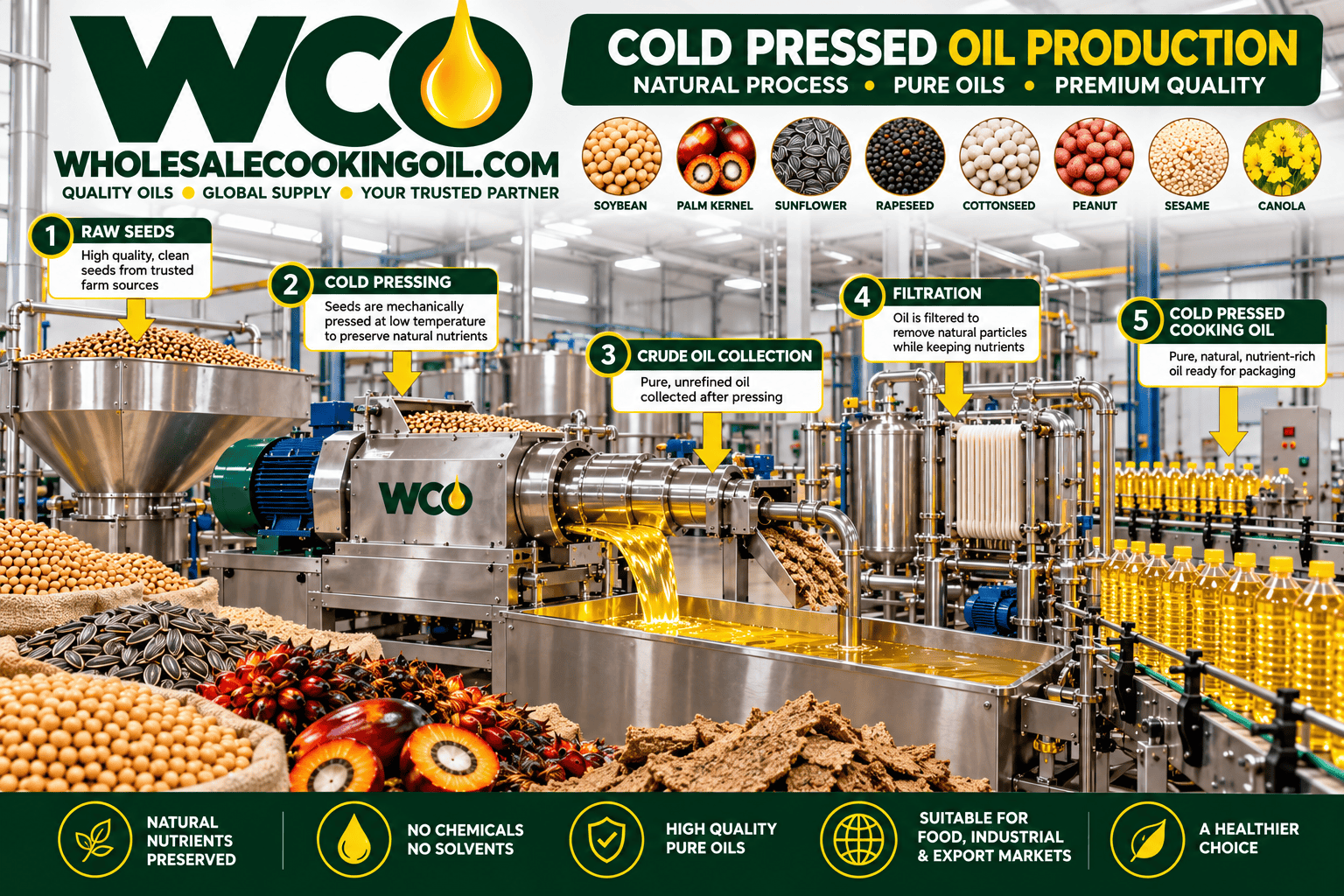
Seeds are separated from the grape skins and stems left after winemaking.
Cleaning and drying
Seeds are cleaned and dried with indirect heat to protect oil quality.
Pressing
Seeds are mechanically pressed to release the oil.
Refining (refined grade)
Degumming, neutralizing, bleaching and deodorizing give a pale, neutral oil.
Testing
Each batch is tested for quality and PAHs.
Packing
Filled into bottles, jerrycans, drums, IBC totes or flexitanks.
Storage & handling
Keeping grapeseed oil fresh
Temperature
Store between 10 and 25 °C (50–77 °F), away from heat sources.
Light and air
Keep containers sealed and out of direct sunlight to prevent rancidity.
Shelf life
Up to 18 months unopened for refined oil. Because it is high in polyunsaturated fat, keep it cool and sealed, and use cold-pressed oil within a year.
Buying wholesale
Wholesale grapeseed oil supplier: how ordering works
Wholesale Cooking Oil LLC supplies grapeseed oil in bulk direct to food businesses in the United States and worldwide. Every lot is tested and packed at our US facilities and shipped with its Certificate of Analysis. Here is what to expect when you buy grapeseed oil wholesale from us.
Grades
Refined, Cold-pressed (virgin). Each grade is quoted separately.
Pack sizes
1L Bottles, 5L Bottles, 10L Containers, 20L Jerrycans, 200L Drums, 1,000L IBC Totes, 20,000L Flexitanks. Mix any sizes and oils on one quote.
Minimum order
1,000 L (≈264 gal) per quote, across any combination of oils and pack sizes.
Your quotation
Free and emailed to you, valid for 7 days, showing the price, any freight and other charges, the route and an estimated arrival date.
Payment
100% in advance in US dollars, by bank transfer or cryptocurrency, against the pro forma invoice in your quotation.
Dispatch and delivery
Dispatched within 24–48 hours of payment clearing. By truck across the US (usually 1–5 business days), Canada and Mexico, or by sea from five US seaports worldwide.
Documents
A Certificate of Analysis for each lot, plus the commercial invoice, packing list and transport document. Specification sheets on request.
Who we supply
Restaurants, hotels, caterers, bakeries, food manufacturers, distributors, retailers and importers.
FAQ
Grapeseed Oil questions
What is the minimum order?
1,000 liters (about 264 US gallons) per quote, across any combination of oils, grades and pack sizes. For example, one 1,000L IBC tote, five 200L drums, or 50 cases of 4 × 5L bottles.
What is grapeseed oil used for?
Mainly dressings, mayonnaise, marinades, infused oils, sautéing and baking, where its light, clean taste carries other flavors.
Is grapeseed oil good for deep frying?
It handles sautéing and roasting well, but it is very high in polyunsaturated fat, so for fryers running all day a high-oleic oil or deep frying oil lasts longer.
Do you test grapeseed oil for PAHs?
Yes. Our specification includes the EU limits of 2.0 µg/kg for benzo(a)pyrene and 10.0 µg/kg for the sum of four PAHs, and each lot’s results are on the Certificate of Analysis.
Does grapeseed oil contain the antioxidants found in grape seeds?
Grape seeds are rich in polyphenols, but very little of them passes into the oil, so grapeseed oil should not be marketed on that basis.
How is the price set?
Each grade is priced separately, based on the crop, grade, pack size, total volume and delivery destination. Your quotation shows the price, any freight and other charges, the shipping terms and route, and an estimated arrival date.
Compare
Related oils
Olive Oil
Bulk olive oil in every main IOC grade, from extra virgin for dressings and finishing to olive oil and olive…
View olive oil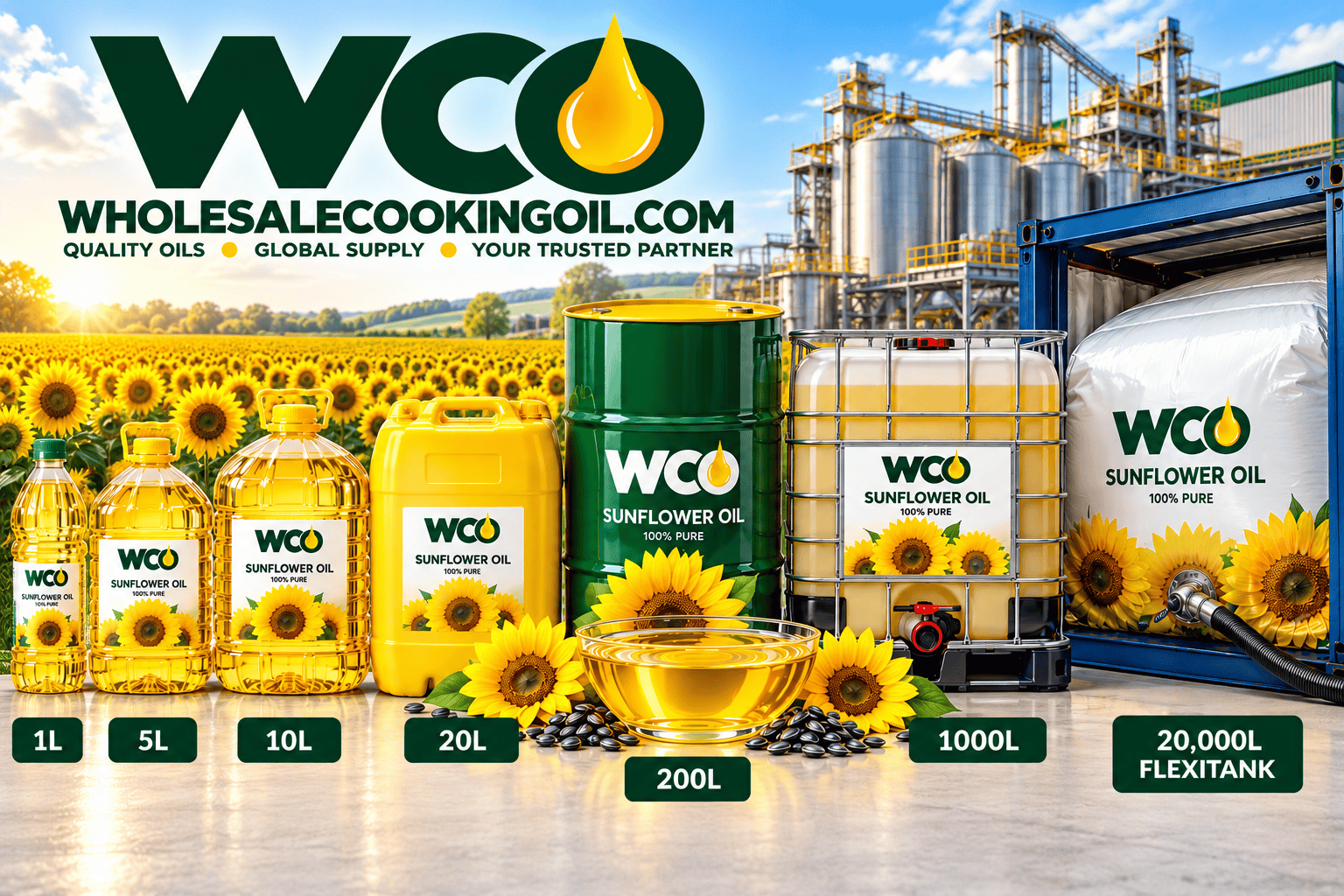
Sunflower Oil
Bulk sunflower oil, refined and winterized, with a clean, neutral taste and a high smoke point. Processed and packed in…
View sunflower oil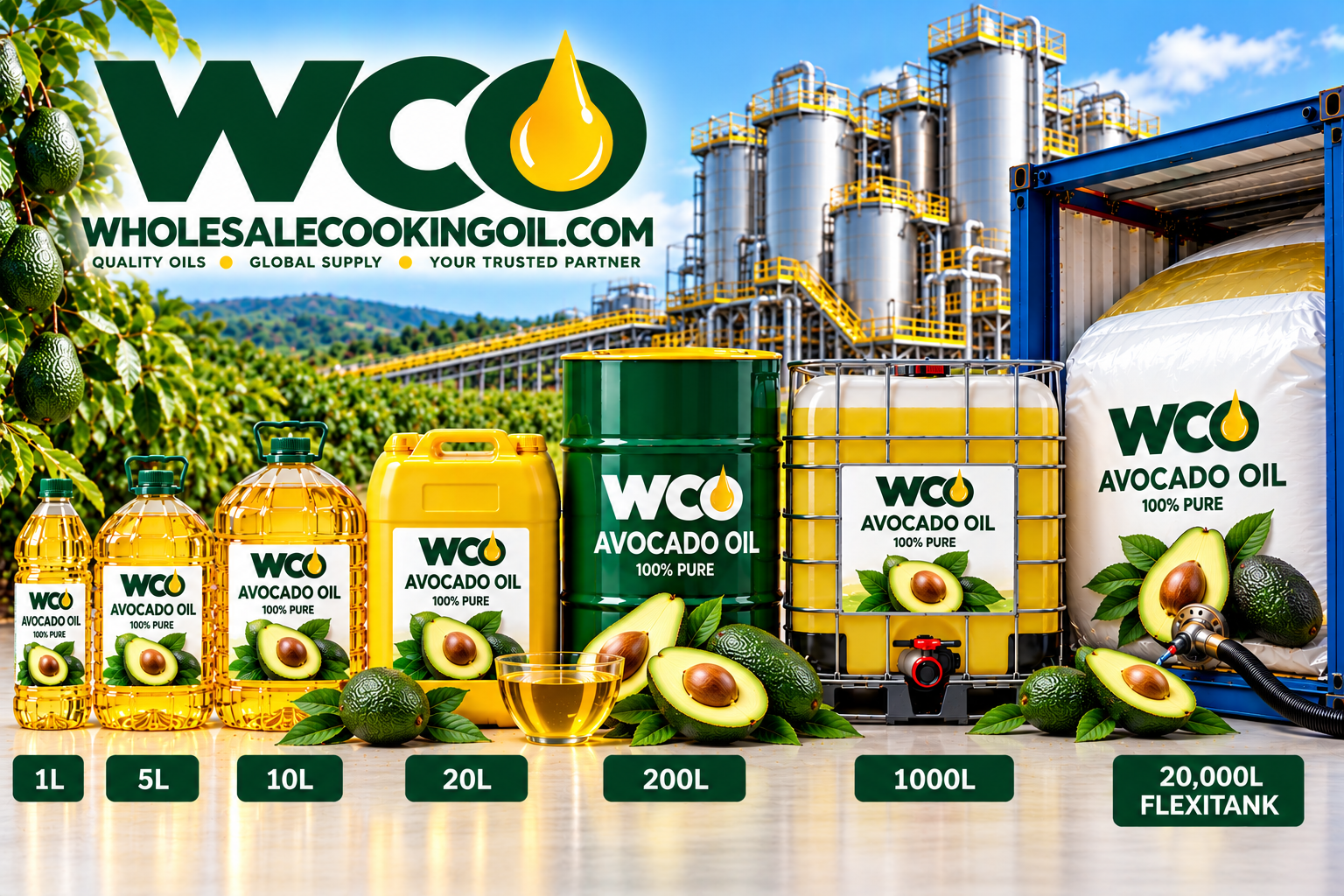
Avocado Oil
Bulk avocado oil pressed from avocado fruit: refined for a neutral taste and very high smoke point, or extra virgin…
View avocado oil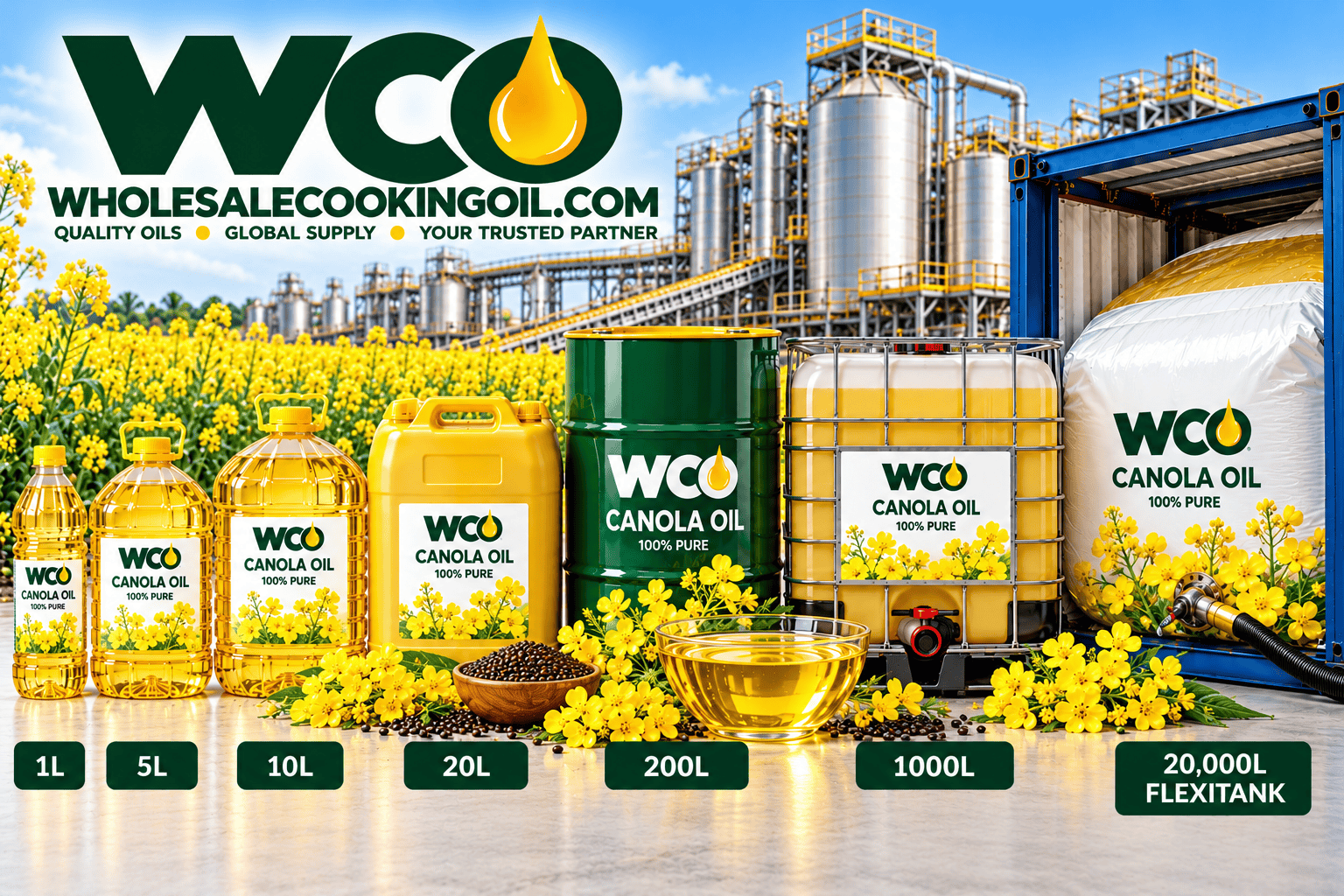
Canola Oil
Bulk canola oil, refined for a clean, neutral taste, with the lowest saturated fat of common cooking oils and natural…
View canola oil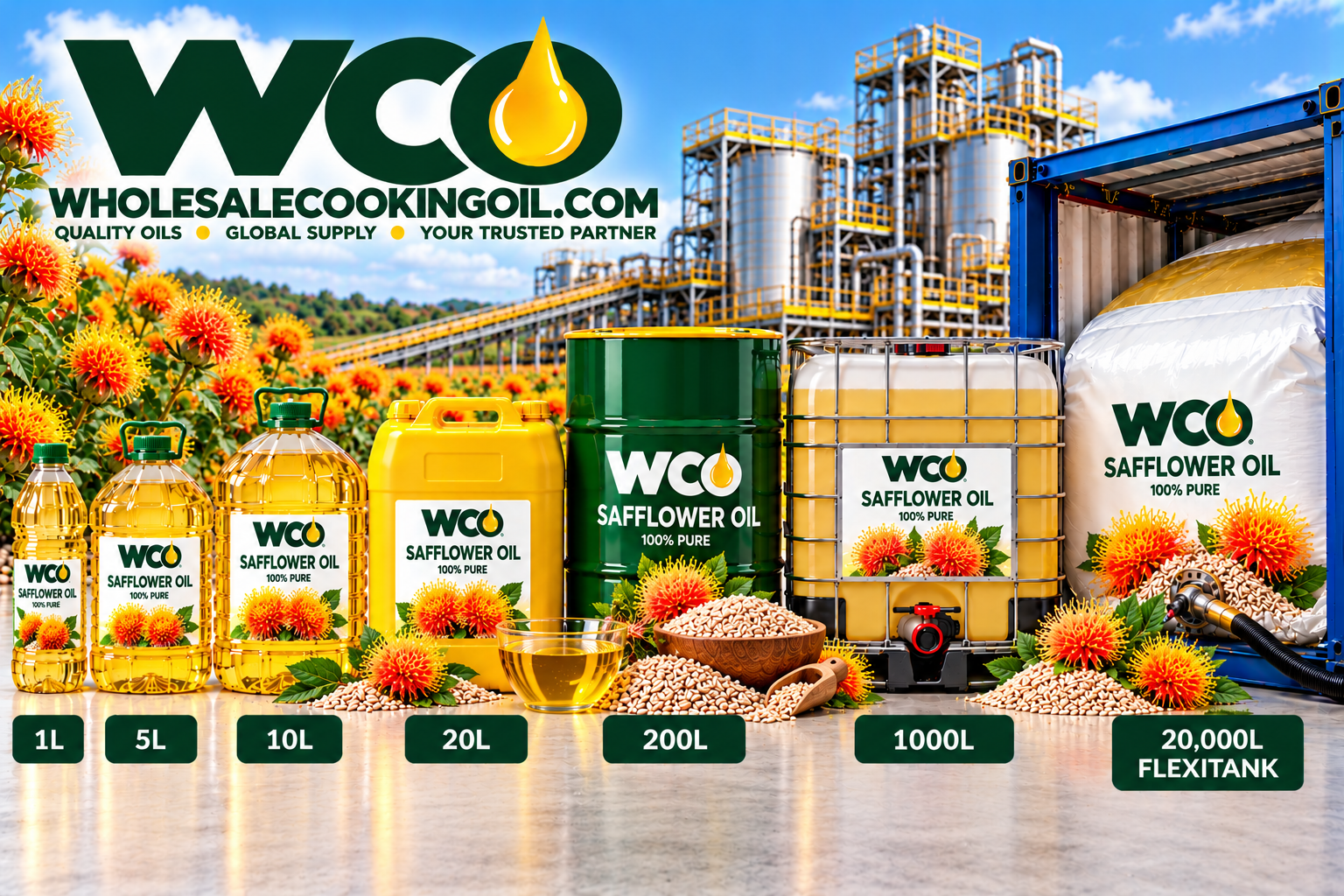
Safflower Oil
Bulk safflower oil in high-oleic grades for long-life frying and stable products, and high-linoleic grades for dressings and cold sauces.…
View safflower oil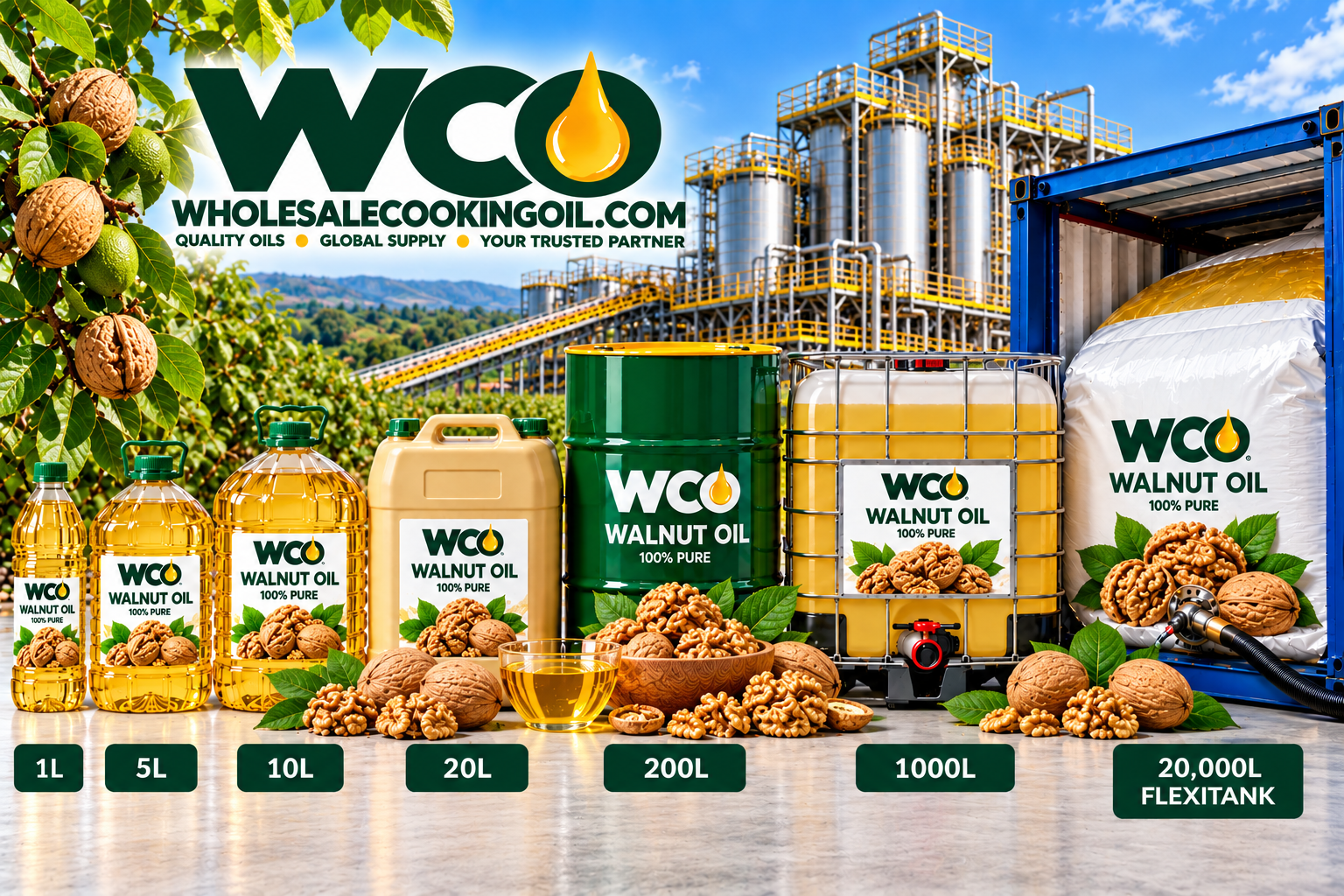
Walnut Oil
Bulk walnut oil with a delicate nutty flavor and natural plant omega-3, in cold-pressed, roasted and refined grades. For dressings,…
View walnut oil