High-oleic · High-linoleic · Cold-pressed
Bulk Safflower Oil
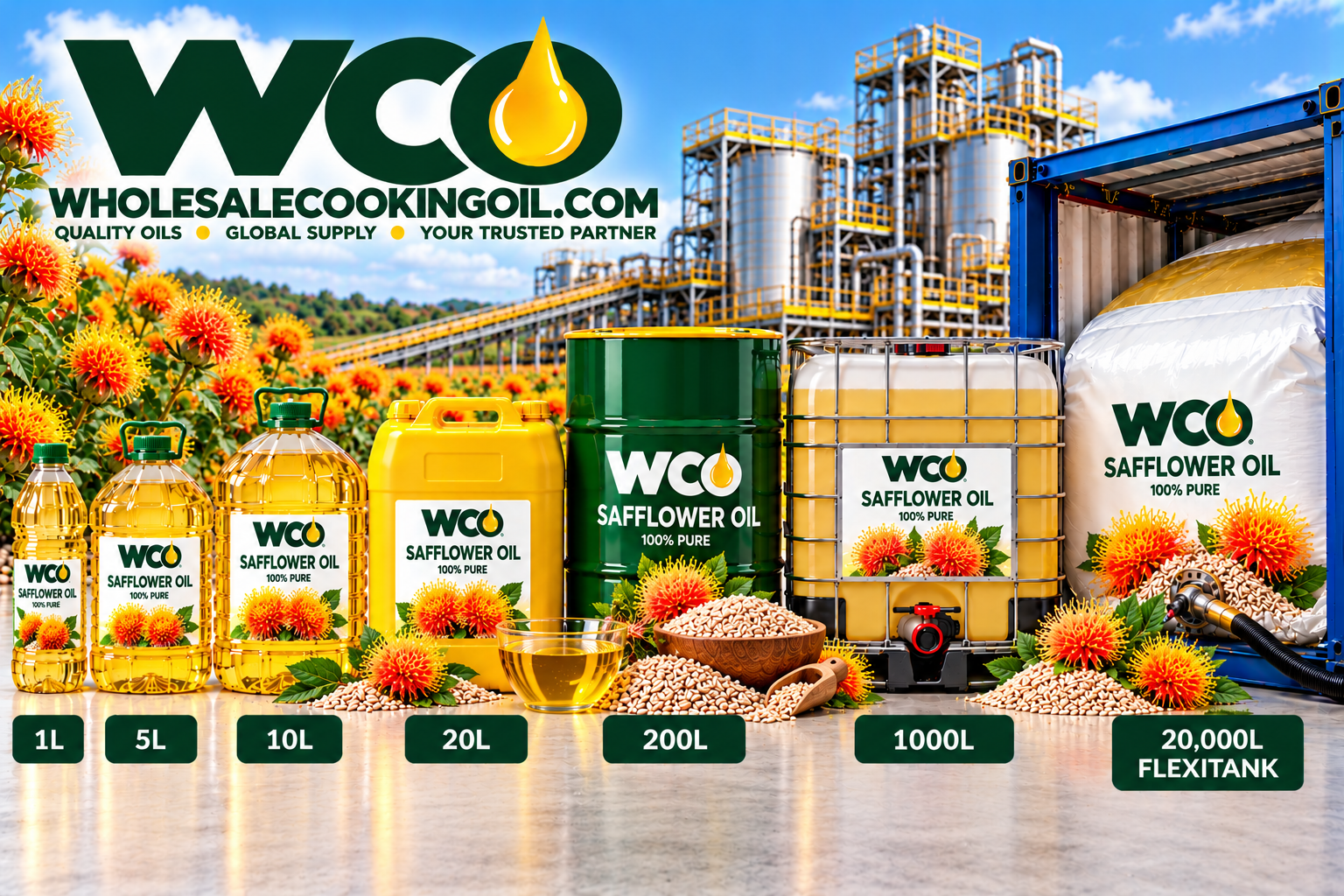
Bulk safflower oil in high-oleic grades for long-life frying and stable products, and high-linoleic grades for dressings and cold sauces. Neutral taste and a high smoke point, supplied from 1L bottles to 20,000L flexitanks.
- Grades
- High-oleic, high-linoleic, cold-pressed
- Smoke point (refined HO)
- About 265 °C / 510 °F
- Best for
- Long-life frying
- Processed in
- USA
Request a quote for Safflower Oil
1. Choose a grade
2. Choose a pack size
Minimum 1,000 L (≈264 gal) per quote — mix any oils and pack sizes. Nothing to pay now: we reply by email with a quotation showing the price, shipping terms and estimated arrival date.
Two very different oils from one crop
Bulk safflower oil is pressed from the seeds of the safflower plant, a hardy, thistle-like crop grown in dry regions. Plant breeders have developed two distinct types. High-oleic safflower oil is mostly monounsaturated fat, very stable under heat and one of the longest-lasting oils in a fryer. High-linoleic safflower oil is mostly polyunsaturated omega-6 fat and is used where a light oil that stays liquid in the cold matters more than heat stability.
Our safflower oil is processed and packed in the United States from US-grown and imported safflower seed, and supplied from 1-liter bottles to 20,000-liter flexitanks.
High-oleic vs high-linoleic safflower oil
| High-oleic, refined | High-linoleic, refined | |
|---|---|---|
| Main fat | Oleic acid (omega-9), 70.0–83.7% | Linoleic acid (omega-6), 67.8–83.2% |
| Heat stability | Very high | Lower |
| Iodine value | 80–100 | 136–148 |
| Best for | Deep frying, baking, snack frying, long shelf life products | Dressings, mayonnaise, cold sauces |
| Typical shelf life | Up to 24 months | Up to 18 months |
Ranges are from the Codex Alimentarius standard for safflowerseed oil. A cold-pressed (virgin) grade is also available for dressings and natural food products. Always state the type on your order, because the two refined grades look the same but behave very differently.
Why buyers choose high-oleic safflower oil
- Long fry life. With very little omega-3 and mostly monounsaturated fat, it breaks down slowly at frying temperatures.
- Neutral taste. Refined safflower oil is pale and bland, so it does not mask the flavor of food.
- High smoke point. Refined high-oleic safflower oil is often quoted at around 265 °C (510 °F), among the highest of common cooking oils.
- Low saturated fat. It is one of the lowest in saturated fat of all cooking oils, for clean-label and nutrition-focused products.
In the United States, oils with at least 70% oleic acid may qualify for an FDA qualified health claim about coronary heart disease. Any claim must follow the exact FDA wording and conditions, and rules differ in other markets.
How bulk safflower oil is priced
Safflower is a smaller crop than soybean or canola, so safflower oil is usually priced above the major seed oils. Each grade is quoted separately on pack size, total volume and destination; the minimum is 1,000 liters per quote.
Technical data
Safflower Oil grades and specifications
Available grades
| Grade | Description |
|---|---|
| High-oleic, refined | About 75–80% oleic acid. Long fry life and shelf life, neutral taste. |
| High-linoleic, refined | About 70–75% linoleic acid (omega-6). For dressings and cold applications. |
| Cold-pressed (virgin) | Unrefined, with a mild nutty flavor. For dressings and natural products. |
Each grade is priced separately. The specifications below are for High-oleic, refined; specifications for other grades are supplied with your quote.
Quality specification
| Parameter | Specification |
|---|---|
| Appearance (20 °C) | Clear, bright, free of sediment |
| Odor and taste | Bland, neutral, free of foreign odors |
| Color (Lovibond, 5¼ in. cell) | 1.5 red max. |
| Free fatty acids (as oleic acid) | 0.10% max. |
| Peroxide value (at packing) | 1.0 meq O₂/kg max. |
| Moisture and volatile matter | 0.05% max. |
| Insoluble impurities | 0.05% max. |
| Oleic acid (C18:1) | 70.0% min. |
| Iodine value (Wijs) | 80–100 |
| Saponification value | 186–194 mg KOH/g |
| Relative density (20 °C) | 0.913–0.919 |
| Refractive index (40 °C) | 1.460–1.464 |
| Smoke point | About 265 °C / 510 °F |
| Shelf life (unopened) | Up to 24 months; 12 months for IBC and flexitank deliveries |
Typical specification for refined high-oleic safflower oil. Identity values follow the Codex Alimentarius standard for safflowerseed oil (high oleic acid). Refined high-linoleic safflower oil has an iodine value of 136–148 and a shorter shelf life; its specification and the cold-pressed specification are supplied with your quote. Values for each lot are confirmed on the Certificate of Analysis supplied with your order.
Fatty acid profile
| Fatty acid | % of total fatty acids |
|---|---|
| Palmitic acid (C16:0) | 3.6–6.0 |
| Stearic acid (C18:0) | 1.5–2.4 |
| Oleic acid (C18:1) | 70.0–83.7 |
| Linoleic acid (C18:2) | 9.0–19.9 |
| Alpha-linolenic acid (C18:3) | 1.2 max. |
| Arachidic acid (C20:0) | 0.3–0.6 |
Ranges for high-oleic safflowerseed oil from the Codex Alimentarius Standard for Named Vegetable Oils. For comparison, the Codex ranges for high-linoleic safflowerseed oil are 8.4–21.3% oleic acid and 67.8–83.2% linoleic acid.
Source: Codex Alimentarius Standard for Named Vegetable Oils (CXS 210-1999)
Applications
What safflower oil is used for
Snack production
High-oleic safflower oil for chips, nuts and snacks that need a long shelf life.
Learn more about Snack productionFood manufacturing
A stable, neutral oil for prepared foods, and high-linoleic oil for dressings and mayonnaise.
Learn more about Food manufacturingRetail and private label
1L and 5L bottles, or under your own brand.
Learn more about Retail and private labelPackaging
Safflower Oil pack sizes
Combine safflower oil grades with any other oils on the same quote. 20L jerrycans and 200L drums suit most fryers and production lines.
| Pack size | US gallons | Ordered as | Liters per order unit |
|---|---|---|---|
| 1L Bottles | 0.26 gal | Case of 12 × 1L | 12 L |
| 5L Bottles | 1.3 gal | Case of 4 × 5L | 20 L |
| 10L Containers | 2.6 gal | Case of 2 × 10L | 20 L |
| 20L Jerrycans | 5.3 gal | Per jerrycan | 20 L |
| 200L Drums | 52.8 gal | Per drum | 200 L |
| 1,000L IBC Totes | 264 gal | Per IBC tote | 1,000 L |
| 20,000L Flexitanks | 5,283 gal | Per flexitank (20ft container) | 20,000 L |
Sourcing
From dryland fields to finished oil
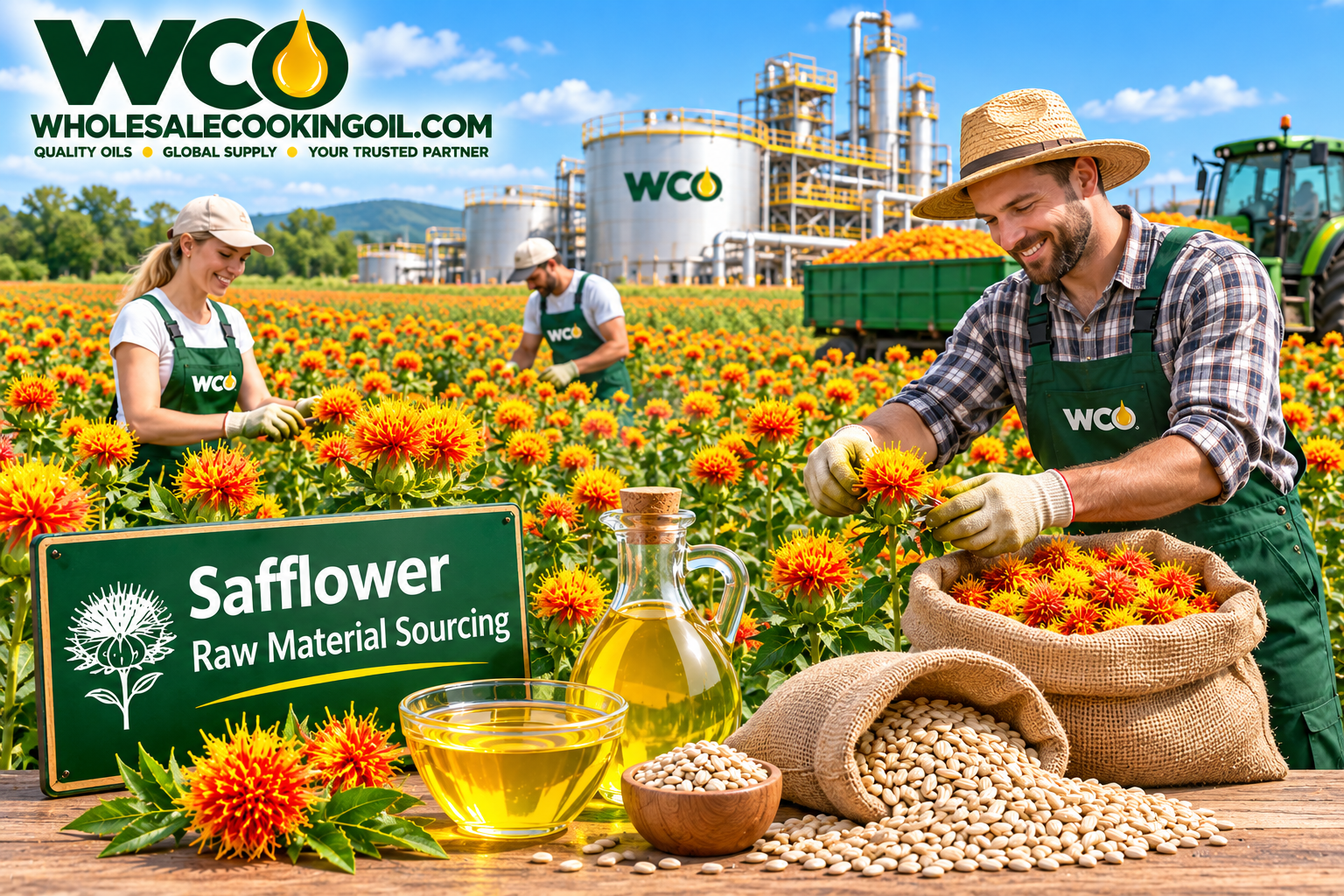
Safflower is a drought-tolerant crop with a deep taproot, grown in dry farming regions where other oilseeds struggle. Our safflower oil is processed and packed in the United States from US-grown and imported safflower seed.
High-oleic and high-linoleic seed come from different plant varieties and are kept separate from field to tank. The oil is pressed, refined, tested and packed at our US facilities.
Processing
How we make safflower oil
Cleaning
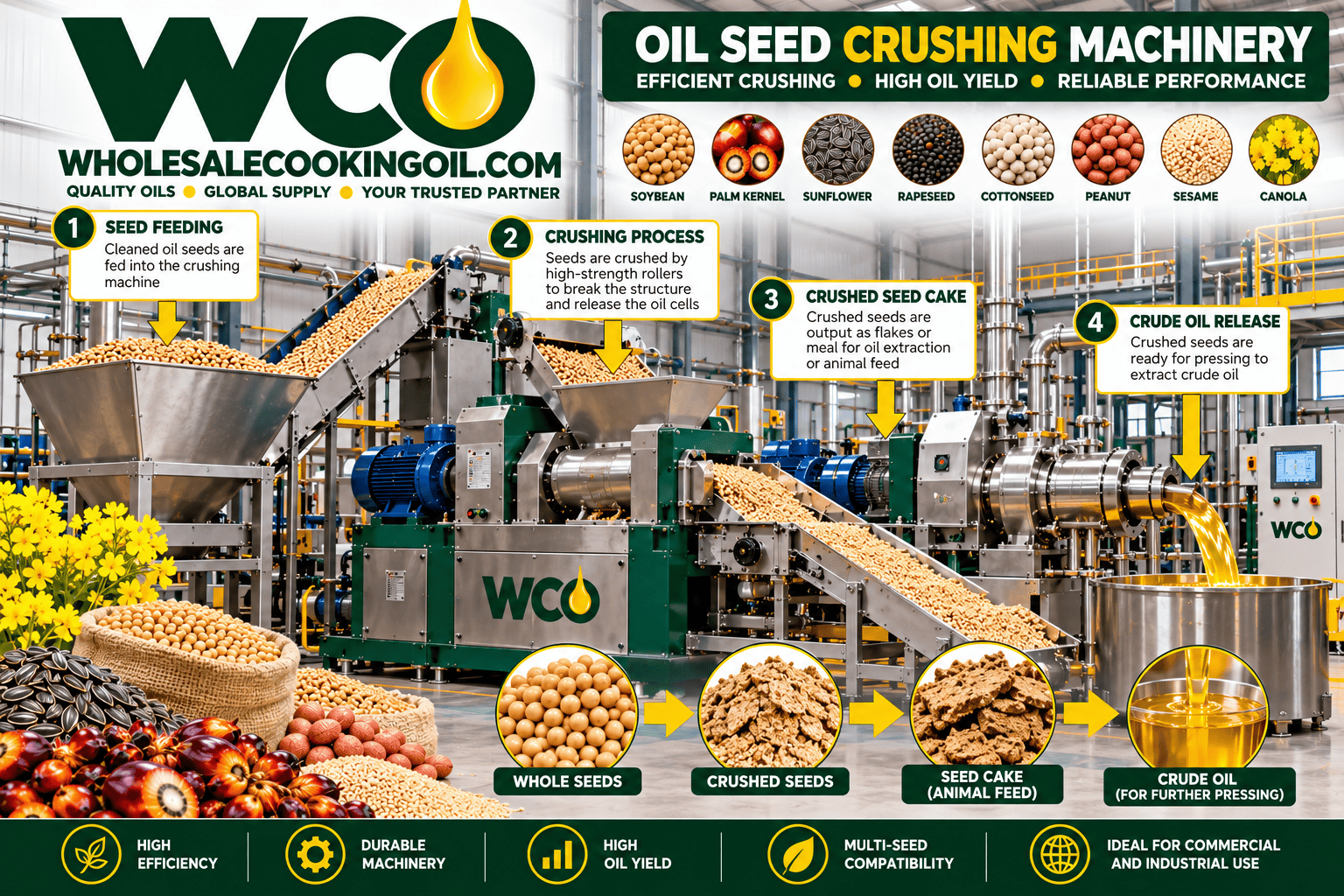
Seed is cleaned and sorted, with high-oleic and high-linoleic varieties kept apart.
Pressing
Seeds are mechanically pressed to release the oil.
Refining (refined grades)
Degumming, neutralizing, bleaching and deodorizing give a pale, neutral oil.
Filtering
Cold-pressed oil is filtered only.
Testing
Each batch is tested against specification, including the fatty acid profile.
Packing
Filled into bottles, jerrycans, drums, IBC totes or flexitanks.
Storage & handling
Keeping safflower oil fresh
Temperature
Store between 10 and 25 °C (50–77 °F), away from heat sources.
Light and air
Keep containers sealed and out of direct sunlight to prevent rancidity.
Shelf life
Up to 24 months unopened for refined high-oleic oil and up to 18 months for high-linoleic oil. Use cold-pressed oil within a year.
In the fryer
Fry at 170–180 °C, filter daily, top up with fresh oil, and replace the oil when it darkens, foams or smokes at normal frying temperature.
Buying wholesale
Wholesale safflower oil supplier: how ordering works
Wholesale Cooking Oil LLC supplies safflower oil in bulk direct to food businesses in the United States and worldwide. Every lot is tested and packed at our US facilities and shipped with its Certificate of Analysis. Here is what to expect when you buy safflower oil wholesale from us.
Grades
High-oleic, refined, High-linoleic, refined, Cold-pressed (virgin). Each grade is quoted separately.
Pack sizes
1L Bottles, 5L Bottles, 10L Containers, 20L Jerrycans, 200L Drums, 1,000L IBC Totes, 20,000L Flexitanks. Mix any sizes and oils on one quote.
Minimum order
1,000 L (≈264 gal) per quote, across any combination of oils and pack sizes.
Your quotation
Free and emailed to you, valid for 7 days, showing the price, any freight and other charges, the route and an estimated arrival date.
Payment
100% in advance in US dollars, by bank transfer or cryptocurrency, against the pro forma invoice in your quotation.
Dispatch and delivery
Dispatched within 24–48 hours of payment clearing. By truck across the US (usually 1–5 business days), Canada and Mexico, or by sea from five US seaports worldwide.
Documents
A Certificate of Analysis for each lot, plus the commercial invoice, packing list and transport document. Specification sheets on request.
Who we supply
Restaurants, hotels, caterers, bakeries, food manufacturers, distributors, retailers and importers.
FAQ
Safflower Oil questions
What is the minimum order?
1,000 liters (about 264 US gallons) per quote, across any combination of oils, grades and pack sizes. For example, one 1,000L IBC tote, five 200L drums, or 50 cases of 4 × 5L bottles.
What is the difference between high-oleic and high-linoleic safflower oil?
They come from different safflower varieties. High-oleic oil is mostly monounsaturated fat and very stable for frying; high-linoleic oil is mostly polyunsaturated omega-6 fat and is used in dressings and cold foods.
Is safflower oil good for deep frying?
Refined high-oleic safflower oil is one of the best frying oils, with a long fry life and a high smoke point. High-linoleic safflower oil is better suited to cold uses.
Which grade should I choose?
For frying, baking and long shelf life products, choose high-oleic. For dressings and mayonnaise where the oil must stay liquid in the cold, high-linoleic works well.
Does safflower oil taste of anything?
Refined safflower oil is neutral. Cold-pressed safflower oil has a mild, nutty taste.
How is the price set?
Each grade is priced separately, based on the crop, grade, pack size, total volume and delivery destination. Your quotation shows the price, any freight and other charges, the shipping terms and route, and an estimated arrival date.
Compare
Related oils
High-Oleic Sunflower Oil
Bulk high-oleic sunflower oil with at least 75% oleic acid and almost no omega-3, for long fry life and extended…
View high-oleic sunflower oil
High-Oleic Canola Oil
Bulk high-oleic canola oil with about 7% saturated fat, about 70% monounsaturated fat and only about 3% omega-3, for a…
View high-oleic canola oil
Sunflower Oil
Bulk sunflower oil, refined and winterized, with a clean, neutral taste and a high smoke point. Processed and packed in…
View sunflower oil
Canola Oil
Bulk canola oil, refined for a clean, neutral taste, with the lowest saturated fat of common cooking oils and natural…
View canola oil
Grapeseed Oil
Bulk grapeseed oil from the wine harvest: refined for a pale color and clean, light taste, or cold-pressed with a…
View grapeseed oil
Deep Frying Oil
Bulk deep frying oil, a blend of RBD palm olein and high-oleic sunflower oil made for fryers that run all…
View deep frying oil