Industries · Fast Food & QSR Chains
Frying Oil for Fast Food and QSR Chains
For chains, frying oil is one of the biggest food costs and a big part of how the food tastes. We supply stable, long-life frying oils with the same specification in every lot, for every location.
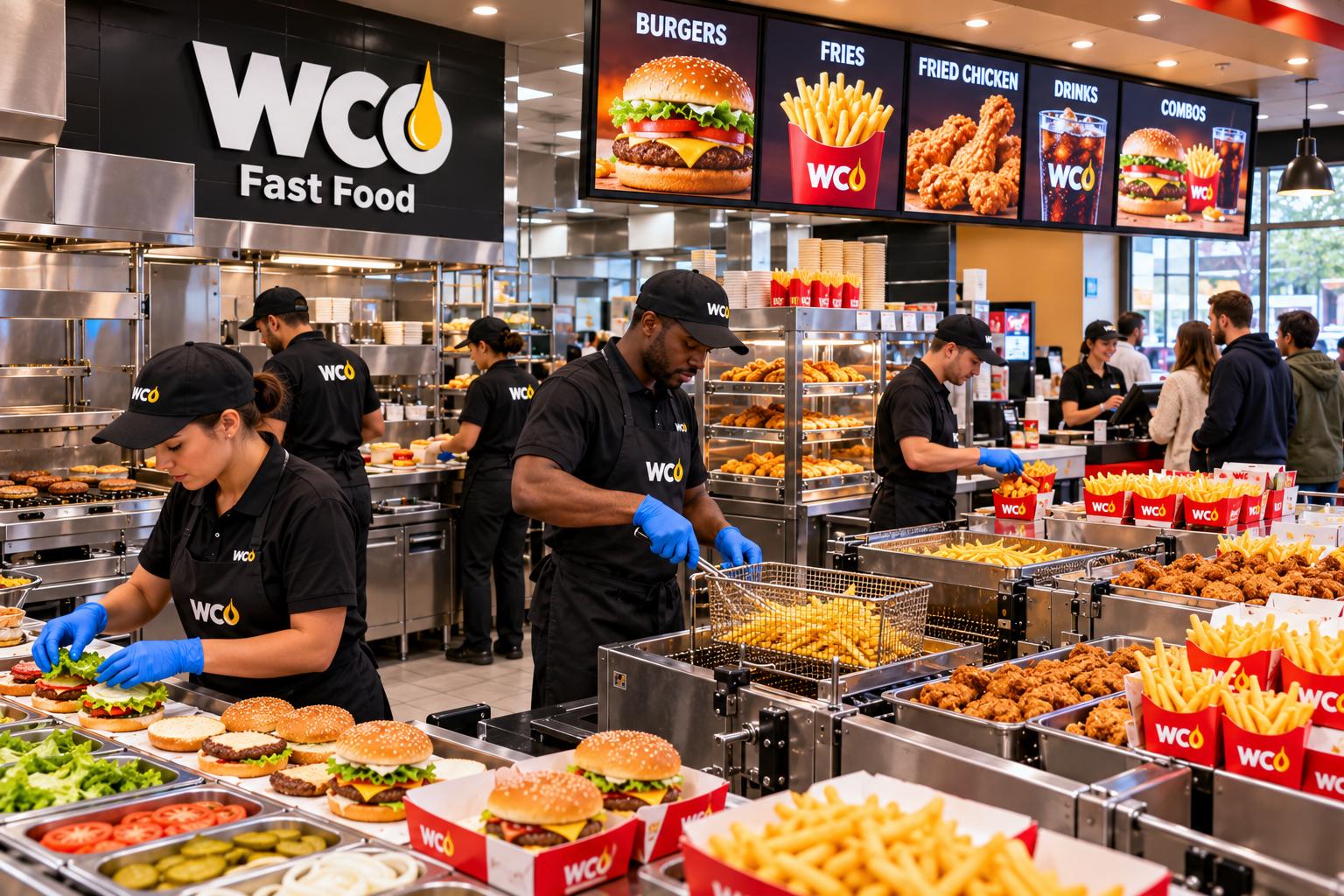
Quick-service fryers run hot for most of the day, so the oil must resist breakdown, keep a neutral taste and stay consistent across every restaurant in the chain. Oils low in polyunsaturated fat and omega-3, such as palm olein, high-oleic oils and our deep frying oil, last longest.
We supply jerrycans for individual restaurants and IBC totes or flexitanks for central warehouses and distributors, all made to one specification and documented with a Certificate of Analysis for every lot.
What matters
What fast food and QSR chains need from an oil supplier
Fry life
Fewer oil changes per week lowers cost and waste.
Same specification everywhere
Every restaurant fries with the same oil.
Food quality
Clean taste, crisp texture and good color.
Supply for many sites
Packs for restaurants, bulk for central warehouses.
Recommended oils
Oils for fast food and QSR chains
Our most popular choices. Every oil is available in every pack size; browse all oils.
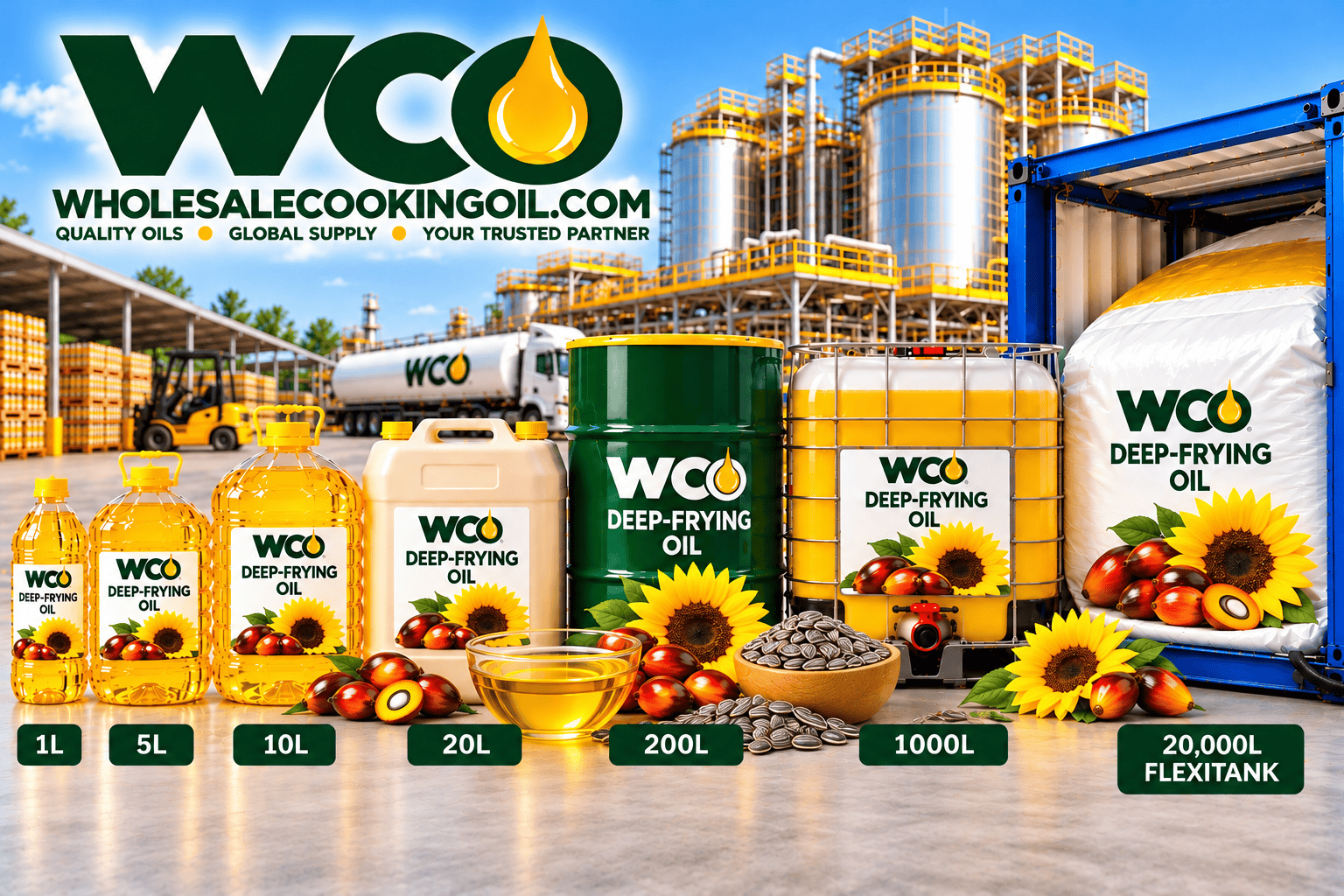
Deep Frying Oil
Formulated for continuous frying.
View oil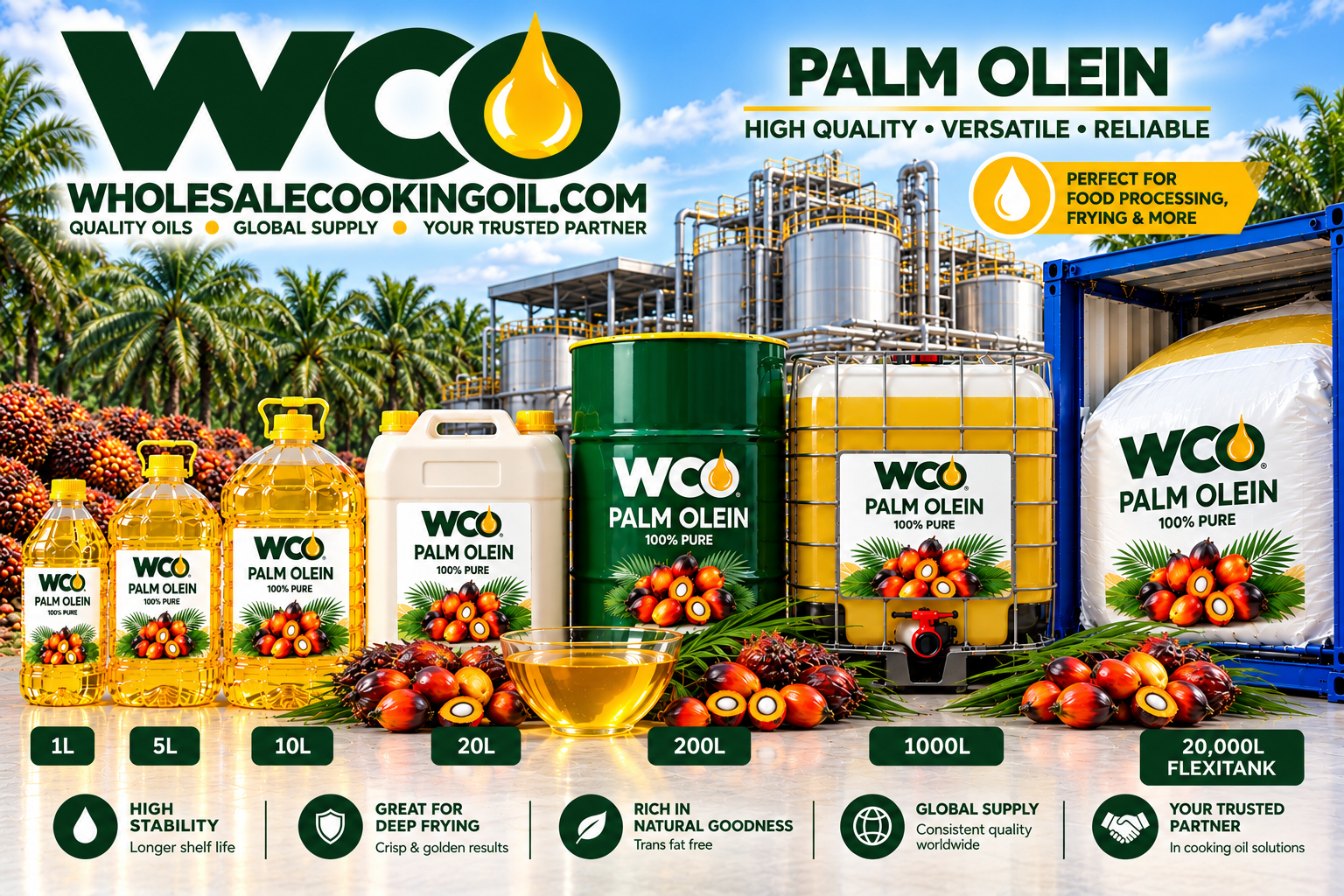
Palm Olein
Stable, economical and widely used in quick service.
View oil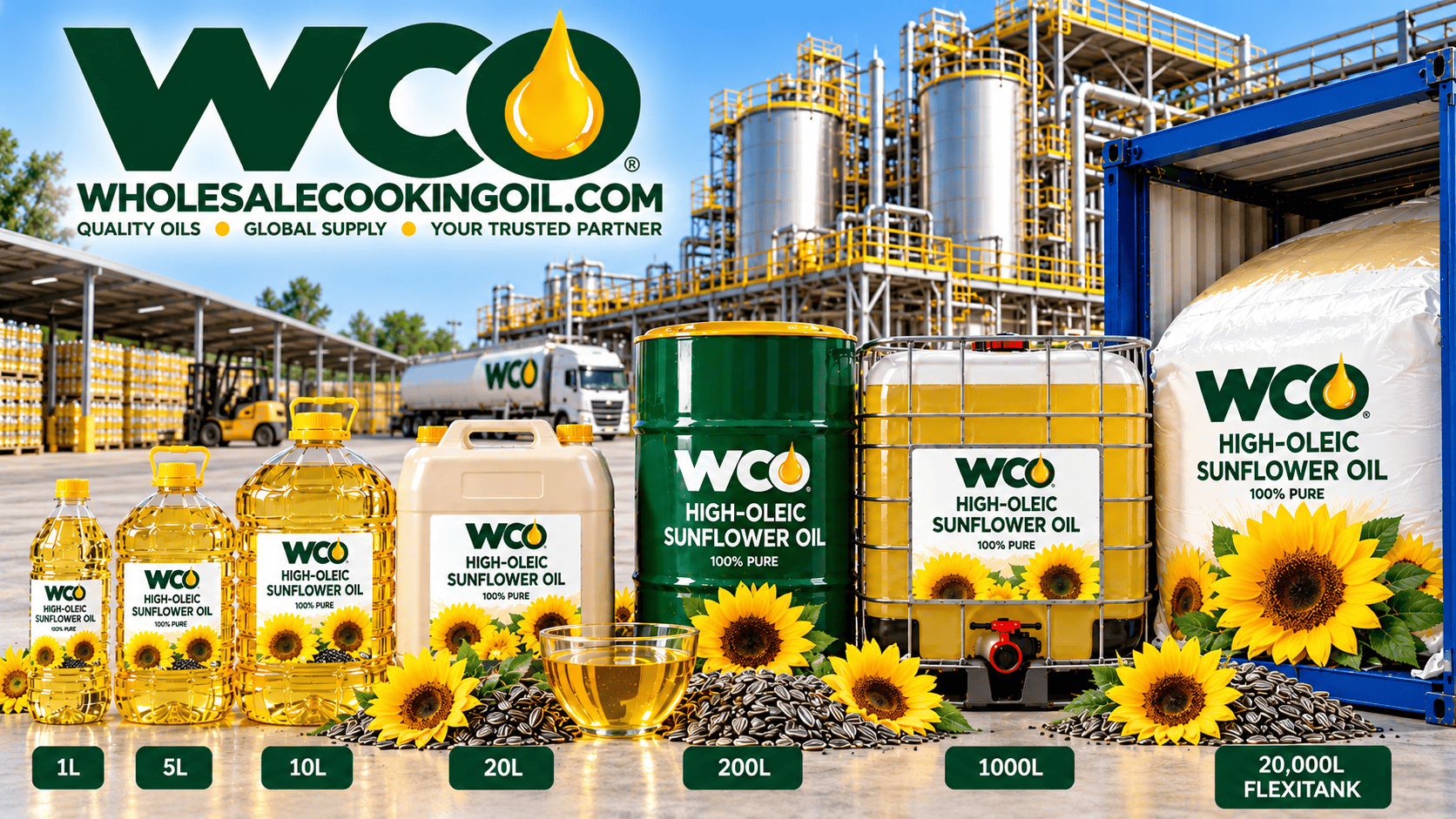
High-Oleic Sunflower Oil
Long fry life with low saturated fat.
View oil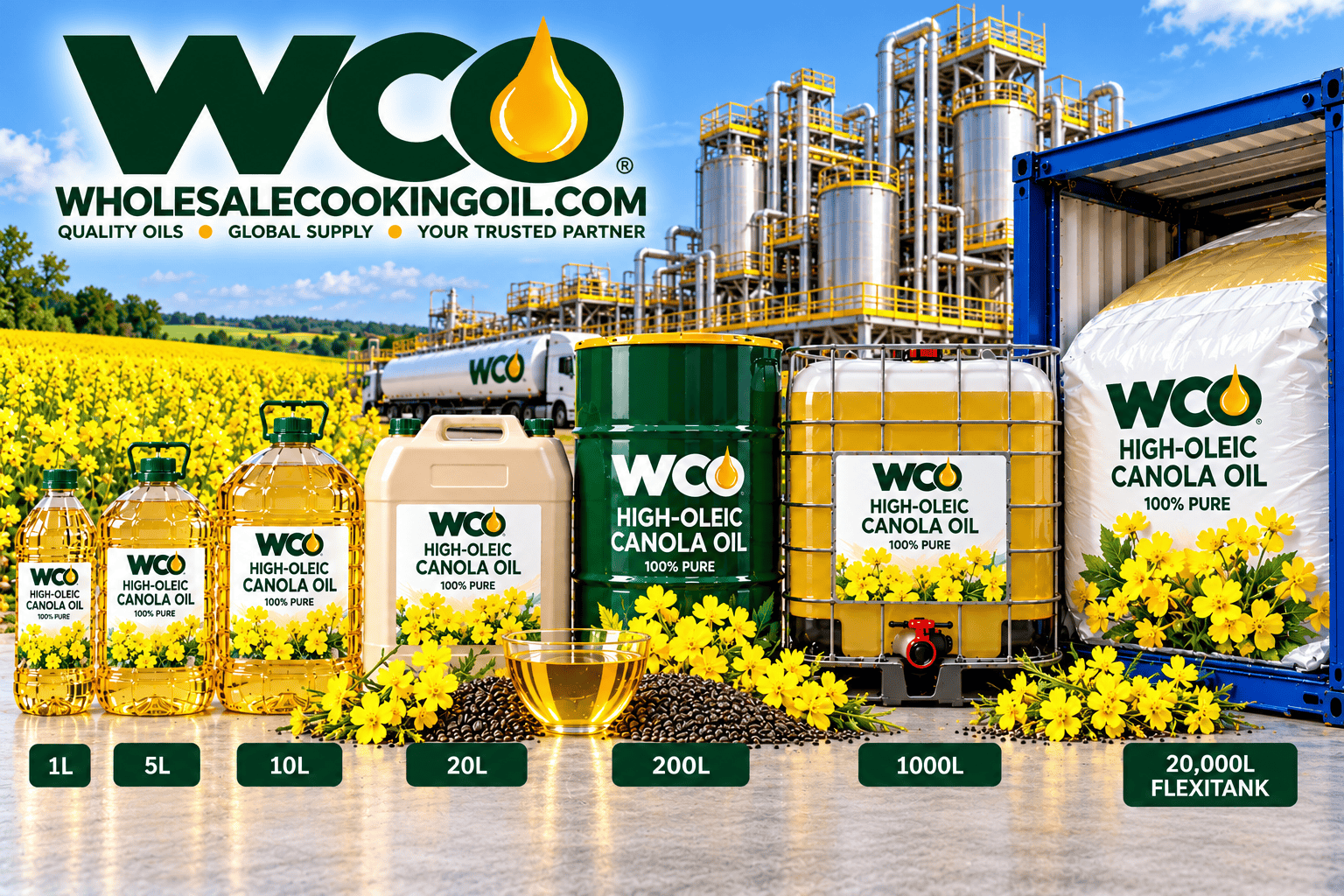
High-Oleic Canola Oil
Low saturated fat and very little omega-3.
View oil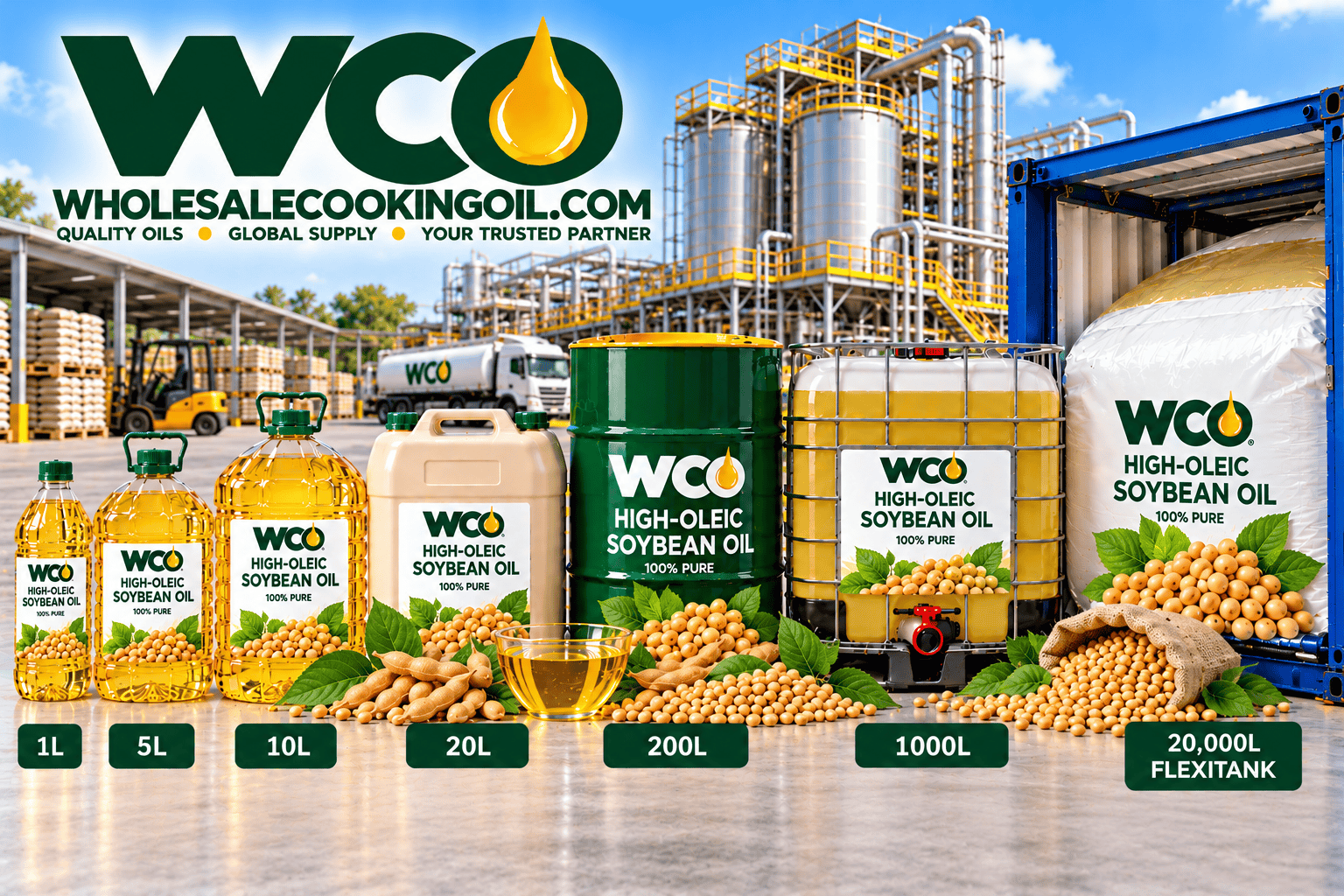
High-Oleic Soybean Oil
A stable soybean option for fryers.
View oil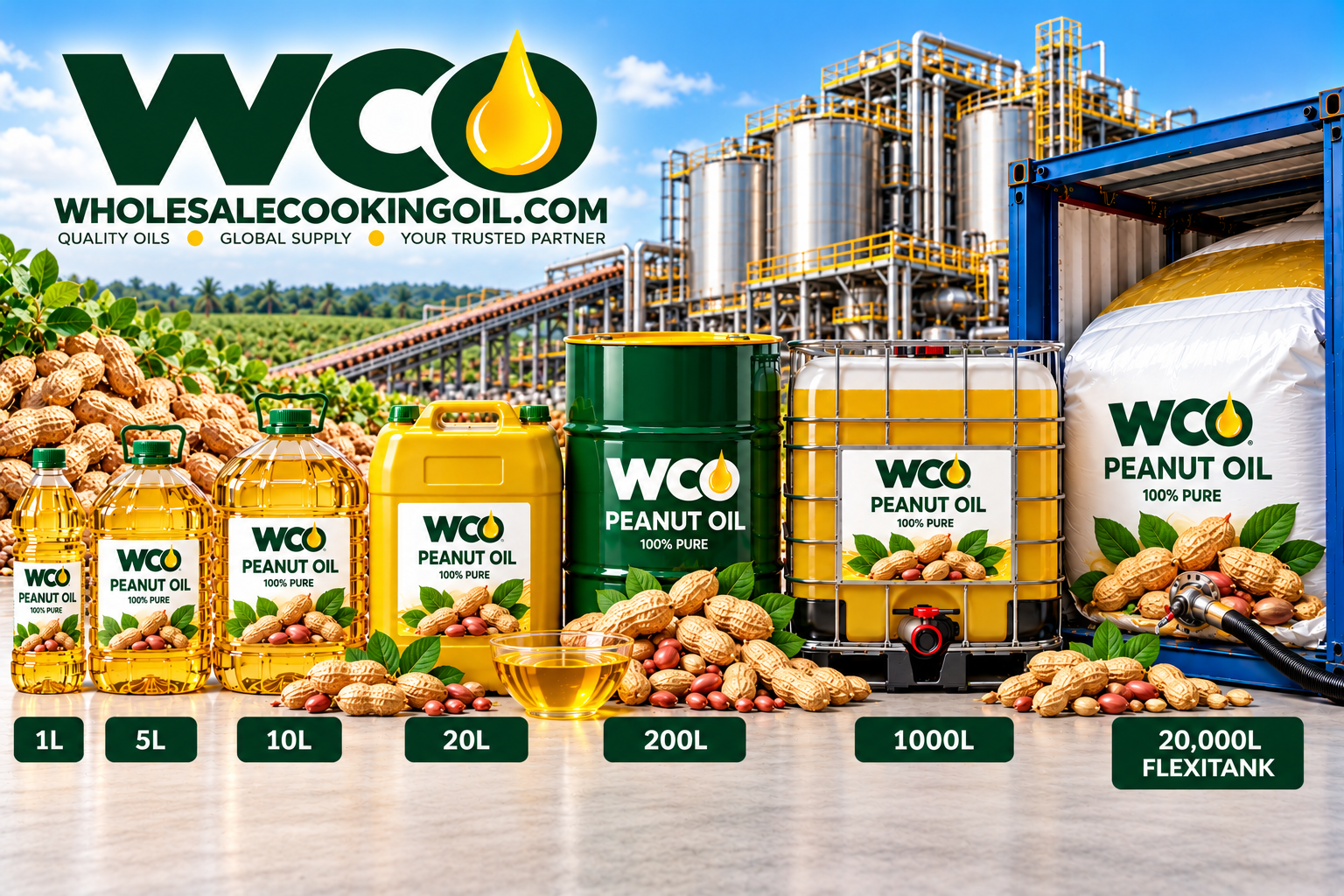
Peanut Oil
A classic for fried chicken.
View oilCompare
How the oils compare
Heat stability reflects how much polyunsaturated fat and omega-3 an oil contains: the less it has, the longer it lasts in a fryer and in finished food. Smoke points are for refined grades, as stated on each oil page.
| Oil | Best for | Heat stability | Smoke point | At room temperature |
|---|---|---|---|---|
| Deep Frying Oil | Continuous frying | Very high | About 230 °C / 450 °F | Liquid |
| Palm Olein | Economical long-life frying | Very high | About 230 °C / 450 °F | Liquid; may cloud when cool |
| High-Oleic Sunflower Oil | Long fry life, low saturated fat | Very high | About 230 °C / 450 °F | Liquid |
| High-Oleic Canola Oil | Long fry life, very low omega-3 | Very high | About 246 °C / 475 °F | Liquid |
| High-Oleic Soybean Oil | Stable soybean-based frying | Very high | About 230 °C / 450 °F | Liquid |
| Peanut Oil | Fried chicken | High | About 230 °C / 450 °F | Liquid; may cloud when cold |
Example
Example order: a chain of 20 restaurants
If each of 20 restaurants uses about 60 liters of frying oil a week, the chain uses about 1,200 liters a week. A central warehouse could take one 20,000-liter flexitank roughly every four months and supply restaurants in jerrycans, or each restaurant could order jerrycans directly.
| Oil | Pack | Quantity | Liters |
|---|---|---|---|
| Palm Olein | 20,000L Flexitanks | 1 × 20,000L Flexitank | 20,000 L |
| Total | 20,000 L | ||
An illustration only: your own quantities depend on your menu, equipment and volumes. The minimum is 1,000 liters per quote across all lines.
Good practice
Tips for fast food and QSR chains
- Keep fryers at the recommended temperature; in the EU, frying potato products at 160–175 °C is part of acrylamide reduction rules.
- Measure total polar compounds with a frying-oil tester. Germany’s long-standing guidance treats oil above 24% as spent, and India sets a 25% limit.
- Filter oil at least daily and top up with fresh oil.
- Fry similar foods together to limit flavor transfer and breakdown.
- Send used oil to licensed collectors for recycling.
Rules and research
What fast food and QSR chains should know
- The EU sets an acrylamide benchmark of 500 µg/kg for ready-to-eat French fries, and requires fry temperatures of 160–175 °C for potato products as part of acrylamide reduction. Source: Commission Regulation (EU) 2017/2158 on acrylamide
- German DGF guidance treats frying oil above 24% total polar compounds as spent; India sets a legal limit of 25%. Source: OFI Magazine: Regulatory update, deep frying (2024)
- India requires food businesses using more than 50 liters of frying oil a day to keep records of oil use and disposal. Source: FSSAI guidance on used cooking oil
Rules change and differ by country. Always confirm the requirements that apply where you operate.
FAQ
Questions from fast food and QSR chains
Which oil lasts longest in a fryer?
Oils with little polyunsaturated fat and omega-3: our deep frying oil, palm olein and high-oleic sunflower, canola and soybean oils.
When should frying oil be discarded?
When it darkens, foams, smokes at normal temperature or tastes off. Many operators also measure total polar compounds: German guidance treats oil above 24% as spent, and India sets a legal limit of 25%.
Can every restaurant get the same oil?
Yes. We supply each oil to a written specification, and every lot comes with a Certificate of Analysis, so every outlet receives oil that meets the same specification. Order everything on one quote list and tell us how to split the deliveries.
Should a chain use a flexitank or jerrycans?
A flexitank is cheapest per liter but needs a storage tank and a way to distribute oil to restaurants. Jerrycans cost more per liter but go straight to each fryer.
Can you match our current frying oil specification?
Send us your specification, and we will confirm which oil and grade can meet it.
Other industries
We also supply
Get a quote for your business
Add the oils, grades and pack sizes you need to one list and send a single request.