
Industries · Bakeries
Bulk Baking Oils and Fats for Bakeries
Liquid oils for moist cakes and soft breads, solid fats for crisp pastry and fillings, and stable frying oil for doughnuts, from craft bakeries to industrial lines.
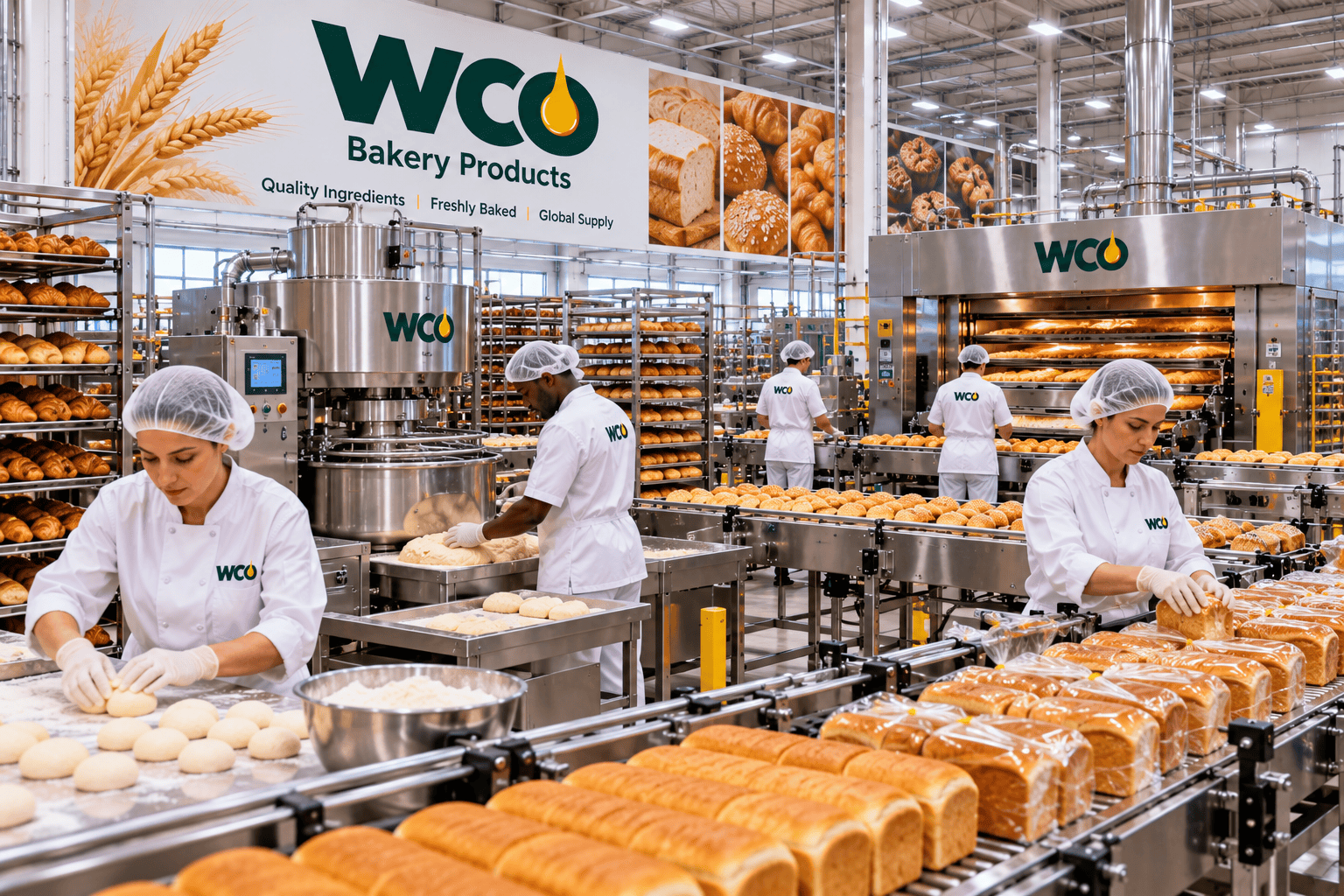
Bakers choose oils by how they behave in the dough. Liquid oils such as canola, sunflower and soybean oil give moist cakes, muffins and soft breads. Solid and semi-solid fats such as RBD palm oil, coconut oil and palm kernel oil give structure, flakiness and a clean bite in pastry, biscuits, fillings and coatings.
Doughnuts and other fried bakery products need a stable frying oil. We supply all of these on one quote, from 5-liter bottles for small bakeries to drums and IBC totes for production lines.
What matters
What bakeries need from an oil supplier
The right texture
Liquid oils for softness, solid fats for structure and flakiness.
Neutral flavor
Oils that let butter, vanilla and grain flavors come through.
Shelf life
Stable oils that keep baked goods fresh longer.
Production volumes
Drums and IBC totes that feed mixers directly.
Recommended oils
Oils for bakeries
Our most popular choices. Every oil is available in every pack size; browse all oils.
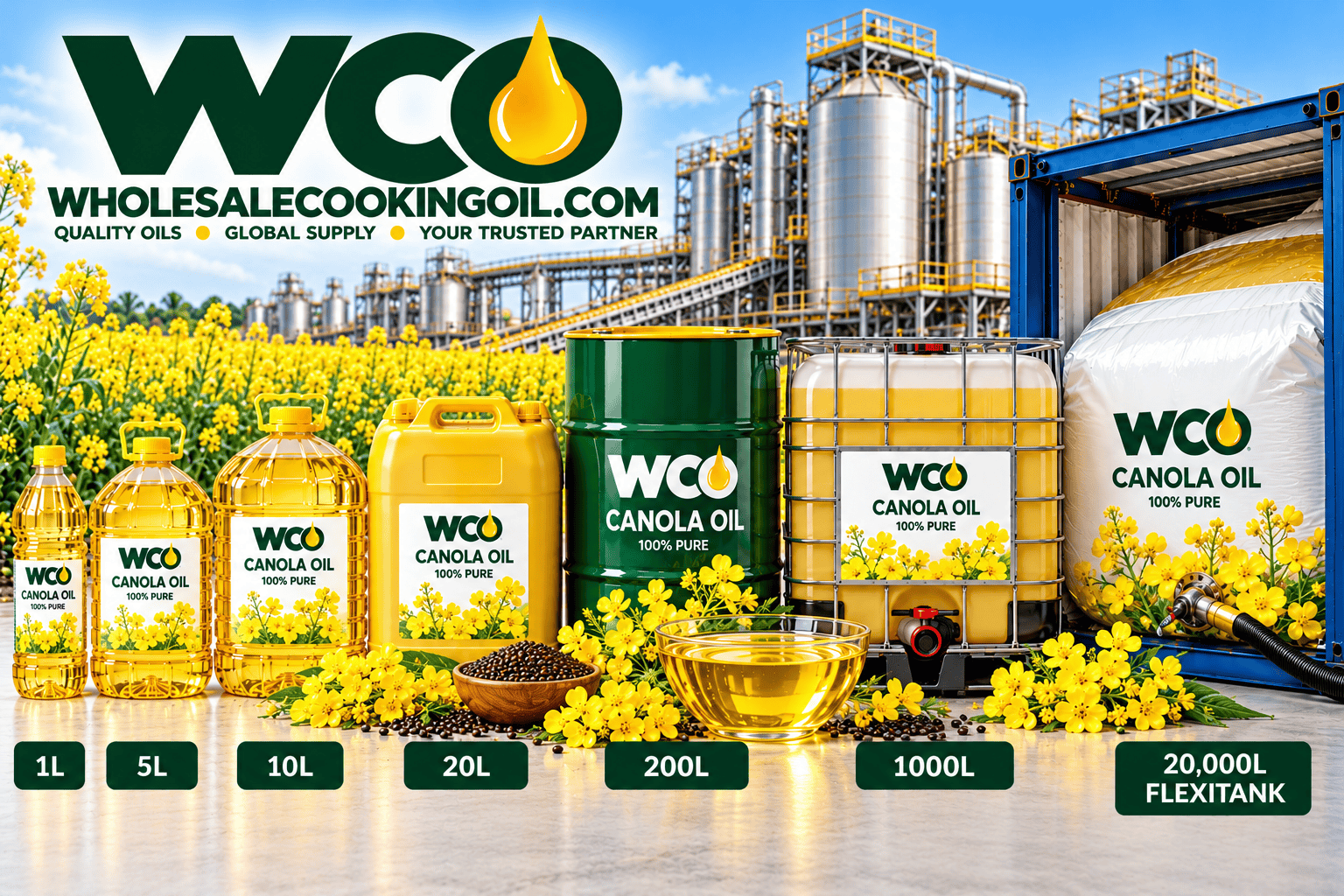
Canola Oil
Neutral and liquid for cakes, muffins and breads.
View oil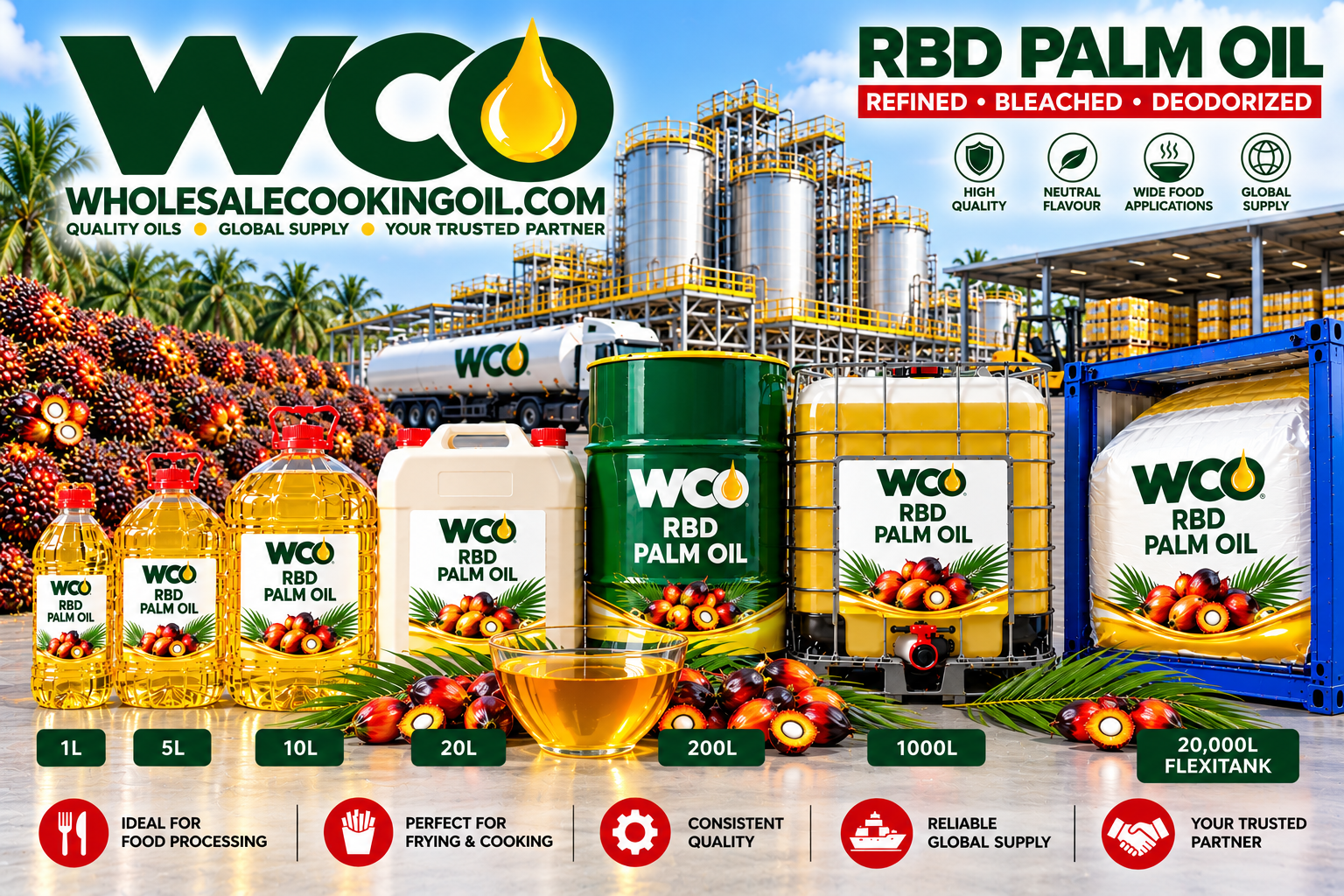
RBD Palm Oil
Semi-solid fat for pastry, biscuits and shortenings.
View oil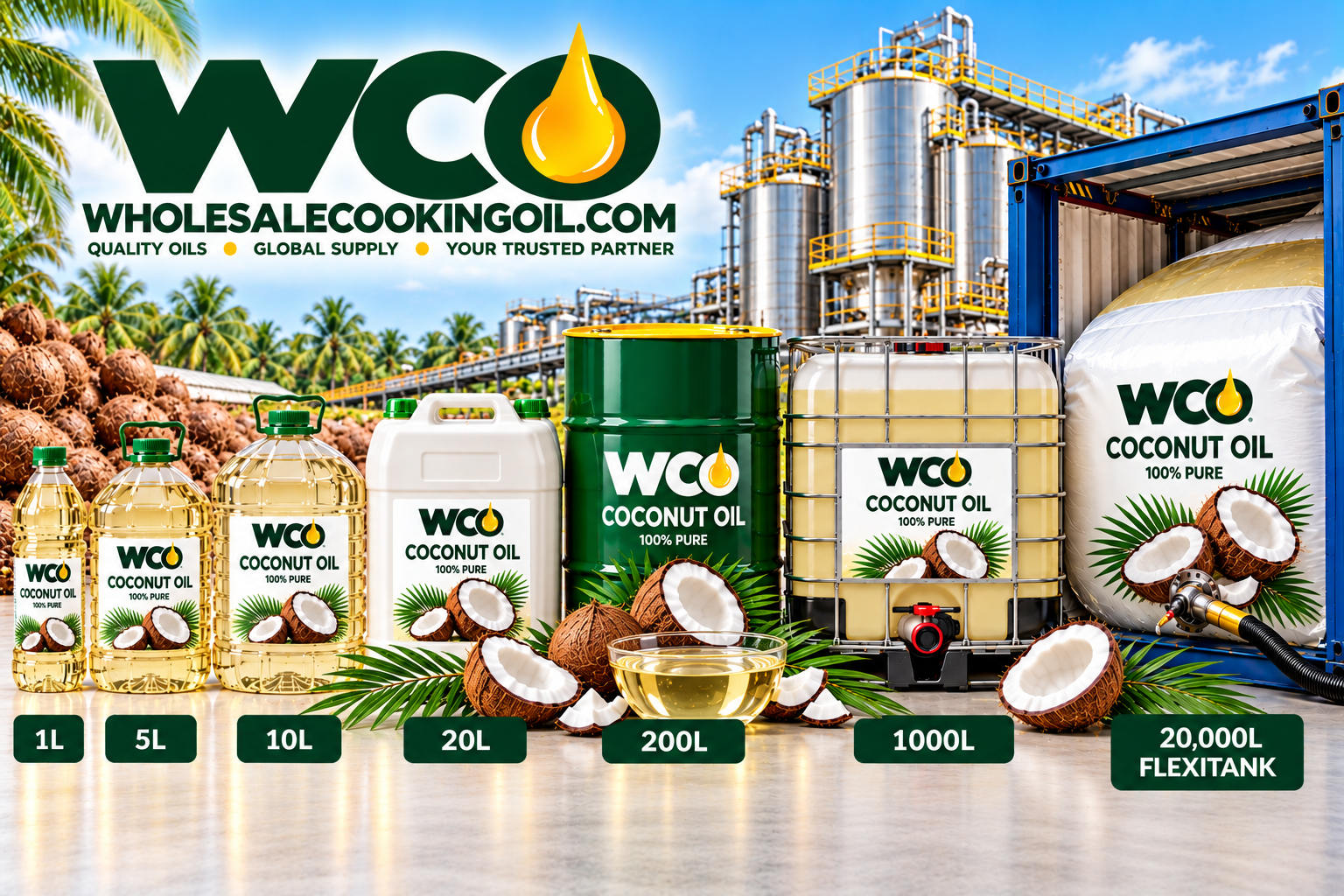
Coconut Oil
Sharp melt for crisp biscuits and plant-based bakes.
View oil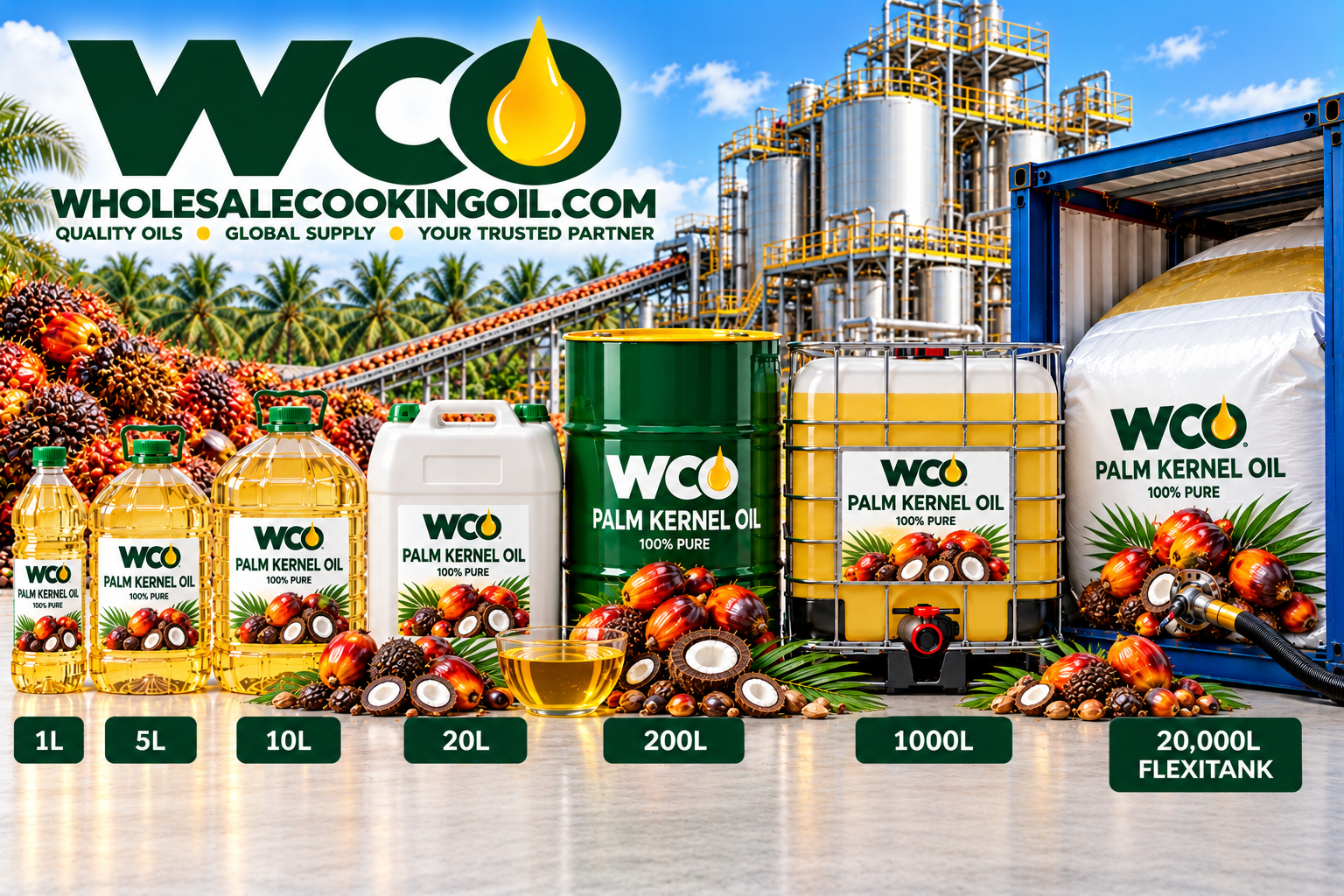
Palm Kernel Oil
Fillings, creams and coatings.
View oil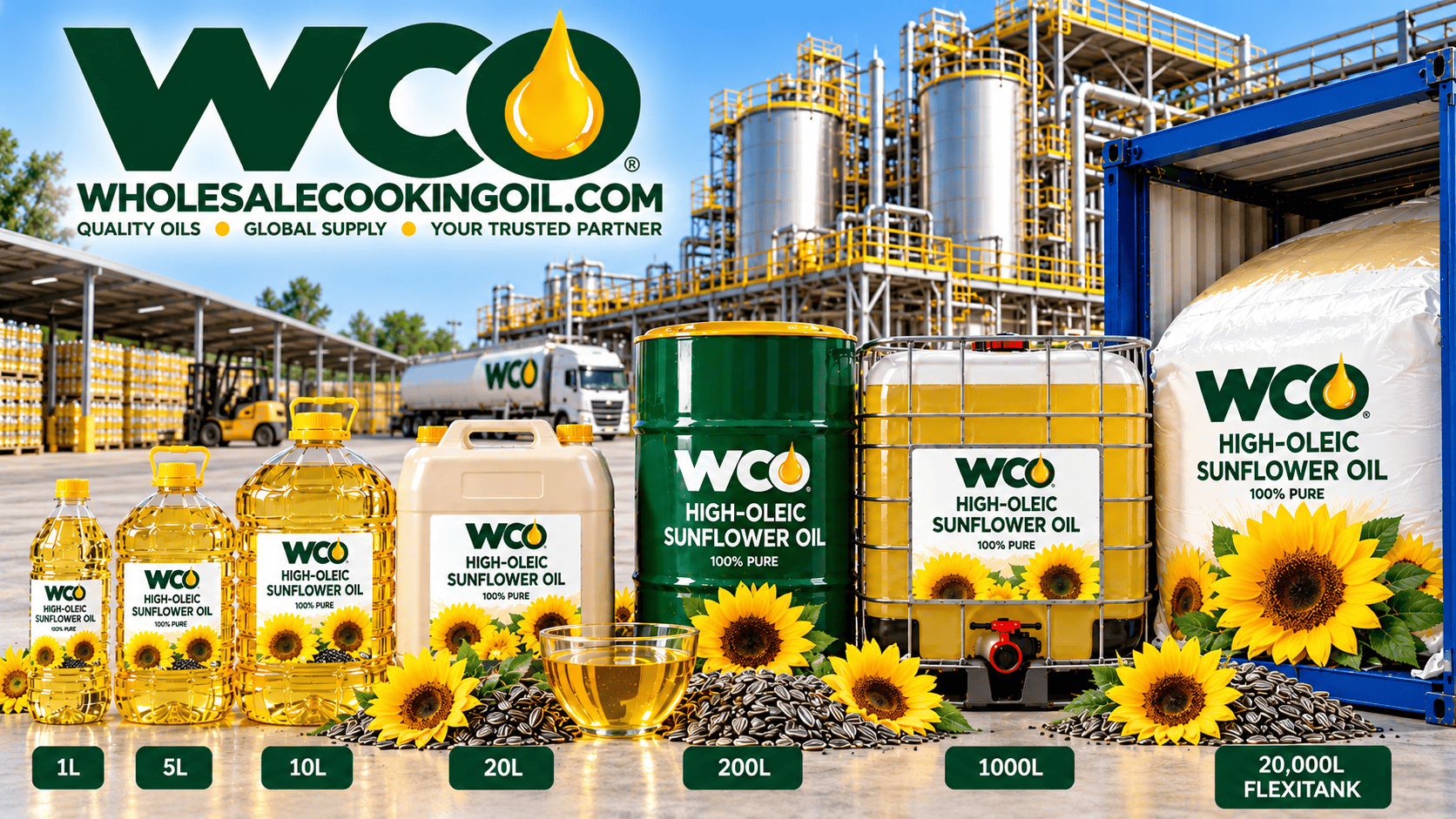
High-Oleic Sunflower Oil
Stable frying for doughnuts.
View oil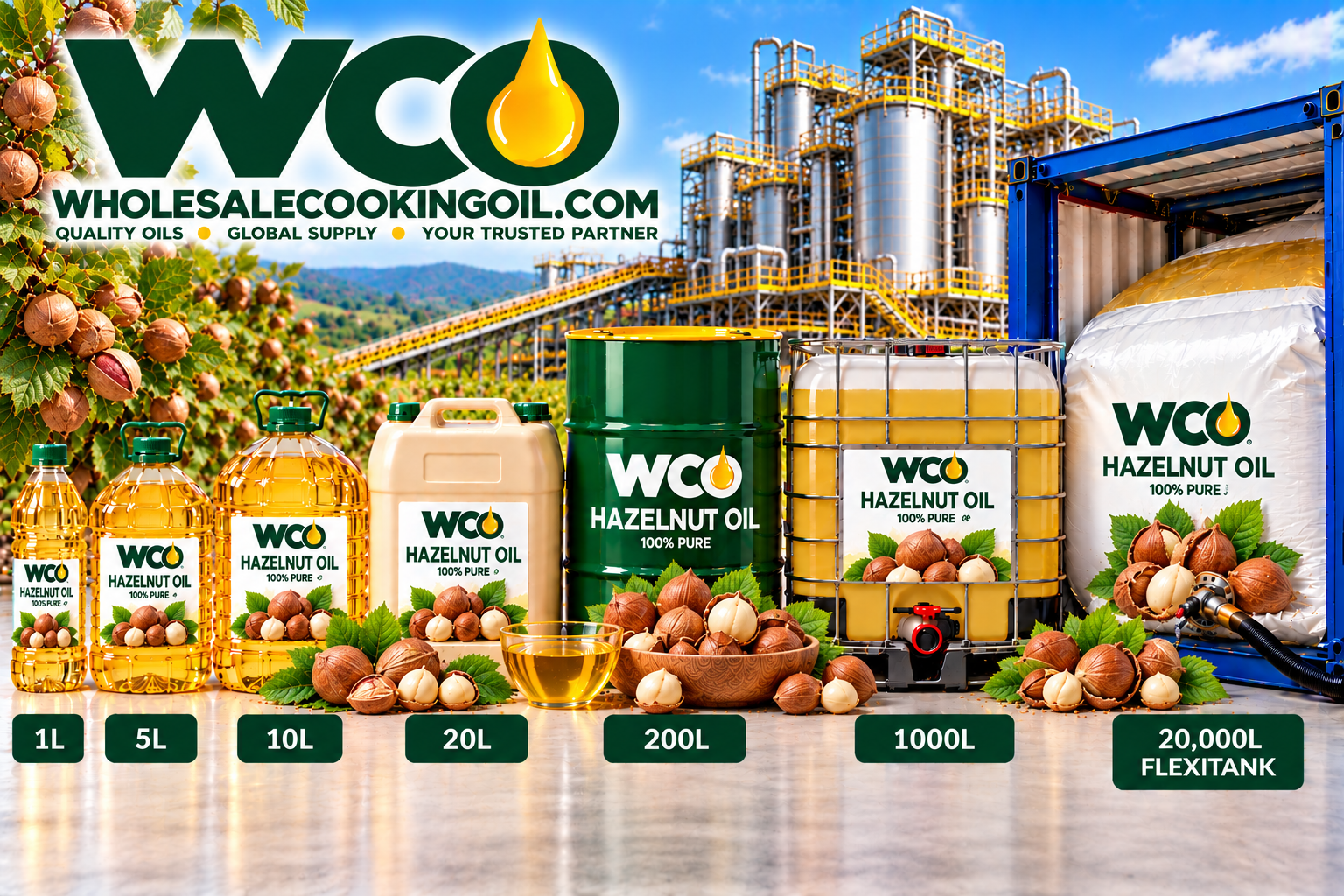
Hazelnut Oil
Flavor for pastry and premium bakes.
View oilCompare
How the oils compare
Heat stability reflects how much polyunsaturated fat and omega-3 an oil contains: the less it has, the longer it lasts in a fryer and in finished food. Smoke points are for refined grades, as stated on each oil page.
| Oil | Best for | Heat stability | Smoke point | At room temperature |
|---|---|---|---|---|
| Canola Oil | Cakes, muffins, quick breads | Moderate | About 220–230 °C / 430–450 °F | Liquid |
| Soybean Oil | Breads and doughs | Moderate | About 230 °C / 450 °F | Liquid |
| RBD Palm Oil | Pastry, biscuits, shortening | Very high | About 230 °C / 450 °F | Semi-solid |
| Coconut Oil | Crisp biscuits, plant-based bakes | Very high | About 204–232 °C / 400–450 °F | Solid below about 24 °C |
| Palm Kernel Oil | Fillings, creams, coatings | Very high | — | Solid below about 27 °C |
| High-Oleic Sunflower Oil | Frying doughnuts | Very high | About 230 °C / 450 °F | Liquid |
Example
Example order: a bakery with a doughnut line
A bakery using liquid oil for cakes and breads, palm fat for pastry and a doughnut fryer might order canola oil in 5L bottles, RBD palm oil in drums and frying oil in jerrycans.
| Oil | Pack | Quantity | Liters |
|---|---|---|---|
| Canola Oil | 5L Bottles | 25 cases of 4 × 5L | 500 L |
| RBD Palm Oil | 200L Drums | 2 × 200L Drums | 400 L |
| High-Oleic Sunflower Oil | 20L Jerrycans | 15 × 20L Jerrycans | 300 L |
| Total | 1,200 L | ||
An illustration only: your own quantities depend on your menu, equipment and volumes. The minimum is 1,000 liters per quote across all lines.
Good practice
Tips for bakeries
- Use liquid oils for soft crumb and solid fats for flaky or crisp textures.
- Warm solid fats gently and evenly before use; never overheat drums.
- For doughnuts, choose a frying oil low in polyunsaturated fat and filter it often.
- Store fats away from strong odors, which they can absorb.
Rules and research
What bakeries should know
- In the United States, partially hydrogenated oils may not be added to food without FDA approval; the FDA’s compliance dates began on June 18, 2018 and its last extensions ended on January 1, 2020. Bakers have replaced them with palm, lauric and high-oleic oils. Source: US FDA: final determination on partially hydrogenated oils
- In the EU, industrially produced trans fat is limited to 2 grams per 100 grams of fat in food supplied to consumers since April 2021. Source: Commission Regulation (EU) 2019/649 on trans fat
- EU acrylamide benchmarks include 50 µg/kg for wheat-based soft bread and 350 µg/kg for biscuits and wafers. Source: Commission Regulation (EU) 2017/2158 on acrylamide
Rules change and differ by country. Always confirm the requirements that apply where you operate.
FAQ
Questions from bakeries
Can I replace butter with oil in baking?
In many cakes and quick breads, yes. Liquid oils give a moister crumb. For pastry and laminated doughs, solid fats such as palm or coconut oil work better.
Which oil is best for frying doughnuts?
A stable frying oil such as palm olein, deep frying oil or a high-oleic oil.
Will solid fats arrive solid?
Palm, coconut and palm kernel oils can arrive solid in cool weather. Warm them gently and evenly before use.
Do you supply hydrogenated shortening?
No. Our oils and fats are not hydrogenated. Palm, coconut and palm kernel oils give similar functions without partial hydrogenation.
Which fat gives the flakiest pastry?
Semi-solid fats such as RBD palm oil hold layers apart during baking. Coconut oil gives a crisp, short texture.
Get a quote for your business
Add the oils, grades and pack sizes you need to one list and send a single request.