How we make it
How Our Cooking Oils Are Made, From Seed to Sealed Pack
Every oil we sell is pressed, refined or filtered, tested and packed at our own facilities in Tennessee, Mississippi and Oregon. Here is exactly what happens at each step, and why it matters for the oil in your kitchen or factory.
Three routes
Not every oil is made the same way
The route depends on the crop and the grade. Refined oils go through every step below; cold-pressed oils are pressed and filtered only; oils from fruit that must be milled fresh start as crude or virgin oil.
Refined oils
Pressed, extracted and fully refined (degummed, neutralized, bleached and deodorized) for a neutral taste, light color, high smoke point and long shelf life. The workhorse oils for frying, baking and food manufacturing.
Cold-pressed and virgin oils
Mechanically pressed and then only settled and filtered, with no chemical refining, so they keep the natural flavor, color and minor nutrients of the seed or nut.
Oils milled at origin
Palm fruit, coconut, olives and argan kernels must be milled close to where they grow. We bring in the crude or virgin oil, then refine, fractionate or simply filter it, test it and pack it in the United States.
Step by step
From raw material to finished oil
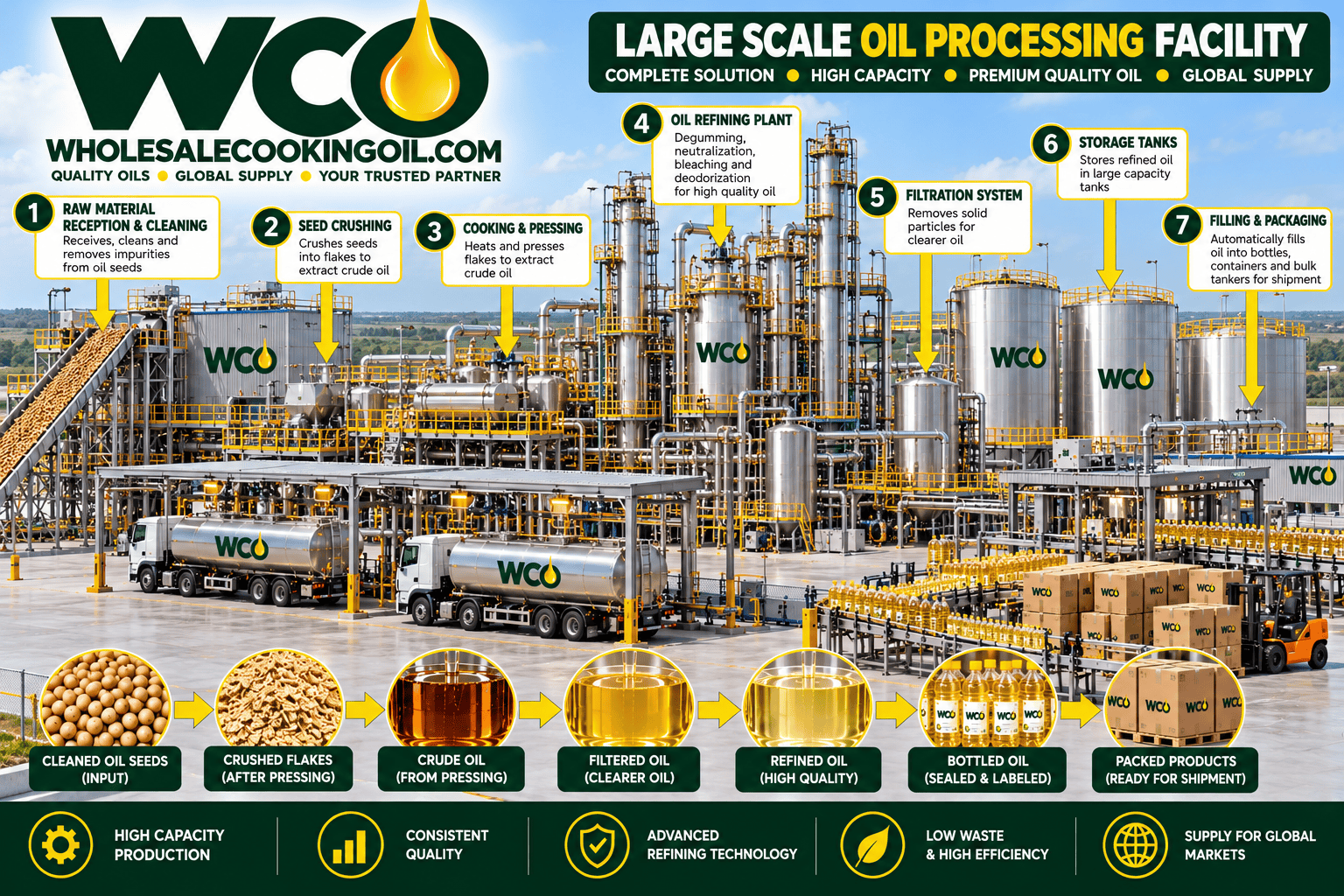
- 1Receiving and cleaning
- 2Conditioning and pressing
- 3Extraction
- 4Degumming and neutralizing
- 5Bleaching
- 6Deodorizing
- 7Winterizing, fractionating and blending
- 8Testing and release
- 9Packing and dispatch
Receiving and cleaning
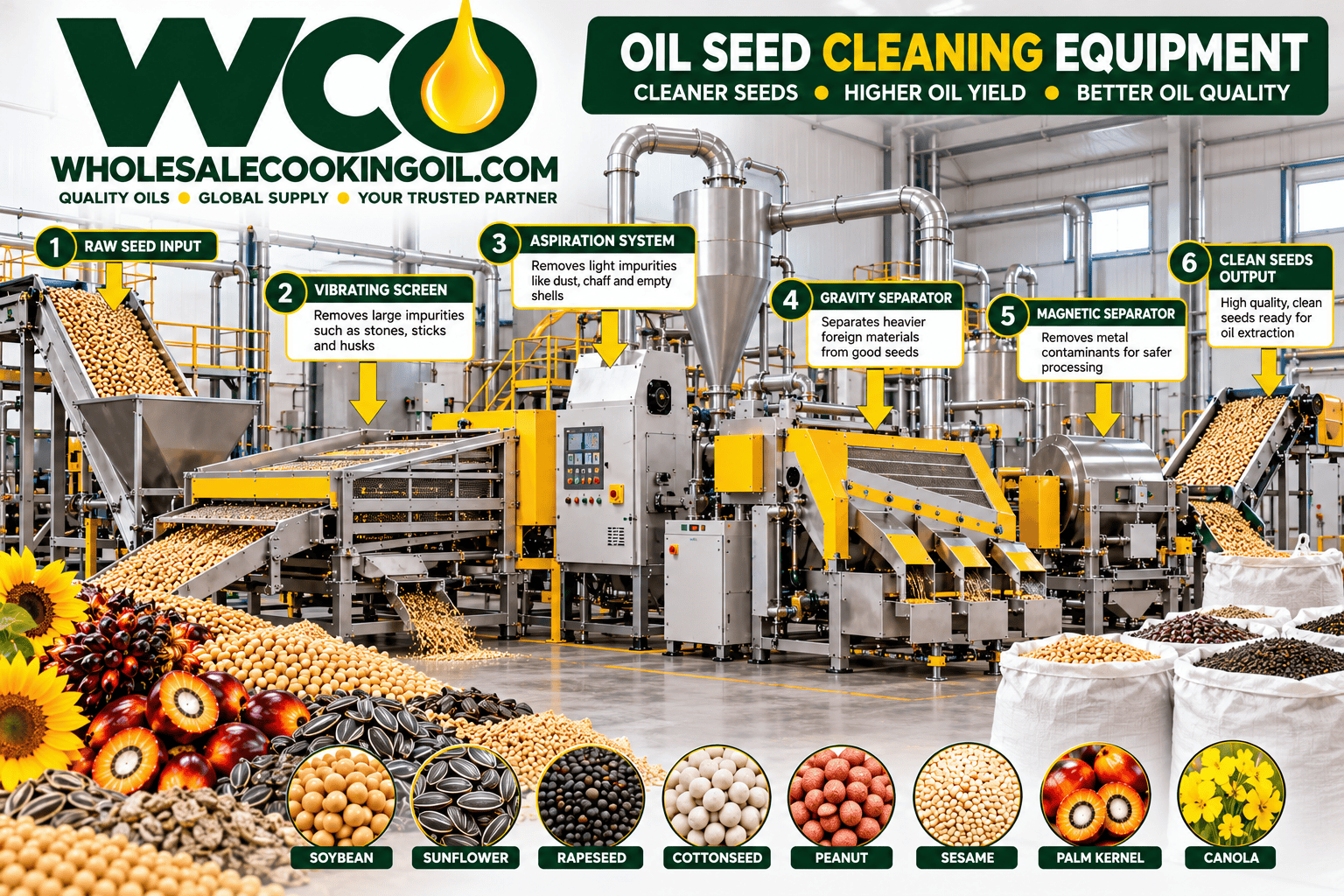
Every delivery of seed, nuts or crude oil is sampled and checked against our purchase specification before it is accepted. Seeds are then cleaned to remove dust, stalks, stones, metal and other foreign material, and dehulled where the grade calls for it.
- Sampling and checks on arrival, including moisture and visible quality
- Screening, aspiration and magnets remove foreign material
- Accepted lots are given a lot code that follows them to the final pack
Conditioning and pressing
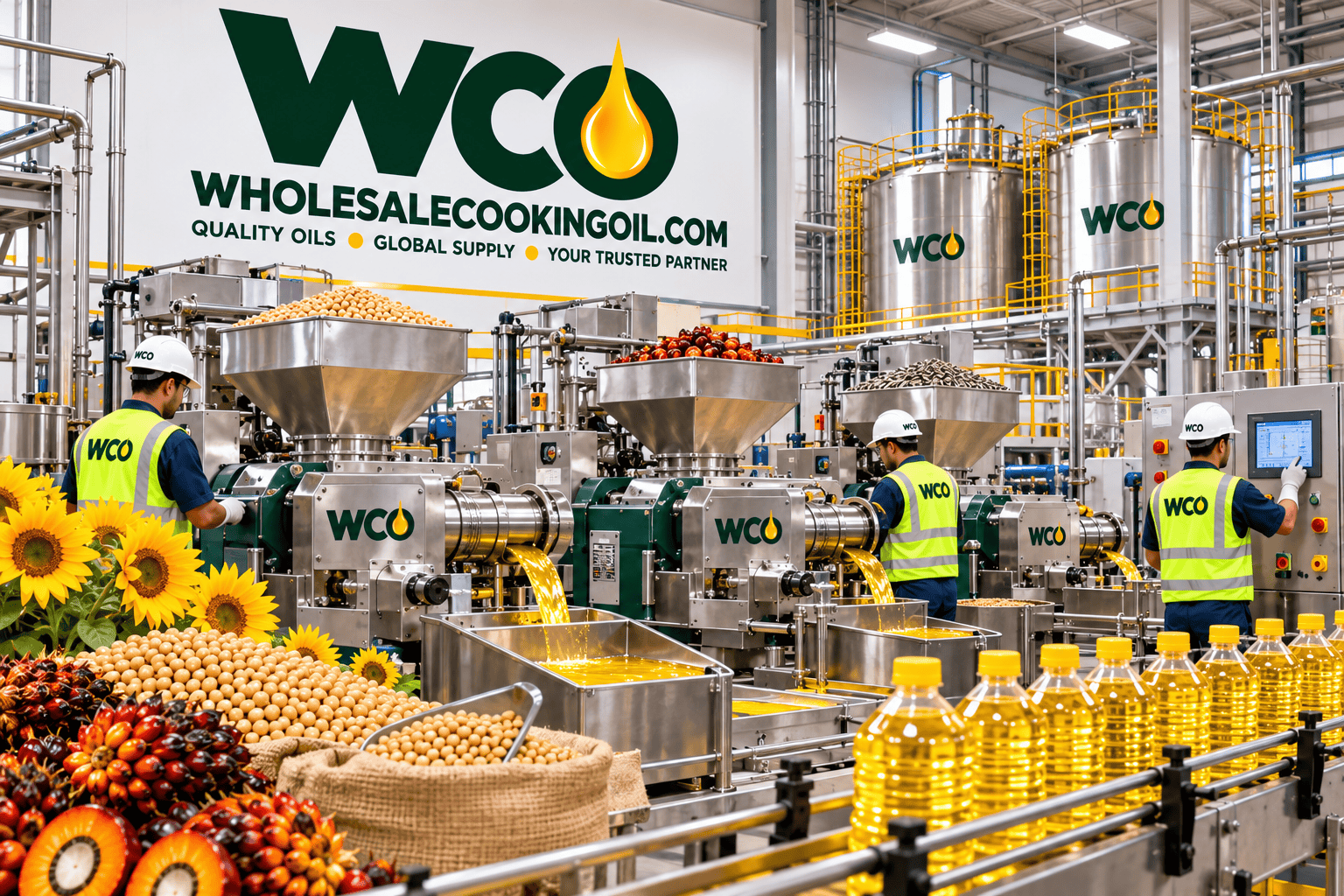
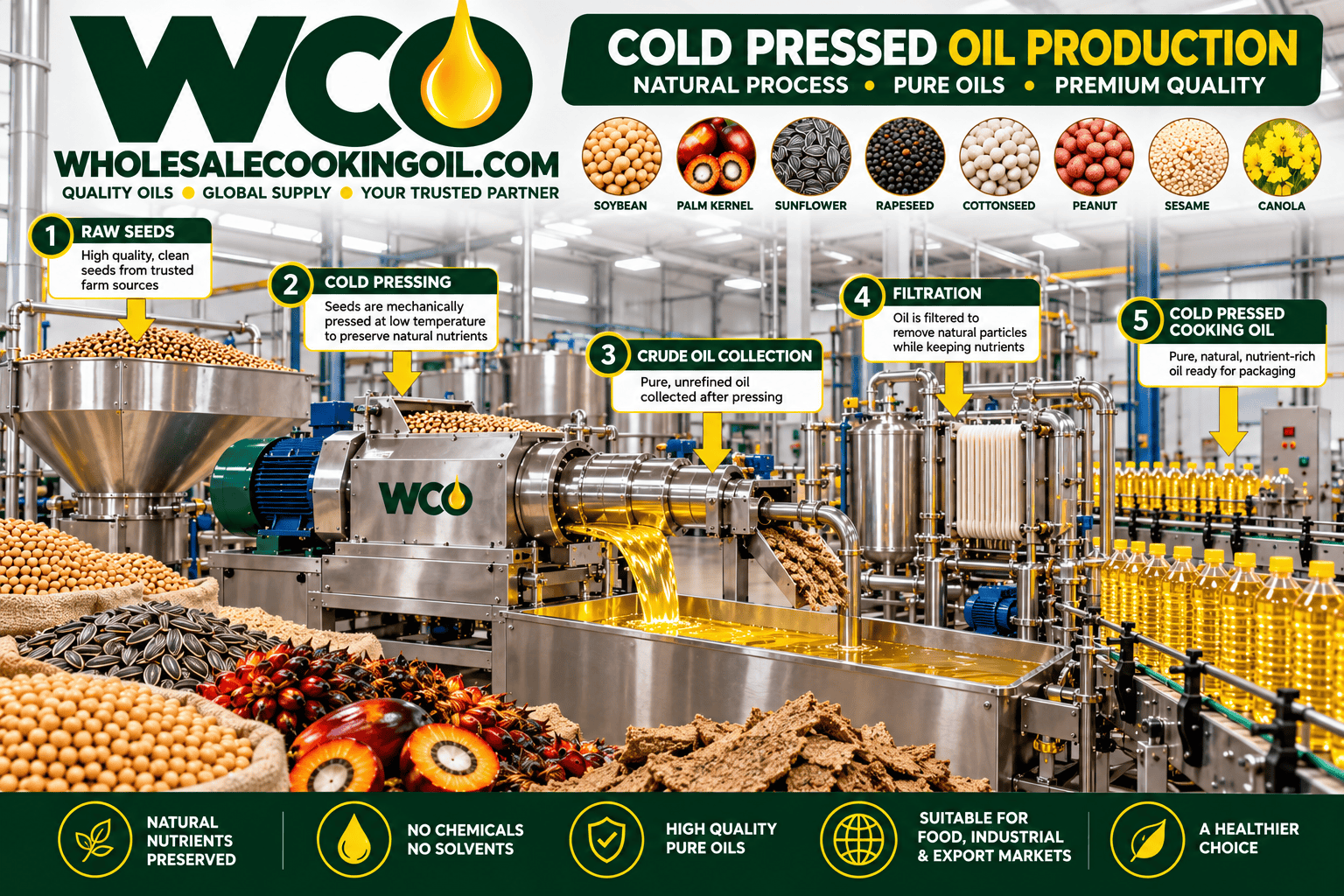
Clean seed is flaked and, for refined grades, gently heated to condition it, then fed through screw presses that squeeze out the oil. Cold-pressed grades are pressed without added heat, at low speed, to protect flavor and color.
- Flaking opens the seed cells so the oil flows freely
- Screw (expeller) presses separate crude oil from the press cake
- Cold-pressed grades: no added heat and no chemical treatment
Extraction
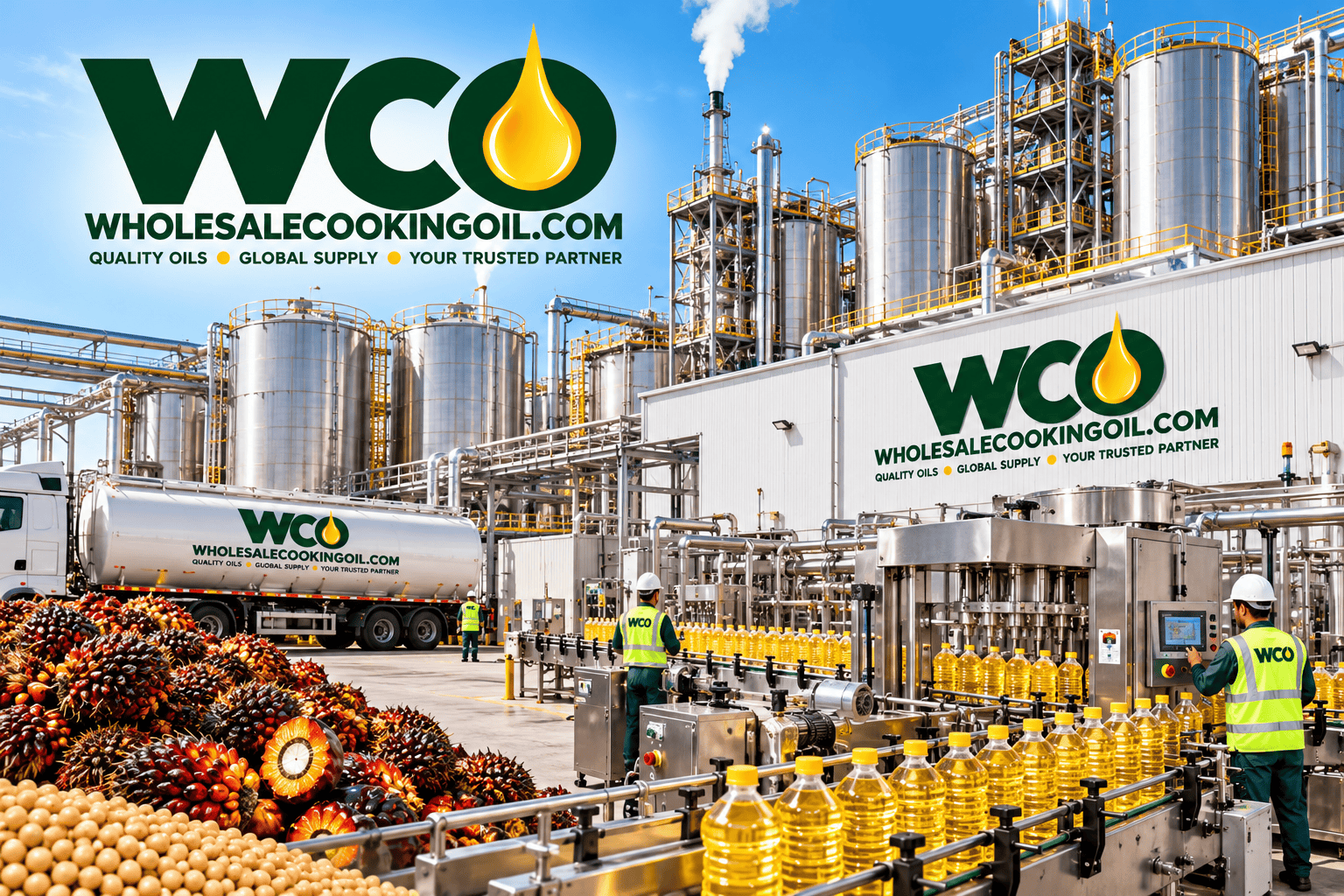
For refined grades, the oil left in the press cake after pressing is recovered, so that very little of the crop is wasted. The recovered oil joins the pressed oil for refining. Cold-pressed and virgin oils skip this step entirely.
- Recovers the oil that pressing alone leaves behind
- Only used for oils that go on to full refining
- Cold-pressed and virgin grades never go through extraction
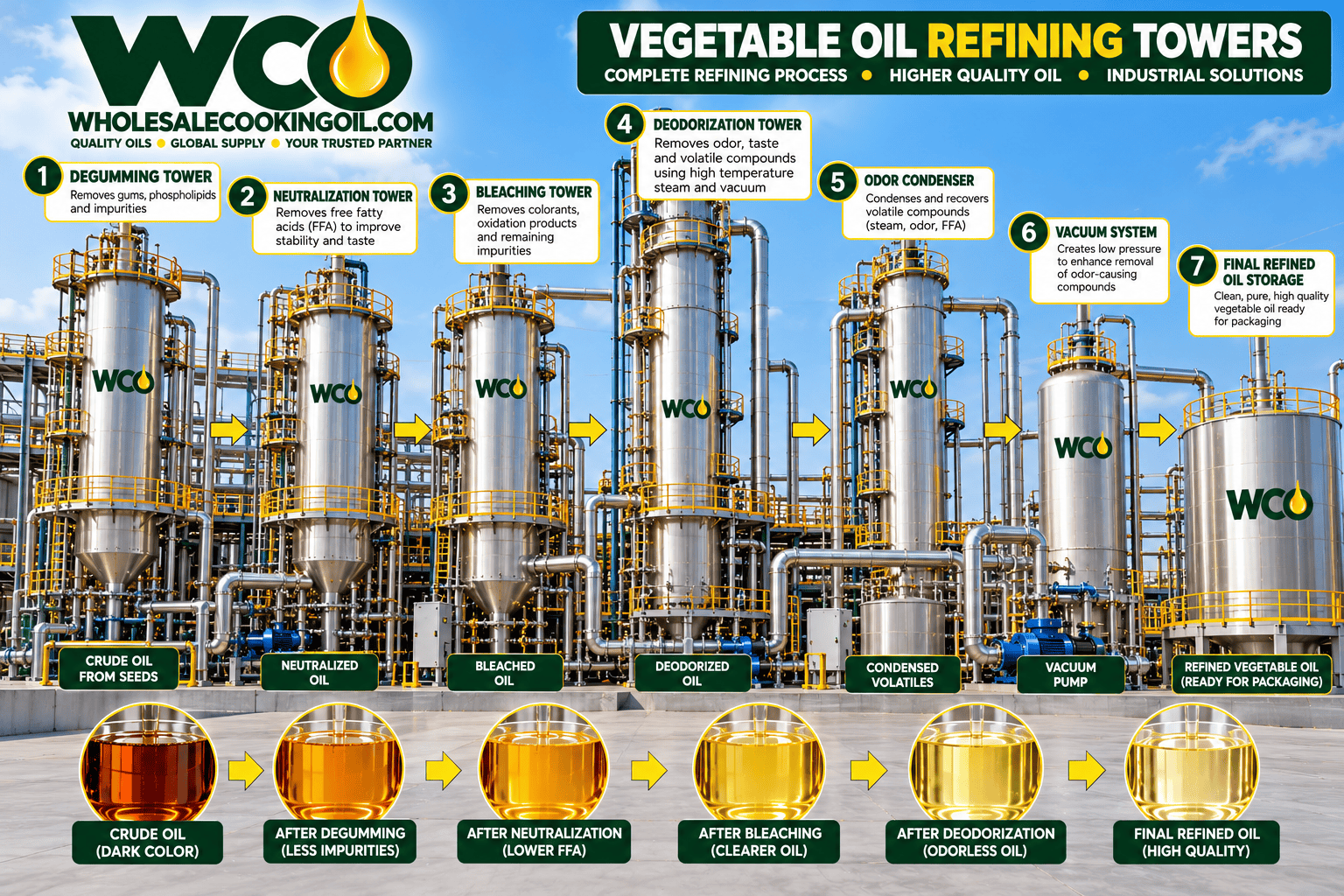
Degumming and neutralizing
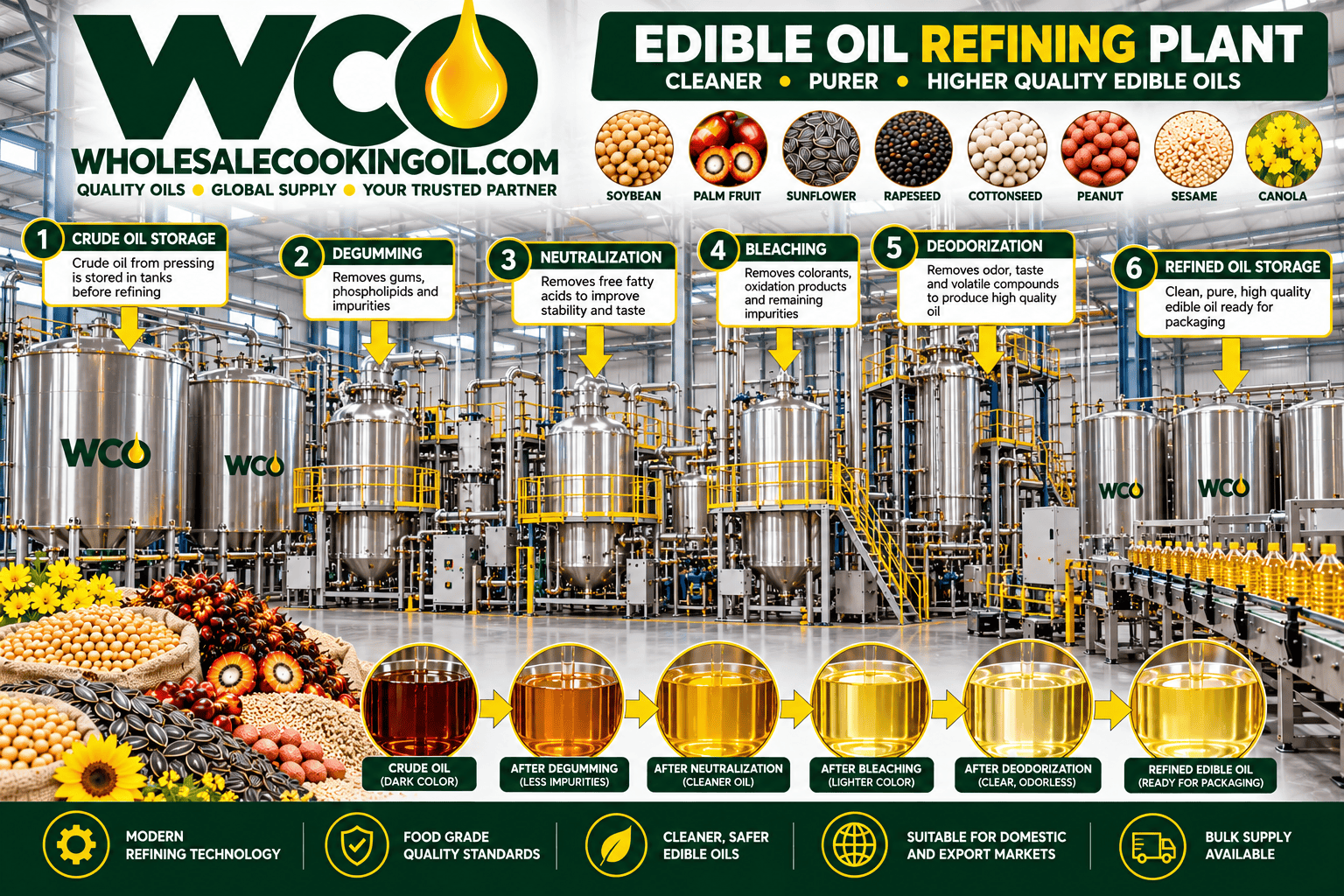
Crude oil contains phospholipids (gums) and free fatty acids that would shorten shelf life and cause foaming and darkening in the fryer. Water or acid degumming removes the gums, and neutralizing removes most of the free fatty acids.
- Removes gums that cause cloudiness, foaming and sediment
- Lowers free fatty acids for a cleaner taste and better frying stability
- Washing and drying remove any remaining traces
Bleaching
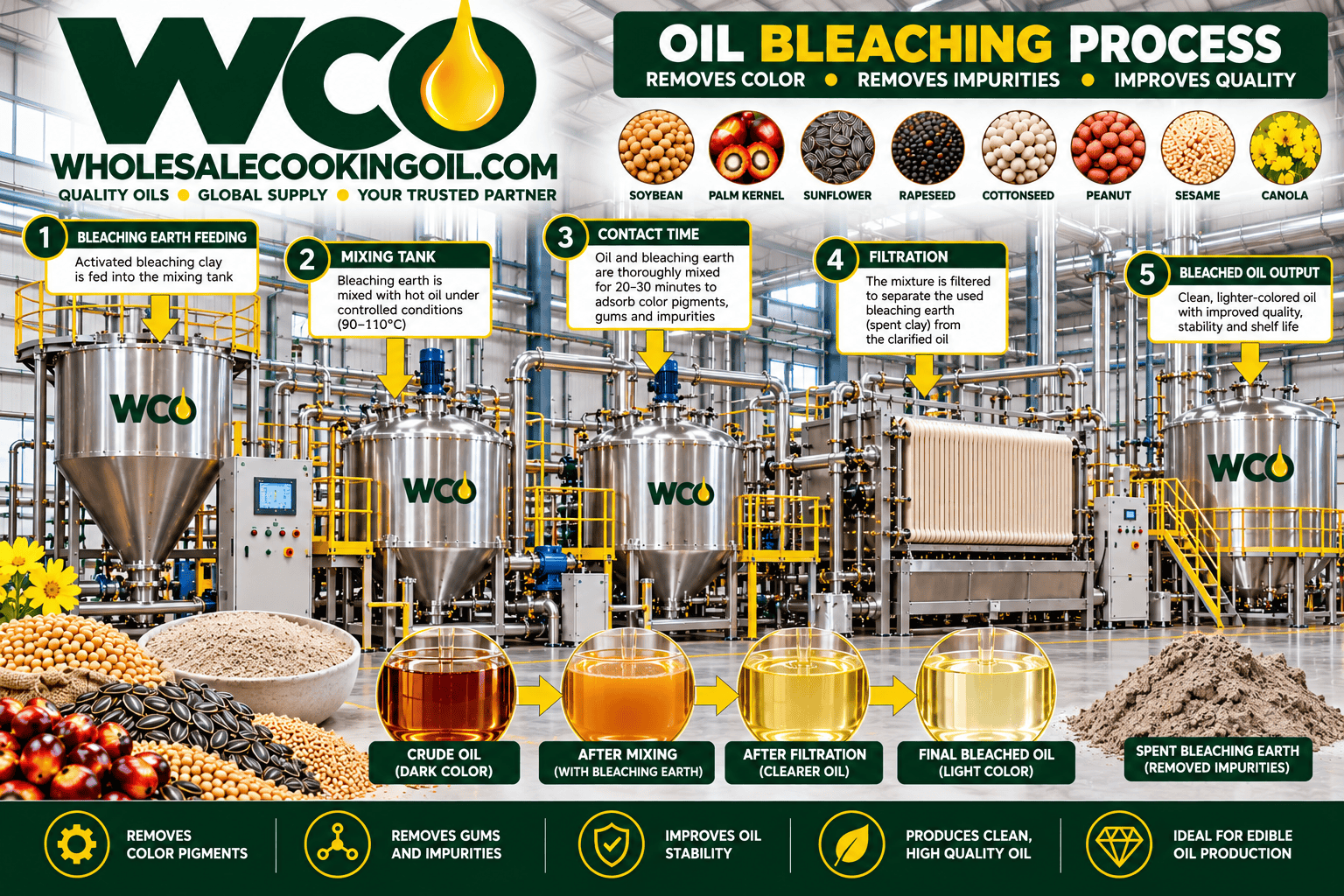
The oil is mixed with activated bleaching earth, a natural clay, which adsorbs color pigments, trace metals and remaining impurities. The clay is then filtered out, leaving a clear, light oil.
- Removes pigments such as chlorophyll and carotenoids
- Takes out trace metals that speed up rancidity
- Filtered to leave no clay in the oil
Deodorizing
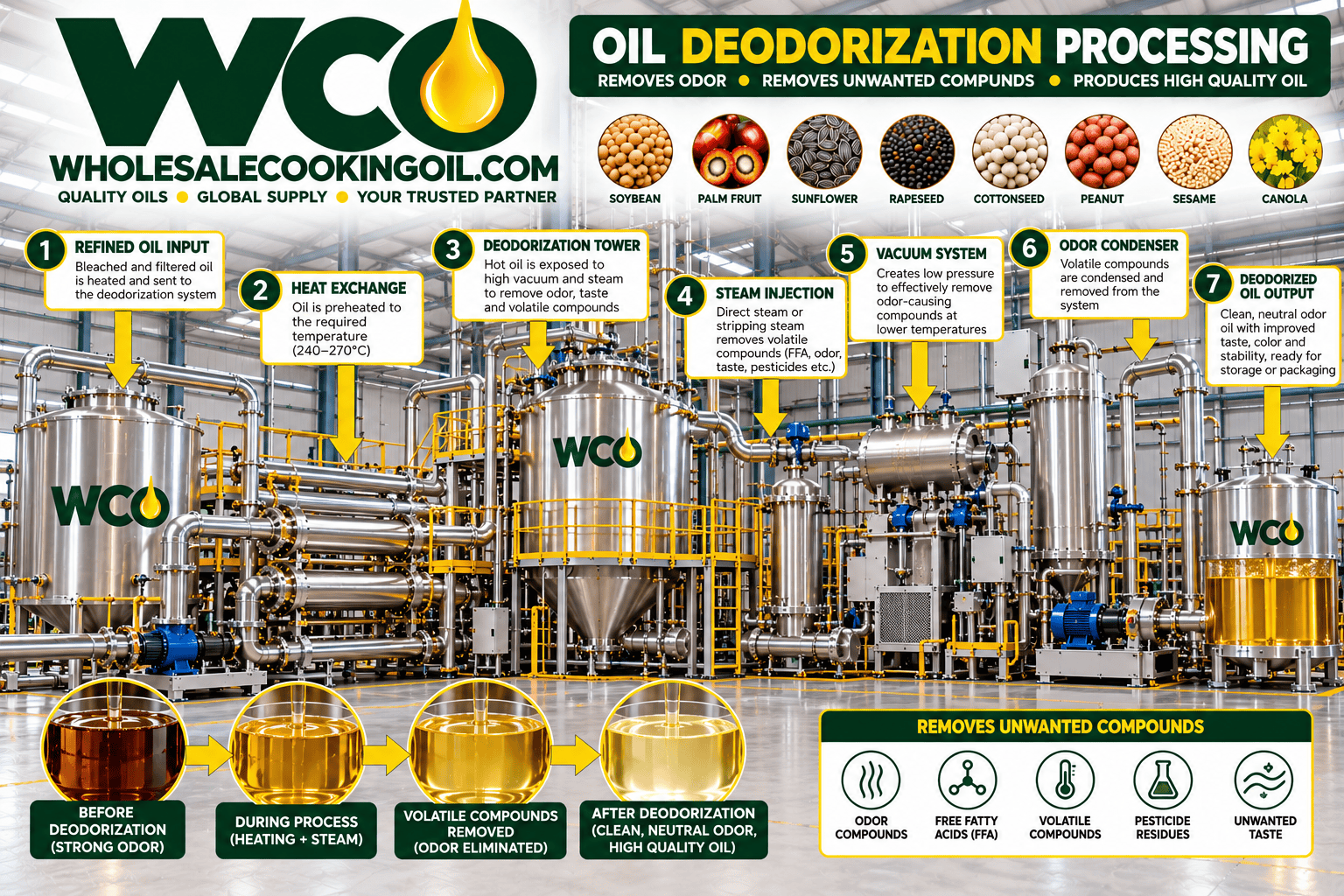
Steam is passed through the hot oil under deep vacuum, carrying away the compounds that cause odor and flavor, along with remaining free fatty acids. We control temperature and time in this step closely, because it decides the oil’s neutral taste, its stability and the level of process contaminants such as 3-MCPD and glycidyl esters.
- Gives refined oils their neutral taste and smell
- Strips remaining free fatty acids for a higher smoke point
- Controlled conditions limit the formation of process contaminants
Winterizing, fractionating and blending
Some oils need one more step. Sunflower and similar oils are chilled and filtered to remove natural waxes, so they stay clear in the cold. Palm oil is fractionated into liquid palm olein and solid stearin. Blended and deep frying oils are combined to a fixed recipe and checked against their specification.
- Winterizing: oil stays clear when refrigerated
- Fractionating: palm olein for frying, stearin for solid fats
- Blending: fixed recipes for blended vegetable and deep frying oils
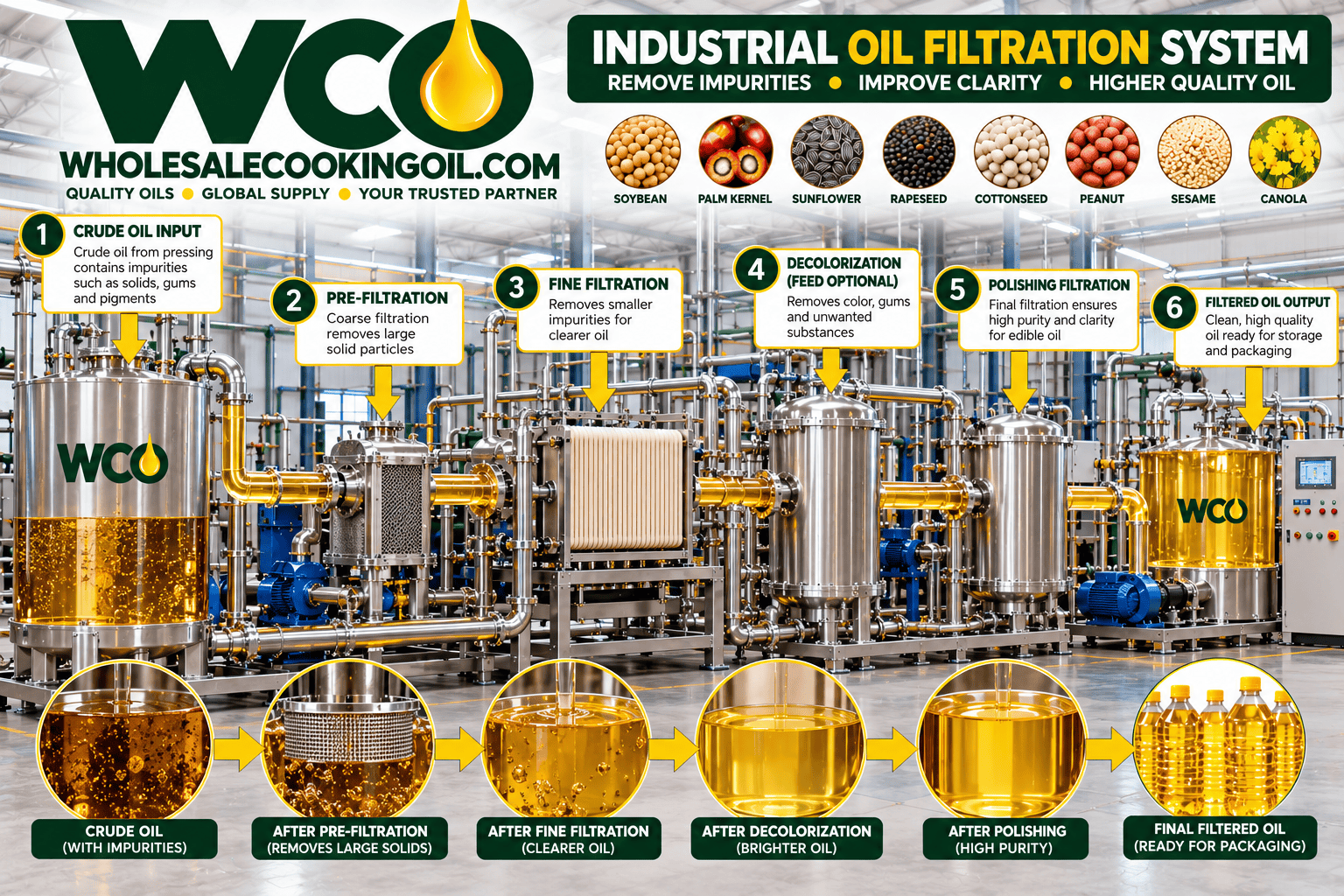
Testing and release
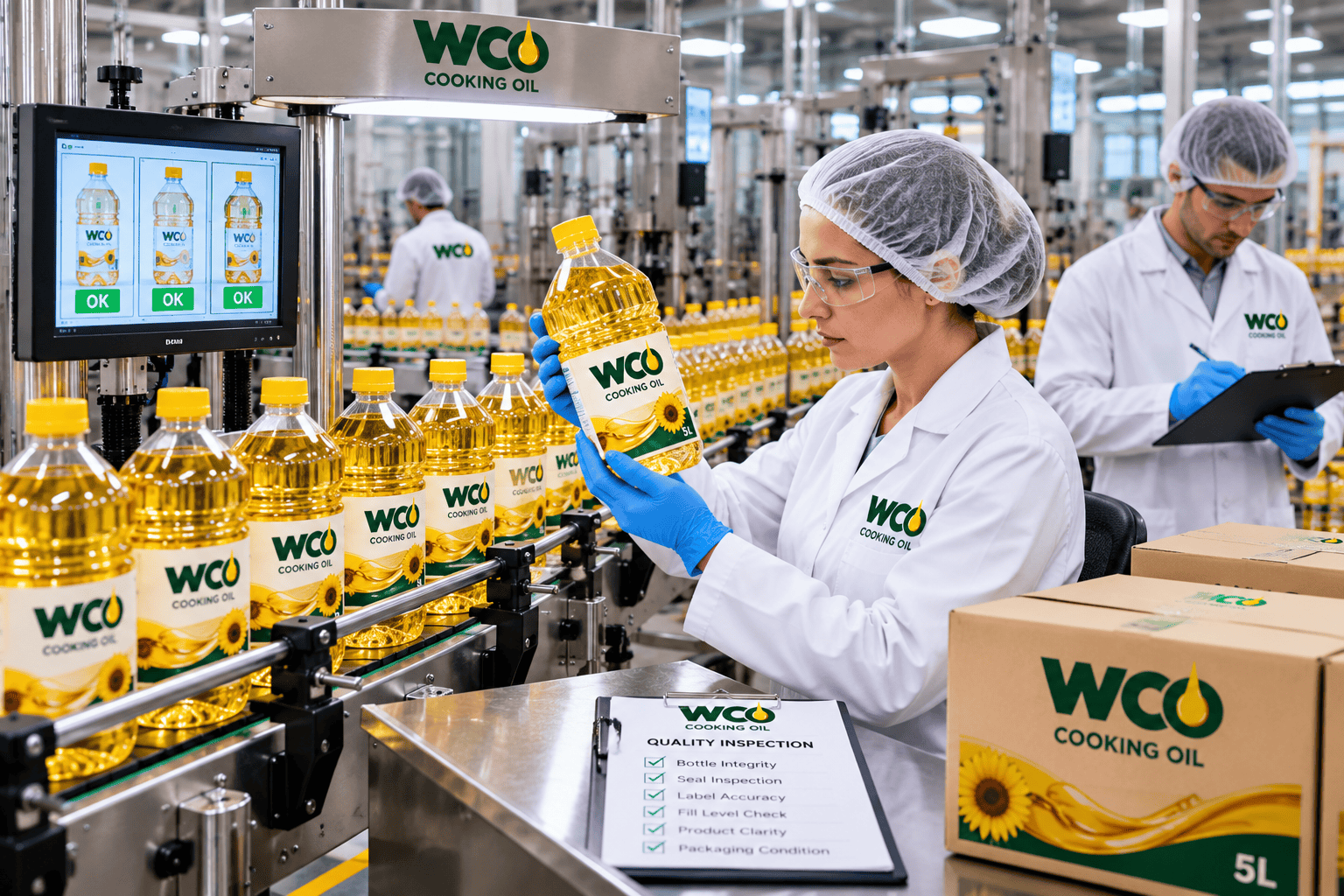
Each lot is sampled and tested in our ISO/IEC 17025-accredited laboratory against the written specification for its grade before it can be packed. Only lots that pass are released, and the results are reported on the Certificate of Analysis that goes with your order.
- Tested against a written specification for each grade
- Lots that do not meet specification are not released
- Results reported on a Certificate of Analysis with every order
Packing and dispatch
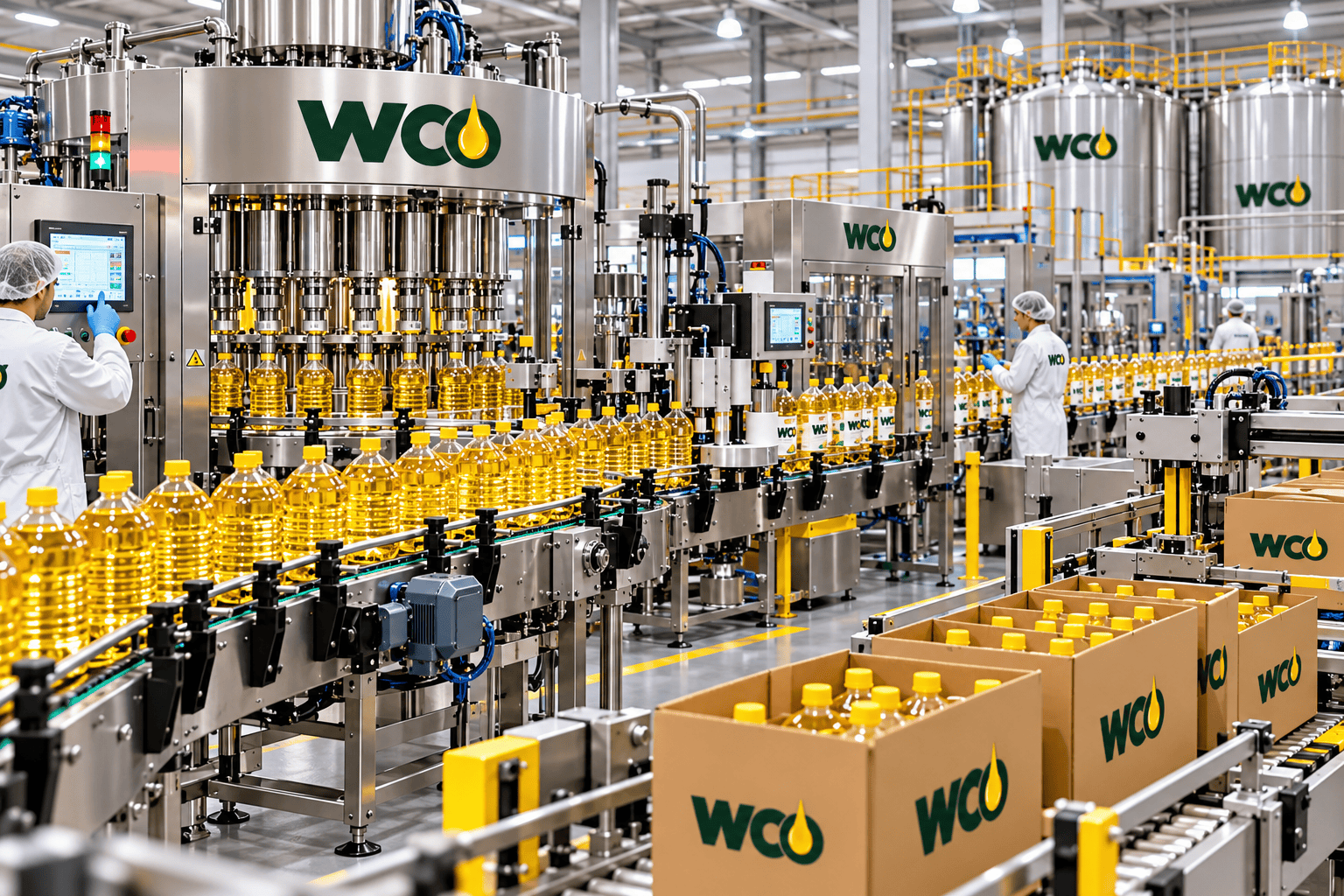
Released oil is filled at our own warehouses into food-grade packs, from 1L bottles to 1,000L IBC totes and 20,000L flexitanks. Every pack carries its lot code, and orders are dispatched within 24–48 hours of payment clearing, depending on order size.
- Food-grade bottles, jerrycans, drums, IBC totes and flexitanks
- Lot code on every pack for full traceability
- Private label packing on request
Cold-pressed and virgin oils
What “cold-pressed” really means
The international Codex standard for named vegetable oils sets the definitions we follow. Virgin oils are obtained by mechanical means such as pressing, without altering the nature of the oil; some heat may be used. Cold-pressed oils are obtained by mechanical means only, without applying heat. Both may only be purified by washing, settling, filtering or centrifuging.
That is how we make our cold-pressed and virgin grades: pressed slowly without chemical treatment, settled, filtered, tested and packed. Because they are not refined, they keep their natural character, and they are best stored cool and used within their shorter shelf life.
Source: Codex Standard for Named Vegetable Oils (CODEX STAN 210-1999), section 2.2, FAO
Quality checks
What we test before an oil is released
Typical parameters on our Certificates of Analysis. The exact list and limits for each oil are on its specification sheet.
| Test | What it tells you |
|---|---|
| Free fatty acids (acid value) | How fresh the oil is and how well it has been refined. Low values mean better frying life and a cleaner taste. |
| Peroxide value | Early oxidation. A low value shows the oil has been processed and stored well. |
| Moisture and impurities | Water and insoluble matter that can shorten shelf life and cause spitting in the fryer. |
| Color | Confirms the grade, such as a light refined oil or a golden virgin oil. |
| Fatty acid profile | The oil’s identity and type, for example high-oleic content, or erucic acid in canola and mustard oils. |
| Iodine value | The degree of unsaturation, a further check of identity and grade. |
| Oil-specific checks | For example THC in hemp seed oil, thymoquinone in black seed oil and tocopherols in wheat germ oil. |
Process contaminants in refined oils
Refining at high temperature can form small amounts of 3-MCPD and glycidyl esters. The European Union sets maximum levels for these in refined vegetable oils under Regulation (EU) 2023/915, with stricter limits for oils used in baby food applying from 1 January 2027. We control deodorizing conditions to keep levels low. If your market or product needs these results, tell us in your quote request.
Traceability
One lot code, from receiving to your pack
Each raw material lot is coded when it arrives, and that code follows the oil through every processing step to the final bottle, drum or flexitank. If you ever have a question about a delivery, the lot code on the pack lets us trace it back to the raw material, the processing run and the test results.
- Lot code on every pack and on the Certificate of Analysis
- The same written procedures at all three US sites
- Specification sheets available for every grade
FAQ
Questions about how our oils are made
What does RBD mean?
RBD stands for refined, bleached and deodorized. It describes an oil that has been through the full refining process, giving a neutral taste, light color and high smoke point.
What is the difference between refined and cold-pressed oil?
Refined oil is cleaned, bleached and deodorized for a neutral taste, high smoke point and long shelf life, which suits frying and food manufacturing. Cold-pressed oil is pressed without added heat and only filtered, so it keeps more natural flavor, color and minor nutrients, but it usually has a lower smoke point and shorter shelf life.
Why are some oils milled outside the United States?
Palm fruit, coconut, olives and argan kernels spoil quickly after harvest and must be milled close to where they grow. We bring in the crude or virgin oil and refine, filter, test and pack it at our US facilities.
How do you keep quality the same from lot to lot?
Every grade has a written specification. Incoming raw materials are checked on arrival, each processing step is run to set conditions, and every lot is tested before release. All three of our sites follow the same procedures.
Can I see a specification or Certificate of Analysis before I order?
Yes. Ask for the specification sheet for any oil, or a sample Certificate of Analysis, through our Contact page or in your quote request.
Can you trace an oil back to its source?
Yes. Each lot keeps its lot code from receiving to the final pack, so we can trace any pack back through processing to the raw material it came from.